Indianapolis rarely announces itself as a queer destination with the theatrical confidence of Chicago, New York, or New Orleans. That is part of what makes discovering it so rewarding.
Table of Contents
The LGBTQ+ life of “Indy” is woven into the city rather than confined to a single, formally branded gayborhood. You encounter it in the neon and patio conversations of Massachusetts Avenue, on the dance floors of Metro and Gregs, in community sports leagues, at neighborhood restaurants, inside public archives, and during an Indy Pride weekend that brings queer Hoosiers from across the state into the center of the capital.
Indy’s queer character is distinctly Midwestern: socially unpretentious, relationship-driven, and sustained by people who understand that community is not only something you find on an app. It is also built by showing up, remembering names, supporting local institutions, joining a league, attending a fundraiser, or becoming a familiar face at the same bar on an ordinary Wednesday.
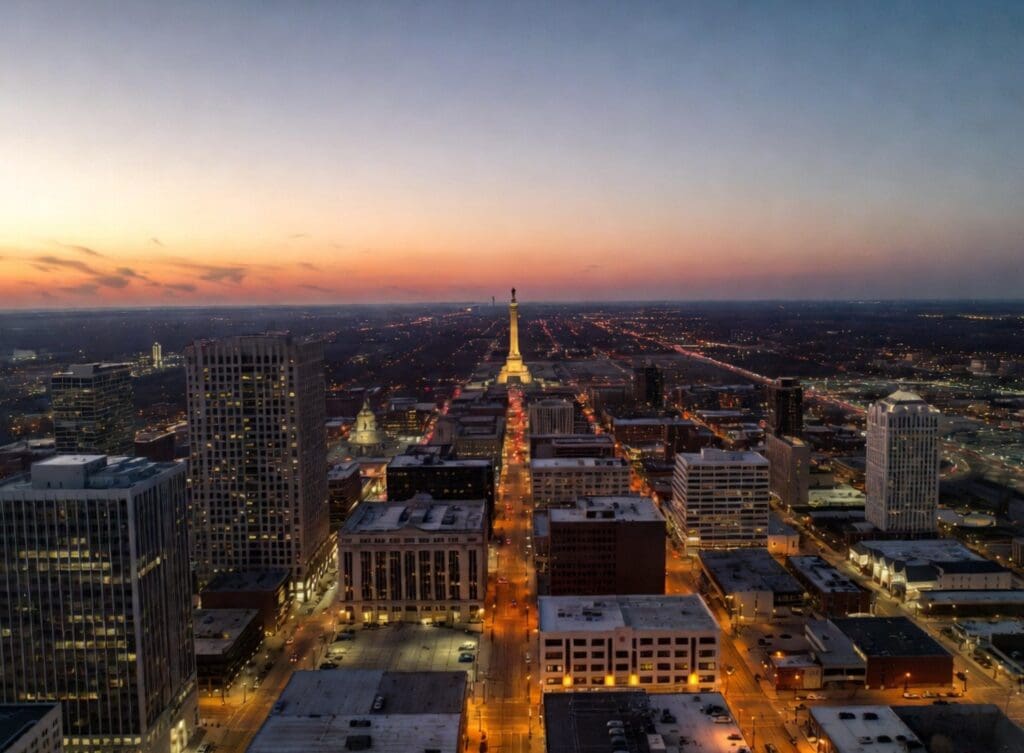
Indianapolis at a Glance for LGBTQ+ Travelers
For a first visit, stay near Mass Ave, Chatham Arch, downtown, or the Old Northside/Herron-Morton area. These locations place you close to the city’s most established LGBTQ+ venues, cultural attractions, and walkable downtown corridors.
The best periods for most visitors are:
- June, for Pride programming and the city’s most visible queer celebrations;
- September and early October, for more comfortable walking weather;
- late April through May, for patios and spring energy, while remembering that major racing events can increase hotel demand.
Indianapolis is easiest to experience as a collection of connected districts rather than as one continuous pedestrian city. Downtown, Mass Ave, Bottleworks, Chatham Arch, and parts of Fountain Square work well on foot or by bike. For nightlife farther north, later evenings, or cross-neighborhood trips, use IndyGo, a taxi, or a rideshare.
Why Gay Travelers Should Pay Attention to Indy
Indianapolis is a useful reminder that meaningful queer life does not belong only to coastal cities.
As Indiana’s capital and largest city, Indy draws LGBTQ+ people from small towns, college communities, suburbs, and rural counties across the state. Its bars and organizations therefore serve more than a purely local function. They can become points of connection for people who may have few explicitly queer spaces where they live.
The result is a community that often feels regionally rooted. Visitors meet not only downtown residents, but also people who have driven in from elsewhere in Indiana for a show, a sports league, a Pride event, or a Saturday night with friends.
Visit Indy’s LGBTQ+ guide emphasizes that the city’s welcoming places range from nightlife and restaurants to coffee shops, cultural institutions, and neighborhood businesses. That breadth is essential to understanding the city: gay Indianapolis is not only a bar itinerary. It is a social ecosystem. (Visit Indy)
Mass Ave: The Cultural Hub
What Massachusetts Avenue Actually Feels Like
Massachusetts Avenue, almost universally shortened to Mass Ave, is the easiest starting point for a queer visitor.
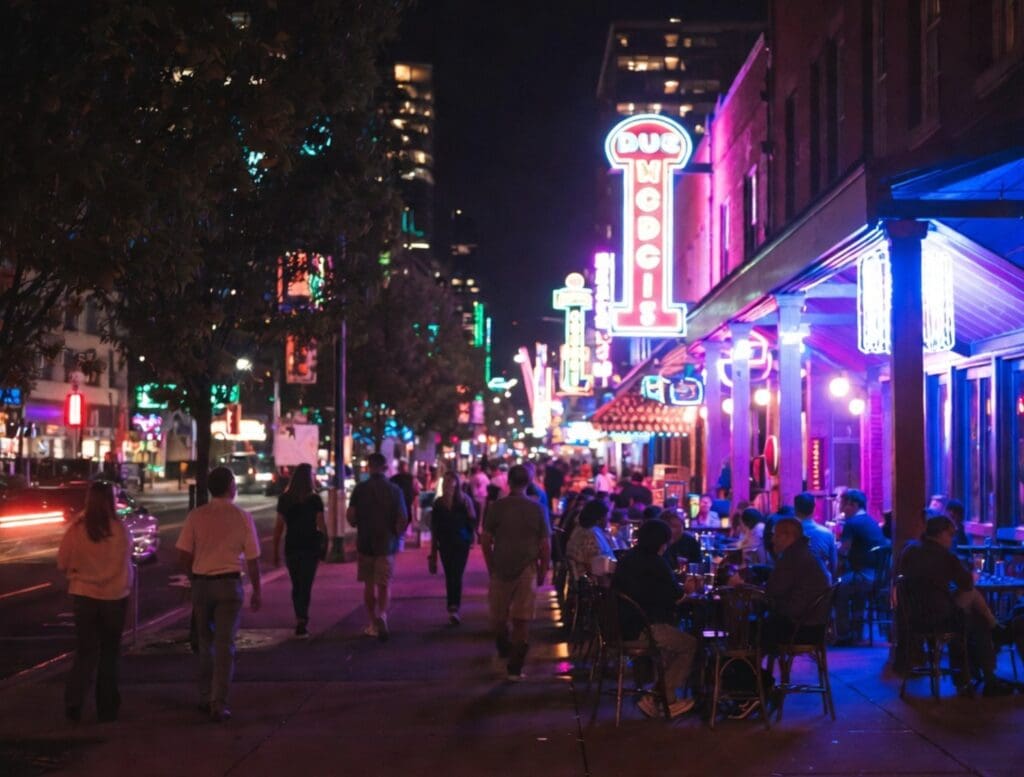
Unlike a purpose-built entertainment complex, the district feels lived in. Its diagonal route cuts through the city’s grid, creating angled intersections, narrow storefronts, sidewalk patios, older commercial buildings, public art, restaurants, theaters, bars, apartments, and the polished redevelopment of Bottleworks at its northern end.
Visit Indy promotes the district with the phrase “45 Degrees from Ordinary,” a reference to the avenue’s angle through downtown. The description is clever, but the real appeal is the way different versions of Indianapolis overlap here: historic brick buildings, nightlife, longtime local businesses, new apartments, public art, and destination dining all sharing the same corridor.
During the day, Mass Ave is energetic but approachable. People move between lunch spots, independent stores, coffee stops, and the Cultural Trail. By early evening, patios fill and the district begins to feel more social. Later, the LGBTQ+ presence becomes easier to notice around Tini and Metro, although the avenue remains mixed rather than exclusively gay.
That integration is part of its personality. Mass Ave does not operate as a closed queer enclave. It is a mainstream cultural district with several visible, longstanding LGBTQ+ institutions at its center.
The Indianapolis Cultural Trail
The Indianapolis Cultural Trail is one of the most useful pieces of visitor infrastructure in the city. The network connects downtown cultural districts, including Mass Ave, Fountain Square, White River State Park, and other central neighborhoods. Official sources describe the trail as approximately ten miles long and designed for walking and cycling. (indyculturaltrail.org)
For LGBTQ+ travelers, its practical value is simple: it links several areas you are likely to visit without forcing every trip onto a major road.
Use it to:
- move between downtown and Mass Ave;
- continue toward Bottleworks;
- connect downtown with Fountain Square;
- reach White River State Park;
- take a low-pressure morning walk after a late night.
Pacers Bikeshare operates along the trail, making short bicycle trips possible without renting a car for the entire visit.
Treat the trail as transportation, not just an attraction. It makes the downtown experience feel more coherent.
Queer History Hidden in Plain Sight
Indianapolis has a deeper LGBTQ+ history than many first-time visitors expect, but much of it is not immediately visible from the street.
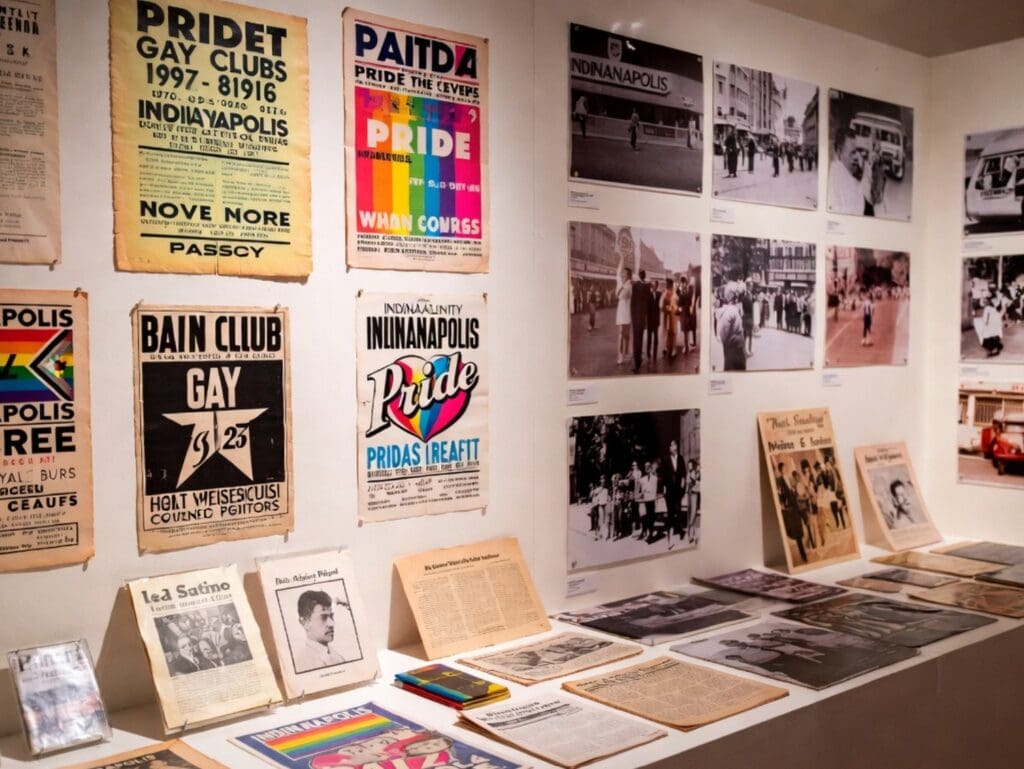
The Indiana Historical Society began its Indiana LGBTQ Collecting Initiative in 2014. The collection includes oral histories, photographs, organizational records, publications, and personal materials documenting queer life across the state. The society describes it as one of its major collecting areas. (Indiana Historical Society)
The Indianapolis Public Library’s Central Library also houses the Chris Gonzalez Collection, an LGBTQ+-focused collection that grew from a grassroots community archive. The library reports that the collection now contains more than 8,000 titles, with materials available in the Central Library and throughout the system. (Indianapolis Public Library)
These institutions matter because queer Midwestern history has often survived through personal preservation: someone saved the newsletter, the event flyer, the photograph, the organizational minutes, or the bar advertisement that official histories ignored.
For visitors interested in more than nightlife, build time into the trip for the Central Library or Indiana Historical Society. This gives context to the places you visit later. A bar can feel different when you understand that it belongs to a longer history of community building, public health activism, drag performance, chosen family, and political organizing.
Where to Stay
Chatham Arch and the Mass Ave Area: Best for a First Visit
Chatham Arch sits at the northeastern edge of downtown, directly beside Mass Ave. It combines historic residential streets with quick access to bars, restaurants, the Cultural Trail, and Bottleworks. Visit Indy notes that the district retains irregular streets and historic workers’ cottages dating from the city’s early growth. (Visit Indy)
This is the strongest all-around base for a first-time LGBTQ+ visitor because you can walk to:
- Metro;
- Tini;
- Bottleworks;
- the Garage Food Hall;
- the Cultural Trail;
- downtown attractions;
- several restaurants and evening venues.
Bottleworks Hotel is the area’s most distinctive major accommodation. It occupies part of the restored former Coca-Cola bottling complex and anchors the wider Bottleworks entertainment district. (Visit Indy)
Choose this area when: nightlife, walkability, design, and convenience are priorities.
Herron-Morton Place and the Old Northside: Best for Neighborhood Character
Herron-Morton Place and the Old Northside are more residential and less continuously commercial than Mass Ave. Their value is proximity to Gregs, historic streets, and a quieter neighborhood atmosphere.
Gregs sits near the meeting point of these communities, and Visit Indy describes it as a cornerstone of the area. (Visit Indy)
Lodging is less concentrated here, so visitors may rely on small inns or licensed short-term accommodations rather than a large cluster of hotels. Confirm exact location before booking; the difference between staying near 16th Street and staying farther north can affect how often you need a car or rideshare.
Choose this area when: you prefer a residential setting and plan to spend time at Gregs or in the northern downtown neighborhoods.
Downtown and the Wholesale District: Best for Pride and Major Attractions
Central downtown is practical for visitors who want easy access to White River State Park, the convention center, museums, sports venues, Monument Circle, and the Pride festival grounds.
Visit Indy maintains a list of TAG-approved hotels marketed as welcoming to LGBTQ+ travelers, including downtown properties such as The Alexander, Conrad Indianapolis, and Crowne Plaza Indianapolis Downtown Union Station. (Visit Indy)
The Alexander is especially convenient for visitors who want a modern hotel near downtown dining, Fountain Square connections, and the Cultural Trail. Bottleworks is better for immediate access to Mass Ave nightlife; central downtown is better for festivals and conventional sightseeing.
Choose this area when: you are attending Pride, a convention, a concert, or a major sporting event.
Fountain Square and Fletcher Place: Best for Arts and Independent Energy
Fountain Square lies southeast of downtown and offers live music, vintage shops, restaurants, working artists, and a more alternative neighborhood atmosphere. It connects to central Indianapolis through the Cultural Trail and the Red Line. (Visit Indy)
It is not the city’s primary gay nightlife district, but many queer visitors feel comfortable in its arts-oriented environment. Staying here works well for travelers who prefer music venues, neighborhood bars, independent businesses, and a little distance from downtown hotel culture.
Choose this area when: arts, food, music, and a less polished neighborhood experience matter more than being beside the principal gay bars.
Broad Ripple: Best for a Longer Stay
Broad Ripple is north of downtown and has its own restaurant, bar, gallery, and trail culture. Visit Indy describes it as a strong local district with access to the Monon Trail and White River. (Visit Indy)
The Red Line connects Broad Ripple with downtown, but it is not the most efficient base for a short Pride or nightlife weekend. Choose it for a longer stay, especially when you want daytime neighborhood life and do not mind traveling into the center.
Nightlife and Historic Social Spaces
Operating hours, show schedules, and door policies can change. Always check the venue’s official website or social channels on the day you plan to visit.
Metro Nightclub and Restaurant
Metro is one of Indianapolis’s defining LGBTQ+ institutions.
The venue describes itself as an inclusive, 21-and-over restaurant, bar, and nightclub established in 1990. It combines pub-style food, a fenced patio, a dance floor, karaoke, DJs, and special events in the heart of Mass Ave. (Metro)
Metro is useful because it can serve several moods in one night. You can arrive early for a drink or food, sit on the patio, and decide later whether to stay for dancing. It feels more like a complete social venue than a room designed only for peak-hour clubbing.
Its longevity also gives it cultural weight. In a city where several queer venues have closed or changed over the decades, Metro remains a visible connection between earlier and contemporary gay Indianapolis.
Best for: first-time visitors, mixed groups, patio conversations, karaoke, and dancing.
Tini
Tini is a narrow, contemporary video and cocktail bar on Mass Ave. Its official site lists regular evening service and an events program, while Visit Indy presents it as one of the district’s most visible LGBTQ+-centered nightlife options. (Tini)
The venue often feels more compact and immediate than Metro. The crowd is close, the music is central, and the experience can shift quickly from early cocktails to a more energetic late-night atmosphere.
Because Tini and Metro are near each other, they form the easiest two-stop nightlife route for visitors staying on Mass Ave.
Best for: cocktails, music videos, a social crowd, and starting or ending a Mass Ave bar crawl.
Gregs Our Place
Gregs is not on Mass Ave, which is precisely why it should not be treated as an optional footnote.
Located at 231 East 16th Street, Gregs has long served the LGBTQ+ community around the Old Northside and Herron-Morton Place. Its official website presents it as a major LGBTQIA+ entertainment venue, while Visit Indy highlights its high-energy atmosphere, dance culture, and charitable support for local HIV/AIDS and LGBTQ+ organizations. (Gregs Our Place)
Gregs feels more like a destination than a casual stop encountered while walking. Plan the trip intentionally and check the schedule, particularly if you are interested in line dancing, drag, or special events.
It is also an important example of how Indianapolis queer life extends beyond the most visible tourism corridor. People return to Gregs because of relationships, routine, and community history—not merely because it appears on a visitor map.
Best for: dancing, longstanding local culture, country nights, community fundraisers, and visitors who want to go beyond Mass Ave.
Downtown Olly’s
Downtown Olly’s has served Indianapolis’s LGBTQ+ community for more than two decades. Its official website describes it as a longstanding bar, restaurant, and event space, while Visit Indy highlights karaoke, drag, food, and its role as a late-night and brunch gathering place. (downtownollys.net)
Olly’s strength is its informality. It functions as a social anchor rather than a place where visitors must arrive dressed for a major club night. Food, conversation, neighborhood familiarity, and entertainment share equal importance.
Best for: casual drinks, karaoke, drag events, comfort food, and a less image-conscious atmosphere.
English Ivy’s
English Ivy’s is a gay-owned restaurant and bar in the historic St. Joseph neighborhood near downtown. Its own description emphasizes an LGBTQ+-enthused, sociable environment serving brunch, lunch, dinner, and cocktails. (englishivys.com)
It works especially well as a first stop before nightlife. The atmosphere is more restaurant-centered than club-centered, making it useful for solo travelers, older visitors, couples, or anyone who wants to begin with a meal rather than immediately entering a loud room.
Best for: brunch, dinner before going out, conversation, and visitors who prefer a neighborhood restaurant-bar.
Zonie’s Closet
Zonie’s Closet represents another side of queer Indianapolis: low-key, performance-driven, and outside the polished Mass Ave corridor. Visit Indy describes it as an eastside venue with drag, an easygoing atmosphere, and longstanding performers. (Visit Indy)
Because it is outside the principal downtown walking zone, confirm the event schedule and arrange transportation in advance.
Best for: drag, an unpretentious evening, and visitors willing to explore beyond central downtown.
Community Beyond Dating Apps
The most rewarding way to experience LGBTQ+ Indianapolis is to participate in something that is not designed around matching profiles.
Apps may help visitors locate events or meet people, but they do not replace the city’s physical social networks.
Stonewall Sports Indianapolis
Stonewall Sports Indianapolis organizes inclusive recreational leagues, including kickball, volleyball, dodgeball, softball, and bocce. The organization emphasizes participation, friendship, community, and accessibility across skill levels. (stonewallindy.org)
Visitors staying for several weeks may be able to join a league or attend an event. Short-term travelers can still check public schedules, fundraisers, or social gatherings.
Sports leagues are particularly valuable because they create repeated contact. Bars provide spontaneity; leagues build familiarity.
Indy Pride Community Events
Indy Pride operates beyond a single annual festival. Its calendar includes community programming, cultural events, Pride nights with local sports teams, and opportunities to volunteer. (Indy Pride)
Before traveling, check the event calendar rather than assuming queer programming exists only in June. A smaller reading group, market, sports night, or community meeting may offer more meaningful conversation than the largest party of the weekend.
Community Organizations
Several local organizations reveal the depth of LGBTQ+ life in Central Indiana:
Indiana Youth Group provides safer spaces and programming for LGBTQ+ young people. (Inspiring Younger Generations)
Trinity Haven supports LGBTQ+ young adults experiencing housing instability through transitional and collaborative housing programs. (Trinity Haven)
Damien Center offers health services, support groups, case work, and community resources. (Indy Pride)
Indy Rainbow Chamber of Commerce supports LGBTQ+-owned and allied businesses across Indianapolis and Indiana. (Indy Rainbow Chamber of Commerce)
Travelers do not need to treat these organizations as tourist attractions. The respectful approach is to learn about their work, attend public events, donate when appropriate, and understand that the nightlife you enjoy exists within a wider community infrastructure.
🗺️ Indianapolis LGBTQ+ Guide 30+ Spots
Explore Indianapolis’ LGBTQ+ nightlife, queer-owned businesses, community organizations, cultural institutions, health & wellness, and affirming faith communities.
Indy Pride: When the City Becomes Most Visibly Queer
Indy Pride is the clearest moment to see the scale of LGBTQ+ life across Central Indiana.
For 2026, the official Indy Pride schedule placed the parade on Massachusetts Avenue and festival programming across Military Park and White River State Park on June 13. Because dates, routes, and festival boundaries can change, future travelers should confirm the current year’s official guide before booking. (Indy Pride)
What Pride Weekend Feels Like
Pride changes the social geography of the city.
Mass Ave becomes both a parade route and a gathering corridor. Downtown hotels fill with visitors. Community organizations, vendors, sports groups, healthcare providers, performers, families, longtime activists, and first-time attendees occupy the same festival space.
The emotional tone is important. For many attendees from smaller Indiana communities, Indy Pride is not merely a party. It may be the largest openly LGBTQ+ gathering they attend all year.
That gives the weekend a mixture of celebration and reunion. Groups reconnect, local organizations recruit volunteers, bars host additional programming, and visitors encounter a much broader cross-section of queer Indiana than they would on a routine nightlife trip.
Pride Logistics
Book early. Hotels around downtown, Mass Ave, and White River State Park are the most convenient.
On parade day:
- arrive before the route becomes crowded;
- wear shoes suitable for extended standing and walking;
- bring water and sun protection;
- prepare for humidity or thunderstorms;
- review security and bag policies;
- save the official event map offline;
- identify an indoor meeting point in case your group becomes separated.
Indy Pride’s official guide has included interactive schedules, maps, accessibility information, and weather updates, making it the most reliable source for event-day planning. (Indy Pride)
Pride Weather
June in Indianapolis is warm and often humid, with normal daytime highs around the low 80s Fahrenheit and meaningful rainfall throughout the month. The National Weather Service’s Indianapolis climate data lists an average June high of approximately 82°F and nearly five inches of monthly precipitation. (Service Météorologique National)
Do not assume a morning forecast will describe the entire day. Carry a compact rain layer and plan short indoor breaks.
Daytime Culture and Non-Nightlife Experiences
Central Library and the Chris Gonzalez Collection
The Indianapolis Central Library is worth visiting for architecture, quiet time, and the Chris Gonzalez Collection.
The collection gives travelers a direct route into local and national LGBTQ+ history through books, periodicals, videos, and archival materials. (Indianapolis Public Library)
This is an especially valuable stop for visitors interested in how queer communities preserved their own stories before mainstream institutions considered those materials historically important.
Indiana Historical Society
The Indiana Historical Society collects LGBTQ+ oral histories, photographs, organizational records, and personal papers. Its collections place queer Indiana within the state’s wider political, social, and cultural history. (Indiana Historical Society)
Check exhibition and library-access information before visiting, particularly when you want to conduct research rather than tour the public exhibits.
Bottleworks District
Bottleworks has transformed a former bottling plant into a hotel, cinema, restaurants, entertainment venues, shops, and the Garage Food Hall. Visit Indy describes it as a major Mass Ave lodging and entertainment hub. (Visit Indy)
The Garage Food Hall occupies historic industrial buildings and offers multiple vendors around communal seating. It is useful for groups with different dietary preferences or budgets. (Visit Indy)
Bottleworks can feel more polished and destination-oriented than the older parts of Mass Ave. That contrast is part of the visit: start at the redevelopment, then walk southwest along the avenue toward smaller storefronts and longstanding nightlife.
Public Art on Mass Ave
Look for Ann Dancing, Julian Opie’s animated public artwork, along the avenue. Visit Indy lists it as one of the district’s signature visual landmarks. (Visit Indy)
Public art helps orient visitors in a district where the street’s diagonal route can initially feel less intuitive than Indianapolis’s main grid.
Fountain Square
Spend an afternoon in Fountain Square for vintage stores, independent retail, music, and neighborhood architecture. The area is approximately one mile southeast of downtown and is connected by both the Cultural Trail and the Red Line. (Visit Indy)
It is a strong choice for travelers who want to see the city beyond its primary tourism corridor without taking a long suburban trip.
Dining and Social Drinking
Indianapolis’s LGBTQ+ social life often begins with food rather than a formal night out.
For an efficient Mass Ave evening:
- Begin with dinner at a restaurant along the avenue or at the Garage Food Hall.
- Walk the district at dusk.
- Stop at Tini or Metro.
- Continue to Gregs or another venue by rideshare if the night still has momentum.
For a quieter evening, begin at English Ivy’s and stay for conversation rather than treating it as a staging point.
Avoid over-scheduling every meal. One of the pleasures of Mass Ave is seeing where the evening feels busy and choosing in real time. During Pride, major events, and weekend brunch hours, reservations become more useful.
Navigating Indy
Is Indianapolis Walkable?
The answer depends on the scale of the trip.
The downtown core, Mass Ave, Chatham Arch, Bottleworks, White River State Park, and sections of Fountain Square are reasonably navigable without a car. The Cultural Trail strengthens those connections. (Visit Indy)
The entire metropolitan area is not walkable in the same way. Distances between neighborhoods can be substantial, and some roads are designed primarily for vehicles.
A realistic strategy is:
- walk within districts;
- bike along the Cultural Trail;
- use the Red Line for north-south travel;
- take rideshares or taxis for late-night, eastside, or cross-city trips.
IndyGo and the Red Line
The Red Line runs from Broad Ripple through downtown to the University of Indianapolis, serving multiple neighborhoods and cultural destinations. IndyGo describes it as the city’s first bus rapid-transit line. (IndyGo)
Service frequency, detours, and station access can change. Use IndyGo’s official trip planner and real-time bus tracking before leaving. (IndyGo)
Getting From Indianapolis International Airport
IndyGo Route 8 connects Indianapolis International Airport with downtown. The airport’s official transportation guidance identifies it as a non-express fixed-route option and lists a systemwide day pass, though fares should be reconfirmed before travel. (Indianapolis Airport Authority)
Route 8 is the budget option, not necessarily the fastest option. Travelers arriving late, carrying significant luggage, or staying away from the downtown route may find a taxi or rideshare more practical.
Do You Need a Car?
A car is unnecessary for a short weekend concentrated around Mass Ave, downtown, Pride, and Fountain Square.
Rent one when:
- you plan suburban excursions;
- you are visiting several dispersed neighborhoods;
- mobility needs make transfers difficult;
- your itinerary includes destinations outside the central transit network.
Parking in downtown garages is usually easier than in larger coastal cities, but event weekends can still create congestion and higher prices.
Practical Safety and Comfort
Indianapolis should not be reduced to either a frightening stereotype or an unrealistically carefree picture.
Queer visitors use the same practical judgment they would in any American city:
- verify opening hours;
- keep your phone charged;
- use official transportation services;
- avoid walking long unfamiliar routes alone late at night;
- tell someone where you are meeting a new contact;
- watch your drink;
- use venue staff or security when a situation feels wrong.
For solo travelers, Mass Ave is the easiest district to learn because multiple destinations sit near one another. Gregs, Zonie’s, and other dispersed venues require more intentional transportation planning.
Trans and nonbinary travelers should review current venue policies and local support resources, particularly when traveling during a period of changing state legislation. Indy Pride’s community-resource directory is a practical starting point for locating organizations and services. (Indy Pride)
Accessibility varies by building. Older venues may have architectural constraints, while larger public institutions and festival organizers often publish more detailed access information. Contact venues directly when step-free entry, seating, accessible restrooms, or sensory considerations are essential.
The Best Time to Visit
June: Best for Pride
June offers the largest concentration of explicitly LGBTQ+ programming. It also brings heat, humidity, crowds, and higher accommodation demand.
Choose June when community scale and celebration matter most.
September and Early October: Best Overall Weather
Early fall usually provides more comfortable daytime walking conditions than midsummer. The average September high is in the upper 70s Fahrenheit, while October is cooler. (Service Météorologique National)
Choose fall for patios, the Cultural Trail, and neighborhood exploration without Pride-weekend intensity.
Spring: Best for Emerging Patio Season
April and May can be attractive, but weather changes quickly. The city receives substantial spring rainfall, and temperatures can vary widely. (Service Météorologique National)
Late May also overlaps with Indianapolis’s major racing season, which can affect hotel availability and downtown activity.
Winter: Best for a Lower-Key Visit
Winter is colder, windier, and less suited to long walks, but it can work for travelers focused on museums, restaurants, bars, and indoor events.
Confirm holiday hours, especially around late December and early January.
A Three-Day LGBTQ+ Indianapolis Itinerary
Day One: Mass Ave and the City’s Queer Center of Gravity
Check into a hotel near Mass Ave or downtown.
Begin at Bottleworks and walk through the Garage Food Hall. Continue southwest along Mass Ave, pausing at public art, shops, and patios.
Have dinner in the district. Start the evening at Metro’s patio or bar, then visit Tini later when the atmosphere becomes more energetic.
Keep the first night geographically simple. The goal is to understand the district rather than collect as many venues as possible.
Day Two: History, Neighborhoods, and Gregs
Spend the morning at Central Library exploring the Chris Gonzalez Collection.
Walk or ride toward the Indiana Historical Society and White River State Park. Have lunch downtown.
In the afternoon, follow part of the Cultural Trail or continue into Fountain Square.
Return to your accommodation to rest, then take a rideshare to Gregs. Check the night’s program beforehand; a line-dancing, drag, or special-event evening creates a different experience from an ordinary bar night.
Day Three: Brunch and Community Life
Have brunch at English Ivy’s or another locally owned restaurant.
Check whether Stonewall Sports, Indy Pride, the Rainbow Chamber, or another community organization has a public event.
If no event aligns with your dates, visit Fountain Square, Broad Ripple, or Bottleworks before leaving.
End the trip with a relaxed meal rather than another rushed attraction. Indy is a city that reveals itself through social rhythm as much as through landmarks.
Common Mistakes to Avoid
Treating Mass Ave as the Entire Queer City
Mass Ave is the best starting point, not the full story. Gregs, Olly’s, Zonie’s, community organizations, sports leagues, archives, and neighborhood events broaden the experience.
Assuming Every LGBTQ+ Venue Has the Same Crowd
Metro, Tini, Gregs, Olly’s, English Ivy’s, and Zonie’s serve different moods. Choose based on atmosphere and programming rather than expecting one universal “gay nightlife” experience.
Relying Entirely on Dating Apps
Apps can be useful, but they often produce a thinner view of the city. Attend an event, talk to a bartender during a quiet hour, join a public activity, or spend time in a community institution.
Forgetting That Indianapolis Is Spread Out
A destination that appears “near downtown” may still require transportation. Group venues geographically instead of crossing the city repeatedly.
Publishing or Following an Outdated Venue List
Queer nightlife changes quickly. Use official venue pages, not an undated roundup, to confirm that a business remains open and that its schedule has not changed.
Frequently Asked Questions
Does Indianapolis have a gay neighborhood?
Not in the rigid sense of one officially defined gayborhood. Mass Ave is the city’s most visible LGBTQ+ social corridor, while Herron-Morton, the Old Northside, St. Joseph, downtown, Fountain Square, and other areas contain important venues and community connections.
Is Mass Ave walkable?
Yes. The avenue itself and nearby Chatham Arch and Bottleworks are among the city’s easiest areas to explore on foot. The Cultural Trail improves pedestrian and bicycle connections to the wider downtown area. (Visit Indy)
What is the best gay bar in Indianapolis?
There is no single answer.
Choose Metro for a longstanding Mass Ave institution, Tini for a compact cocktail-and-dance atmosphere, Gregs for an established community nightclub outside Mass Ave, Downtown Olly’s for a casual bar-and-restaurant experience, and English Ivy’s for food and conversation.
Is Indianapolis welcoming to LGBTQ+ travelers?
The city has visible LGBTQ+ venues, an active Pride organization, community nonprofits, sports leagues, historical collections, and tourism resources specifically addressing LGBTQ+ visitors. Individual experiences can still vary, and travelers should use ordinary safety awareness. (Visit Indy)
When is Indy Pride?
Indy Pride generally takes place in June. In 2026, the parade and principal festival programming occurred on June 13, with the parade on Mass Ave and events in the Military Park and White River State Park area. Future dates should be confirmed through Indy Pride’s official calendar. (Indy Pride)
Can I visit without a car?
Yes, particularly for a short stay focused on downtown, Mass Ave, White River State Park, Bottleworks, and Fountain Square. Use the Cultural Trail, IndyGo, and rideshares to fill transportation gaps.
Where should a first-time visitor stay?
Chatham Arch or the Mass Ave area offers the best combination of walkability, nightlife, restaurants, and neighborhood atmosphere. Central downtown is more convenient for Pride and major attractions.
Final Perspective: The Queer Heart of the Crossroads
The most memorable thing about gay Indianapolis is not that it imitates a larger queer destination.
It does not need to.
Its strength lies in the way LGBTQ+ life is sustained across ordinary time: weeknight karaoke, a sports league, a familiar patio, a drag fundraiser, an archive preserving stories that might otherwise disappear, a Pride weekend bringing the state together, and a bar where generations of Hoosiers have learned that they are not alone.
Indianapolis rewards visitors who arrive with curiosity rather than condescension. It is neither a cultural wasteland waiting to be rescued nor a flawless sanctuary untouched by the pressures facing LGBTQ+ people across the Midwest.
It is a living queer city: resilient, imperfect, hospitable, historically layered, and shaped by people who keep building community in person.
About the Author
Alain VEST is LGBTQ+ travel journalist
Editorial requirement: Replace every bracketed field with accurate, verifiable information. The published biography should name only places the author has genuinely visited and experiences they can truthfully substantiate.