Updated: July 2026
Table of Contents
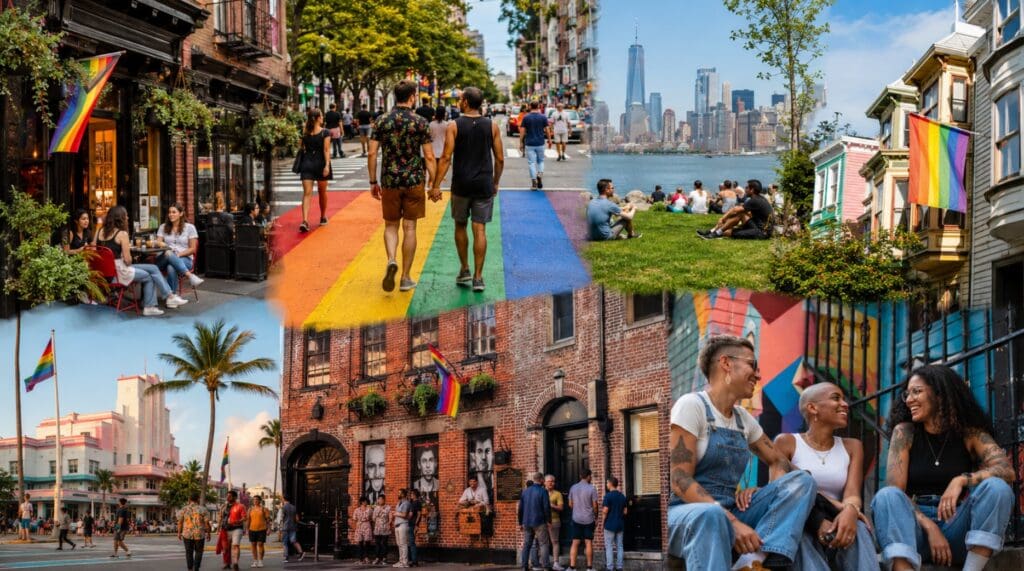
The best gay neighborhoods in the United States are not interchangeable nightlife districts.
Some are historic centers of liberation. Some are compact entertainment corridors. Others are residential neighborhoods where queer life is woven into cafés, bookstores, markets, parks, community centers, and ordinary routines. A few remain visibly LGBTQ+ from morning until late at night. Others have become more mixed as rents, gentrification, migration, and changing nightlife habits have dispersed their communities.
That distinction matters when planning a real trip.
A traveler who wants dancing, drag, and easy bar-hopping may love West Hollywood or Chicago’s Northalsted. Someone seeking history and walkability may prefer the Castro, Philadelphia’s Gayborhood, or the West Village. A couple looking for a restorative pool weekend may choose Palm Springs. Meanwhile, a visitor who values a smaller, community-driven scene may find Jacksonville’s Riverside and Five Points more meaningful than a larger but less personal destination.
This guide focuses on neighborhoods that offer genuine visit-in-person value: places where LGBTQ+ history, local businesses, hospitality, public space, and social life still intersect.
It also includes a practical reality check. A neighborhood can be welcoming while its state government is politically hostile. A famous gay district can still feel exclusionary to some visitors. A large nightlife scene is not automatically a strong community. Therefore, the best choice depends on your identity, budget, travel style, mobility needs, age, and reason for visiting.
Quick comparison: which gay neighborhood is right for you?
🗺️ LGBTQ+ Neighborhoods Across the U.S. 18 neighborhoods
From the historic Castro to the tropical vibes of Wilton Manors — every neighborhood from the guide, pinned on one map.
Data source: Ultimate LGBTQ+ Neighborhood Guide · Map data: OpenStreetMap
📍 Click any pin for neighborhood details · Zoom in for a closer look.
Before choosing a gay neighborhood: understand what “gayborhood” means in 2026
The traditional American gayborhood emerged partly from necessity. LGBTQ+ people needed areas where they could find housing, community, employment, political organization, health services, relationships, and relative safety.
Today, these neighborhoods face a complicated transition.
Legal progress and wider social acceptance have allowed many LGBTQ+ people to live more openly outside historic enclaves. At the same time, rising rents have displaced residents, bars, bookstores, nonprofits, and independent businesses. Dating apps have also reduced the need to visit a specific street simply to find other queer people.
As a result, many famous gay neighborhoods now serve several roles at once:
- historic landmark;
- nightlife destination;
- tourist attraction;
- residential neighborhood;
- community service hub;
- commercial brand;
- political symbol.
The strongest neighborhoods are those that still function for local people, not only visitors.
When planning, look beyond how many rainbow flags appear on one street. Ask whether the area has community institutions, daytime businesses, public gathering places, cultural programming, and a meaningful relationship to local LGBTQ+ history.
1. The Castro, San Francisco, California
Best for LGBTQ+ history, iconic streets, and a neighborhood-scale experience
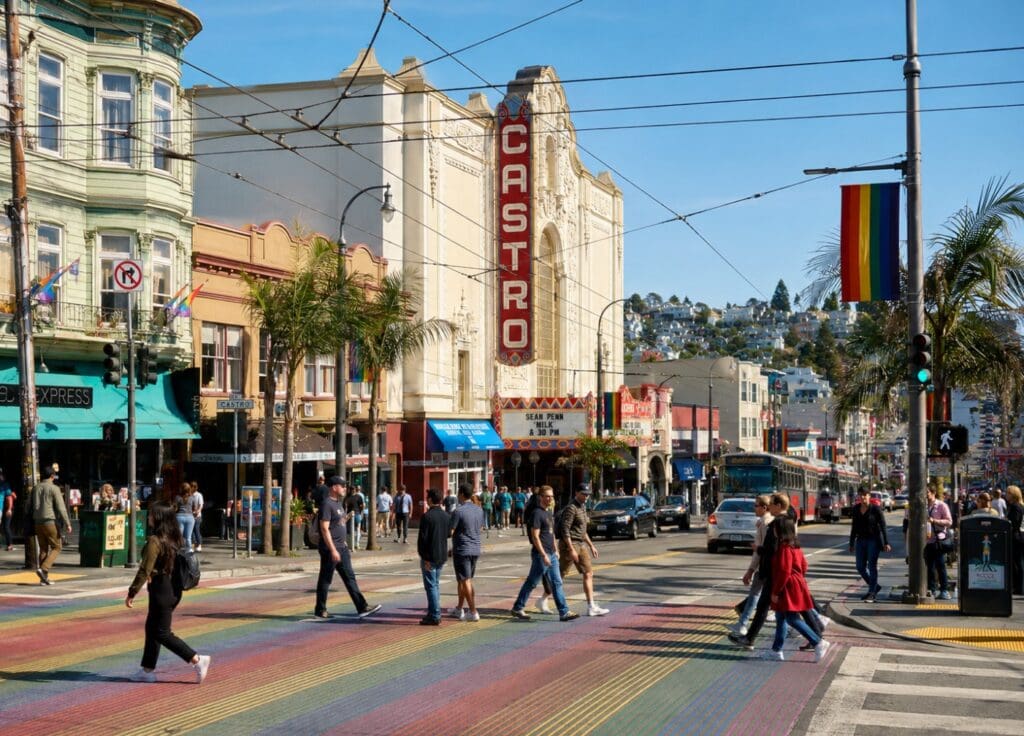
The Castro is not simply one of America’s best-known gay neighborhoods. It is one of the places where modern LGBTQ+ political identity became visible in urban public life.
San Francisco Travel describes it as the city’s LGBTQ+ cultural hub, with Victorian architecture, rainbow crosswalks, historic landmarks, restaurants, shops, and nightlife: https://www.sftravel.com/neighborhoods/castro.
The neighborhood’s importance comes from more than symbolism. Harvey Milk lived, worked, organized, and built political power here. The district became associated with public visibility at a time when being recognized entering a gay business could threaten someone’s job, housing, or safety.
Today, the Castro feels more like a lived neighborhood than a nonstop party strip. That is its greatest strength.
The real vibe
During the day, expect dog walkers, longtime residents, visitors photographing the rainbow crosswalks, neighborhood regulars in cafés, and people moving between the Castro and nearby Dolores Park.
At night, the energy grows, but the district usually remains easier to navigate than West Hollywood or New York’s busiest queer corridors. It works particularly well for travelers who want history, conversation, and nightlife without feeling that every evening must become a major production.
The Castro can also feel more intergenerational than many app-driven gay spaces. Older residents remain visible, community history is physically present, and several bars function as genuine neighborhood institutions.
What to do
Start near the intersection of Castro and Market Streets. Then explore:
- Harvey Milk Plaza;
- the Rainbow Honor Walk;
- the exterior of the Castro Theatre;
- the GLBT Historical Society Museum;
- Castro Street’s independent businesses;
- nearby Mission Dolores Park;
- the slopes and Victorian streets around Eureka Valley.
The GLBT Historical Society preserves and exhibits LGBTQ+ history and is an essential stop for travelers who want more than a photo opportunity.
For an old-school neighborhood bar experience, Twin Peaks Tavern sits at the gateway to the Castro. Its large street-facing windows have long represented the shift from hidden queer social life to public visibility.
San Francisco Travel’s current LGBTQ+ bar guide is useful for checking which venues are operating before your visit: https://www.sftravel.com/article/essential-lgbt-bars-san-francisco.
Where to stay
Staying directly in the Castro is ideal for atmosphere, but accommodation inventory is limited.
The Parker Guest House sits between the Castro, Mission, and Noe Valley and offers a quieter guesthouse experience with strong public transportation access.
You can also stay in:
- the Mission for restaurants and nightlife;
- Duboce Triangle for residential calm;
- Hayes Valley for central access;
- downtown near Market Street for simpler airport transportation.
How to get around
Do not rent a car solely for the Castro. Parking is difficult, hills are real, and public transportation is far easier.
Muni Metro and the historic F Market streetcar connect the neighborhood with downtown. Walking between the Castro, Mission Dolores, and Dolores Park is manageable, although elevation changes can be tiring.
Insider strategy
Visit once in the morning and again after dark. The contrast explains the neighborhood better than any single bar crawl.
During daylight, focus on history and architecture. In the evening, choose one or two venues rather than trying to “complete” the Castro. This is a neighborhood best understood through time, not speed.
2. West Hollywood’s Rainbow District, California
Best for glamorous nightlife, density, and an easy first gay trip to Los Angeles
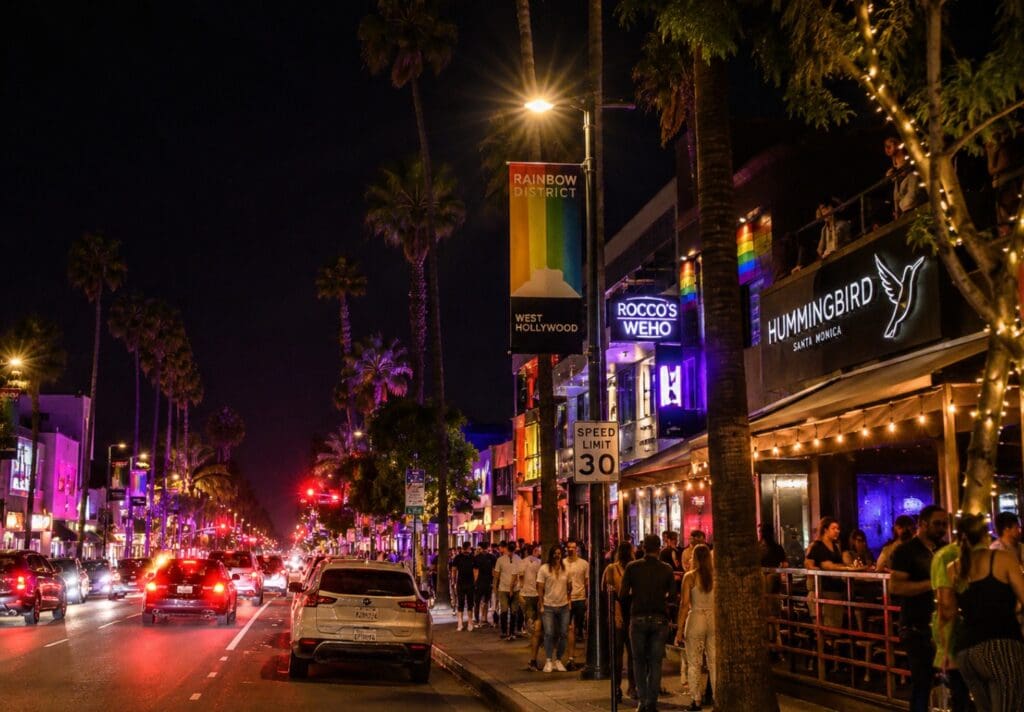
West Hollywood is technically its own city, surrounded by Los Angeles but governed independently. Its Rainbow District stretches for roughly one mile along Santa Monica Boulevard between La Cienega Boulevard and Doheny Drive.
Visit West Hollywood describes the corridor as home to more than 50 LGBTQ+-owned or allied businesses, restaurants, bars, clubs, and shops: https://www.visitwesthollywood.com/neighborhoods/rainbow-district/.
This is one of the easiest LGBTQ+ nightlife districts in the country to understand. Once you arrive, you can walk between venues rather than spending the entire evening in rideshares.
The real vibe
West Hollywood is social, visible, polished, and performance-conscious.
People dress to be seen. Patios matter. Brunch often turns into drinks, and drinks can turn into dancing without anyone formally deciding that the night has begun.
However, WeHo is more diverse than its glossy reputation suggests. You will find sports bars, dance clubs, casual patios, drag, restaurants, queer history, design, and quieter neighborhood businesses.
The crowd changes significantly by venue, time, and day. Early evenings feel more conversational. Late Friday and Saturday nights can become dense, loud, and highly image-conscious.
What to do
Begin with a daytime walk through West Hollywood Park and the surrounding Rainbow District. Visit:
- the inclusive crosswalks;
- ONE Gallery;
- STORIES: The AIDS Monument;
- West Hollywood Library;
- the shops and murals around Santa Monica Boulevard.
The city’s official LGBTQ+ guide is the best starting point for current programming: https://www.visitwesthollywood.com/experiences/lgbtq/.
For nightlife, The Abbey remains one of the district’s most recognizable destinations, while Hi Tops West Hollywood offers a more casual queer sports-bar setting.
Visit West Hollywood publishes a current Rainbow District itinerary here: https://www.visitwesthollywood.com/stories/guide-to-west-hollywood-rainbow-district/.
Where to stay
Stay within walking distance of Santa Monica Boulevard if nightlife is your priority. This allows you to avoid surge-priced rideshares and complicated late-night transportation.
For luxury, The West Hollywood EDITION sits near the western edge of the city. Other useful locations include hotels along Sunset Boulevard or in the residential blocks just north of Santa Monica Boulevard.
However, always check the exact map. A property described as “West Hollywood area” may actually be farther away in Hollywood, Beverly Hills, or Los Angeles proper.
How to get around
Inside the Rainbow District, walk.
For the rest of Los Angeles, expect to use buses, rideshare, or a rental car. West Hollywood does not currently have its own subway station. Traffic between WeHo, Downtown Los Angeles, Santa Monica, and Silver Lake can be substantial.
Build each day geographically. Do not schedule lunch in Santa Monica, an afternoon museum near Downtown, dinner in Los Feliz, and a night in WeHo unless you enjoy sitting in traffic.
Insider strategy
Arrive before 9 p.m. if you want conversation and easier entry. After 10:30 or 11 p.m., the district becomes more crowded and lines can grow quickly.
If the high-glamour energy feels exhausting, start at a patio or sports bar and treat the busier clubs as optional rather than mandatory.
3. Northalsted, Chicago, Illinois
Best for major Pride events, dance floors, sports bars, and an easy nightlife circuit
Northalsted, historically known as Boystown, is one of the most established LGBTQ+ commercial districts in the United States.
Choose Chicago describes it as the country’s oldest officially recognized gay neighborhood and the center of major Pride celebrations: https://www.choosechicago.com/neighborhoods/boystown/.
The neighborhood runs primarily along North Halsted Street in East Lakeview, with bars, restaurants, shops, theaters, and the Legacy Walk.
The real vibe
Northalsted is energetic, approachable, and highly social.
Compared with West Hollywood, it generally feels less fashion-driven and more Midwestern in its ease. Groups gather for sports, drag, karaoke, dancing, brunch, street festivals, and neighborhood events.
The district can feel intensely gay-male-oriented on certain weekend nights. However, its venues and public events attract a broader LGBTQ+ crowd, particularly during Pride Fest and Market Days.
What to do
Walk the Legacy Walk, an outdoor LGBTQ+ history installation along Halsted Street.
Then explore the bars, cafés, restaurants, and local businesses between Belmont and Addison. The Center on Halsted is one of the Midwest’s most important LGBTQ+ community centers and provides programs, events, cultural offerings, and social services.
Northalsted’s official district website maintains current business and event listings: https://northalsted.com/.
If you visit in summer, check:
- Chicago Pride Fest;
- the Chicago Pride Parade;
- Northalsted Market Days.
The 2026 Market Days festival is scheduled for August 7 through 9, according to the official event page: https://northalsted.com/main-events/northalsted-market-days/.
Where to stay
The Best Western Plus Hawthorne Terrace is one block from Northalsted and provides a practical Lakeview base.
You can also stay near:
- Wrigleyville for nightlife and baseball;
- Lincoln Park for a quieter, upscale environment;
- downtown for major attractions, although you will need to take the train north.
How to get around
The Belmont and Addison CTA stations provide access to the Red Line, with additional connections depending on the station and service.
The district itself is walkable. In colder months, distances feel longer than they appear on a map, so dress for wind and lake-effect weather.
Insider strategy
For a relaxed neighborhood night, visit on Thursday or Sunday. For maximum energy, choose Friday or Saturday.
During Market Days or Pride weekend, book accommodations early and do not expect a normal neighborhood experience. The area becomes an enormous outdoor event zone.
4. Andersonville, Chicago, Illinois
Best for queer-owned businesses, bookstores, brunch, and a calmer community atmosphere
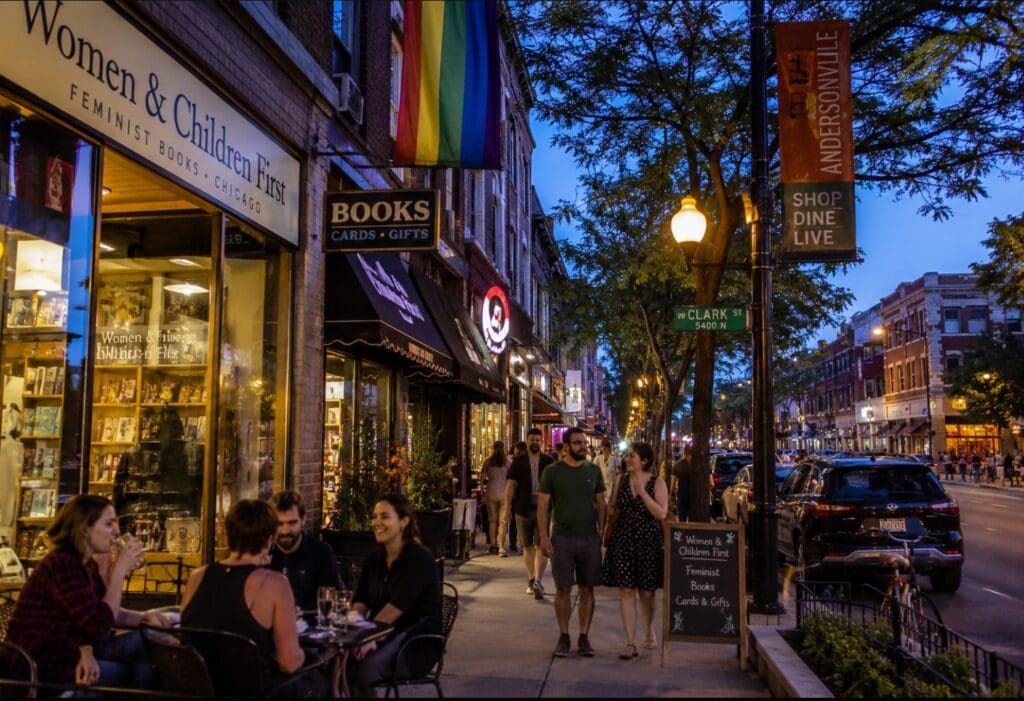
Andersonville offers a different expression of LGBTQ+ Chicago.
Choose Chicago describes the historically Swedish neighborhood as home to one of the city’s largest LGBTQ+ communities, with an artisanal and independent-business character: https://www.choosechicago.com/neighborhoods/andersonville/.
If Northalsted is where many visitors go to party, Andersonville is where many queer Chicagoans go to live, eat, shop, date, and spend an unhurried weekend afternoon.
The real vibe
Andersonville feels mature, residential, creative, and less performative.
Its strongest feature is not a single club. It is the concentration of independent shops, restaurants, home stores, neighborhood bars, bakeries, and community-oriented businesses along Clark Street.
The area tends to appeal to travelers who want queer visibility without a constant nightlife soundtrack. It is also a good choice for lesbian, queer, trans, and mixed LGBTQ+ groups looking for a less male-dominated commercial environment.
What to do
Walk Clark Street slowly. Browse independent shops, stop for coffee, eat brunch, and check local calendars for events.
The Swedish American Museum provides context for the neighborhood’s earlier history, while Women & Children First has long served as an important feminist and LGBTQ+-inclusive bookstore: https://www.womenandchildrenfirst.com/.
Where to stay
Andersonville has fewer conventional hotels than downtown or Lakeview. Consider:
- a licensed vacation rental within walking distance of Clark Street;
- a hotel in nearby Edgewater;
- Northalsted or Lakeview if you want easier nightlife access.
How to get around
The neighborhood is walkable once you arrive. The CTA Red Line runs east of the main Clark Street corridor, so expect a walk or short bus ride from the station.
Insider strategy
Choose Andersonville for daytime and early evening. Then travel to Northalsted only if you want more intense nightlife.
Combining both neighborhoods gives visitors a fuller picture of queer Chicago: one built around nightlife and public celebration, the other around everyday community life.
5. The West Village and Hell’s Kitchen, New York City
Best for historic pilgrimage, Broadway, dense nightlife, and multiple generations of gay New York
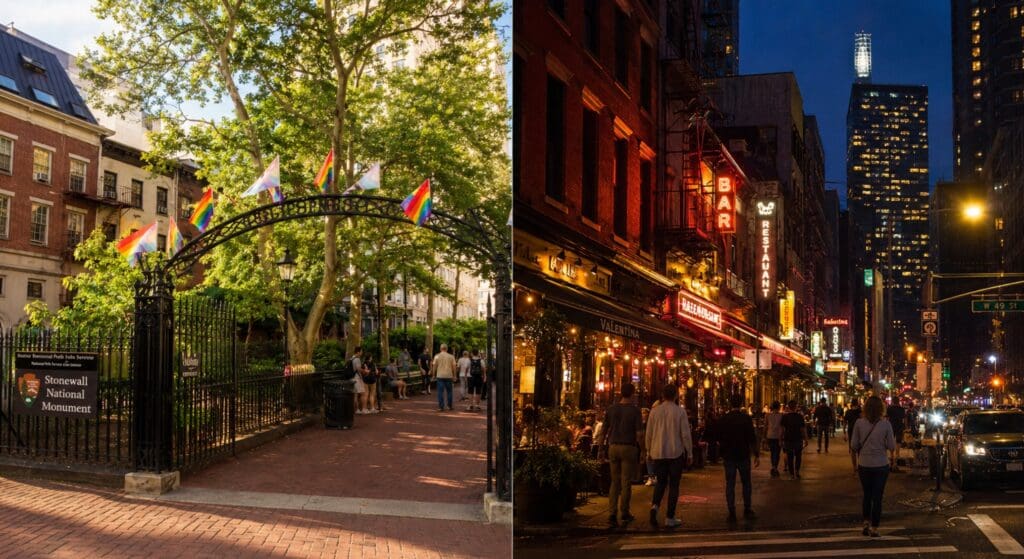
New York does not have one gay neighborhood. It has layers of queer geography.
The West Village represents historic LGBTQ+ New York. Chelsea became a major gay residential and nightlife center in later decades. Hell’s Kitchen now holds one of Manhattan’s densest concentrations of gay bars and restaurants.
NYC Tourism describes the West Village and Chelsea as the historic LGBTQ+ landscape, with Hell’s Kitchen representing a newer center of activity: https://www.nyctourism.com/articles/gay-nyc/.
The West Village: history and intimacy
The West Village is where visitors go to connect with the history of Stonewall, early activism, queer literature, and generations of nightlife.
The Stonewall National Monument is the essential starting point. However, do not treat it as a single-photo stop. Walk Christopher Street, Sheridan Square, Grove Street, and the surrounding residential blocks.
The West Village feels more intimate than Hell’s Kitchen. Streets are narrower, buildings are older, and nightlife is embedded in a neighborhood that also includes restaurants, jazz, theaters, and expensive residential life.
Hell’s Kitchen: modern gay Manhattan
Hell’s Kitchen, particularly around Ninth and Tenth Avenues in the West 40s and 50s, has become one of the city’s most active gay nightlife zones.
Its advantages are practical:
- proximity to Broadway;
- a high concentration of restaurants;
- late-night dining;
- multiple bars within walking distance;
- convenient subway access;
- many hotels.
The energy is faster, louder, and more contemporary than the West Village. Depending on the night, it may also feel more appearance-conscious and crowded.
NYC Tourism maintains a broader LGBTQ+ guide here: https://www.nyctourism.com/maps-guides/lgbtq-nyc/.
Where to stay
Stay in Hell’s Kitchen if nightlife and Broadway are priorities. Stay in the West Village, Greenwich Village, Chelsea, or SoHo if atmosphere and downtown walking matter more.
Remember that Manhattan hotel pricing can change dramatically by date. A ten-minute subway ride may save hundreds of dollars.
How to get around
Use the subway and walk. Taxis and rideshares can be slow in Midtown.
The West Village’s street grid is confusing because it does not follow Manhattan’s usual numbered pattern. Save your hotel and key venues offline.
Insider strategy
Do not try to experience “gay New York” in one neighborhood.
Spend one afternoon in the West Village for history and cafés. Use another evening for Hell’s Kitchen. Then explore queer spaces in Brooklyn, Queens, or Harlem if your schedule allows.
New York’s LGBTQ+ culture is strongest when visitors understand that no single district represents everyone.
6. Philadelphia’s Gayborhood, Pennsylvania
Best for a compact weekend, LGBTQ+ history, piano bars, and easy walking
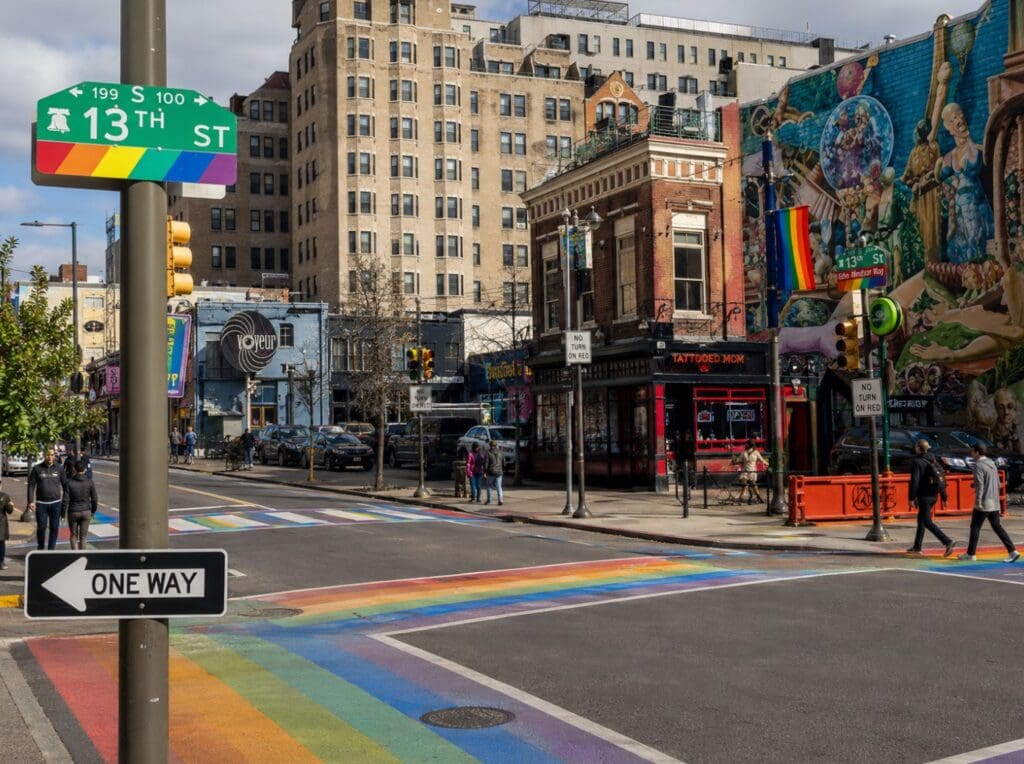
Philadelphia’s Gayborhood sits within Midtown Village and Washington Square West, roughly between Broad and 11th Streets and Chestnut and Pine Streets.
Visit Philadelphia identifies it as the center of the city’s LGBTQ+ life and culture since the mid-20th century: https://www.visitphilly.com/lgbtq/.
The neighborhood is one of the most practical LGBTQ+ destinations for a two- or three-day trip because it is compact, walkable, and surrounded by major historic attractions.
The real vibe
Philadelphia’s Gayborhood feels social without being overwhelmingly polished.
It combines bars, restaurants, theaters, murals, bookstores, coffee shops, and residential streets. Visitors can move easily between LGBTQ+ businesses and broader Center City attractions.
There is also a sense of continuity. Historic institutions remain visible, even as new venues and visitor resources appear.
What to do
Begin at the Philly Pride Visitor Center, which opened at 12th and Locust Streets in 2026 as a dedicated resource for LGBTQ+ travelers and allies.
Then visit:
- rainbow street signs and crosswalks;
- Philly AIDS Thrift at Giovanni’s Room;
- local murals;
- theaters and restaurants around 13th Street;
- nearby Washington Square.
Visit Philadelphia’s neighborhood guide is particularly useful: https://www.visitphilly.com/areas/philadelphia-neighborhoods/midtown-village/.
For nightlife, Tavern on Camac offers several distinct experiences in one building: restaurant, piano bar, and upstairs dancing.
Philly AIDS Thrift at Giovanni’s Room combines LGBTQ+ books, community history, and fundraising.
Where to stay
The Alexander Inn is located in the heart of Center City near the Gayborhood and is one of the most convenient neighborhood options.
Other hotels around Rittenhouse Square, Midtown Village, or Washington Square West provide easy access on foot.
How to get around
The Gayborhood is highly walkable. SEPTA’s subway and regional rail systems connect Center City with the airport and other neighborhoods.
Philadelphia is also easy to reach from New York and Washington by train, making it ideal for a car-free East Coast trip.
Insider strategy
Start the evening at a restaurant or piano bar, then decide whether to move to a dance venue. The neighborhood rewards flexible plans because distances are short.
During Pride or OURfest, expect a much larger and more public community presence than on a typical weekend.
7. Dupont Circle and Logan Circle, Washington, DC
Best for museums, LGBTQ+ history, polished nightlife, and politically engaged travelers
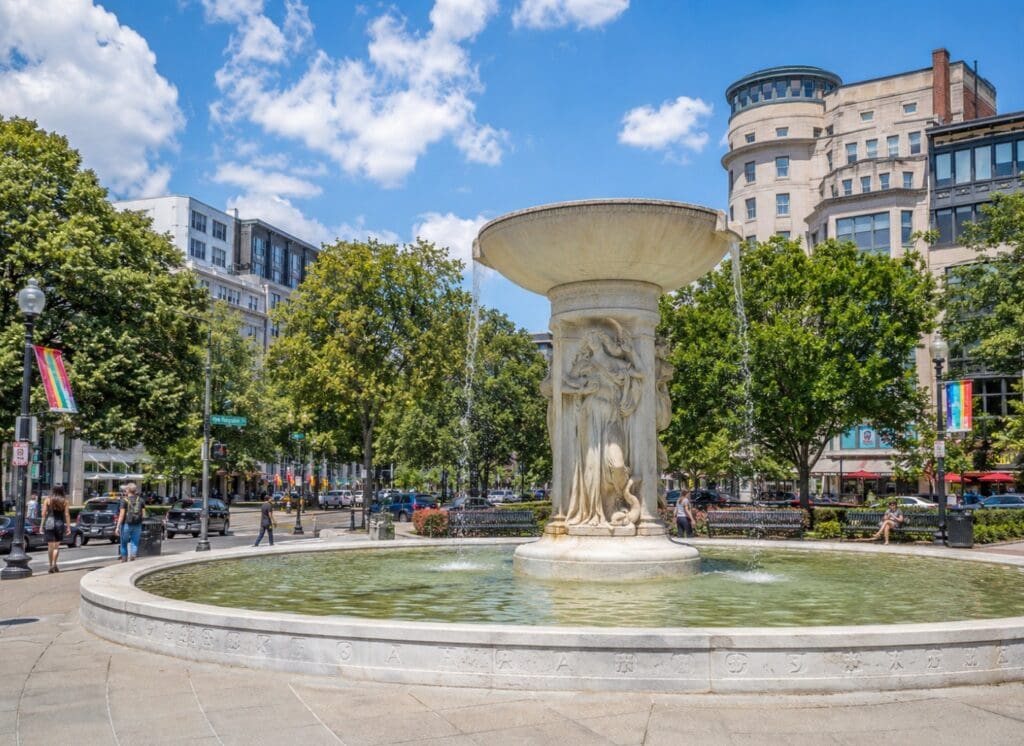
Washington’s LGBTQ+ geography has shifted over time, but Dupont Circle remains essential to understanding the city’s queer history.
Destination DC notes that the community took root there in the 1960s and 1970s, with townhouses serving as social spaces, activist offices, and early business locations: https://washington.org/dc-itinerary/2-days-lgbtq-history.
Today, much of the visible nightlife extends east into Logan Circle and the 14th Street corridor.
The real vibe
Dupont Circle feels cosmopolitan, intellectual, and social. People gather around the fountain, browse bookstores, attend museums, work in policy, and move between brunches, happy hours, cultural events, and nightlife.
Logan Circle has a more contemporary restaurant-and-bar energy, with stylish venues and a dense professional crowd.
DC’s LGBTQ+ scene is notably connected to advocacy, public service, media, diplomacy, nonprofit work, and national politics. However, visitors do not need to be political insiders to enjoy it.
What to do
Spend time at the Dupont Circle fountain, walk 17th Street, visit local bookstores, and explore nearby cultural institutions.
Destination DC’s LGBTQ+ experience guide recommends businesses and landmarks across Dupont and Logan: https://washington.org/visit-dc/lgbtq-things-to-do.
Its current LGBTQ+-owned business guide is helpful for planning daytime stops: https://washington.org/dei/lgbtq-businesses-washington-dc.
For nightlife, Destination DC maintains an updated bar guide: https://washington.org/visit-dc/lgbtq-bars-check-out-washington-dc.
Where to stay
Stay near:
- Dupont Circle Metro for maximum convenience;
- Logan Circle for restaurants and nightlife;
- Thomas Circle for a central compromise;
- downtown if museums and monuments are the main focus.
The key is proximity to Metro, especially during hot, humid summers.
How to get around
DC’s Metrorail is useful, and the central neighborhoods are highly walkable. Bikeshare also works well during mild weather.
Avoid driving unless necessary. Parking is expensive and street restrictions are easy to misunderstand.
Insider strategy
DC social life often begins earlier than in New York or Los Angeles. Happy hour matters. Weeknight events can be more rewarding than late weekend clubbing.
Check calendars for lectures, community fundraisers, performances, and museum programming. The city’s queer culture frequently appears outside conventional nightlife.
8. Capitol Hill, Seattle, Washington
Best for alternative nightlife, coffee culture, music, and an openly queer everyday environment
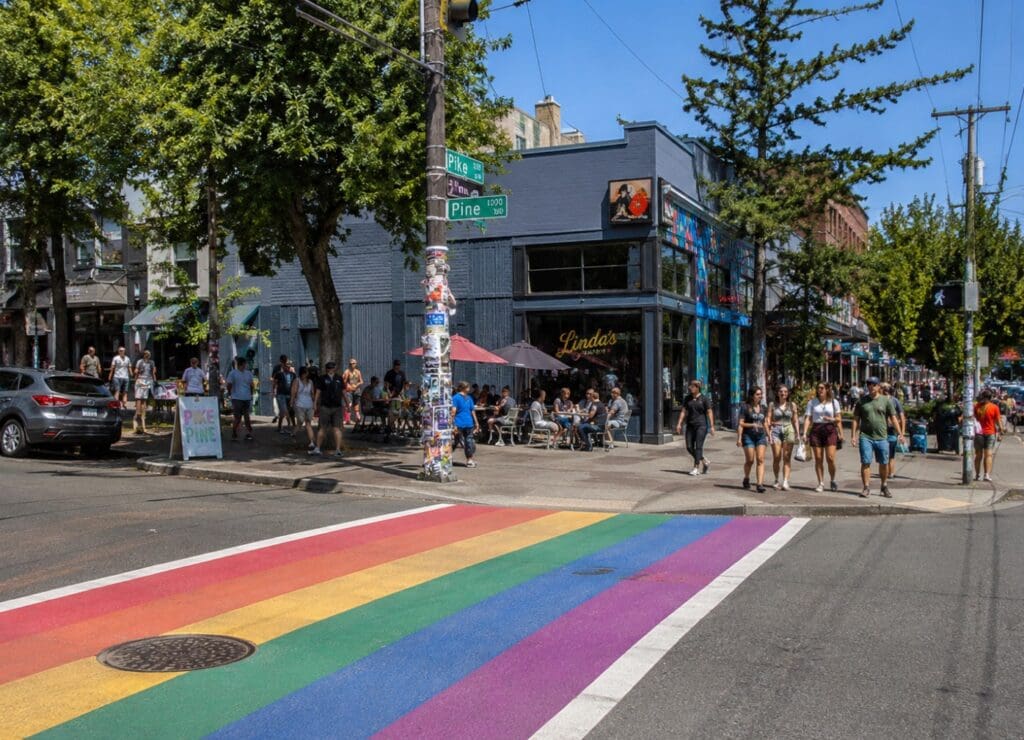
Capitol Hill is Seattle’s best-known LGBTQ+ neighborhood and one of the country’s strongest examples of queer culture integrated into everyday urban life.
Visit Seattle describes it as the city’s LGBTQIA+ cultural epicenter, combining long-running hangouts, restaurants, boutiques, public art, and green spaces: https://visitseattle.org/neighborhoods/capitol-hill/.
The real vibe
Capitol Hill is creative, politically aware, youthful, and less polished than West Hollywood.
It contains dance clubs, cocktail bars, dive bars, live music, coffee shops, bookstores, parks, vintage stores, restaurants, and community institutions. The neighborhood attracts a broad mix of LGBTQ+ people rather than centering only one nightlife demographic.
The Pike/Pine corridor is the busiest part of the district. Residential streets become quieter as you move north toward Volunteer Park.
What to do
Walk the rainbow crosswalks, browse local shops, spend time in Cal Anderson Park, and visit Volunteer Park.
Visit Seattle’s LGBTQ+ guide provides current citywide resources and events: https://visitseattle.org/things-to-do/lgbtq/.
Capitol Hill is particularly strong for visitors who want to move naturally between coffee, shopping, food, music, and nightlife rather than visiting a sealed entertainment zone.
Where to stay
Stay near the Capitol Hill light rail station or on the quieter northern edge of the neighborhood.
Downtown also works because light rail makes the trip easy. However, staying directly on Pike or Pine can be noisy on weekend nights.
How to get around
Link light rail connects Capitol Hill with downtown and Seattle-Tacoma International Airport.
The neighborhood is walkable but hilly. Bring a waterproof layer rather than relying on a large umbrella, especially during crowded evenings.
Insider strategy
Capitol Hill is strongest from late afternoon onward. Start with a bookstore, coffee shop, park, or restaurant before nightlife.
Do not confine yourself to Pike/Pine. Walking north reveals a more residential and less hectic version of queer Seattle.
9. Wilton Manors, Florida
Best for a dense concentration of LGBTQ+ businesses, tropical nightlife, and community visibility
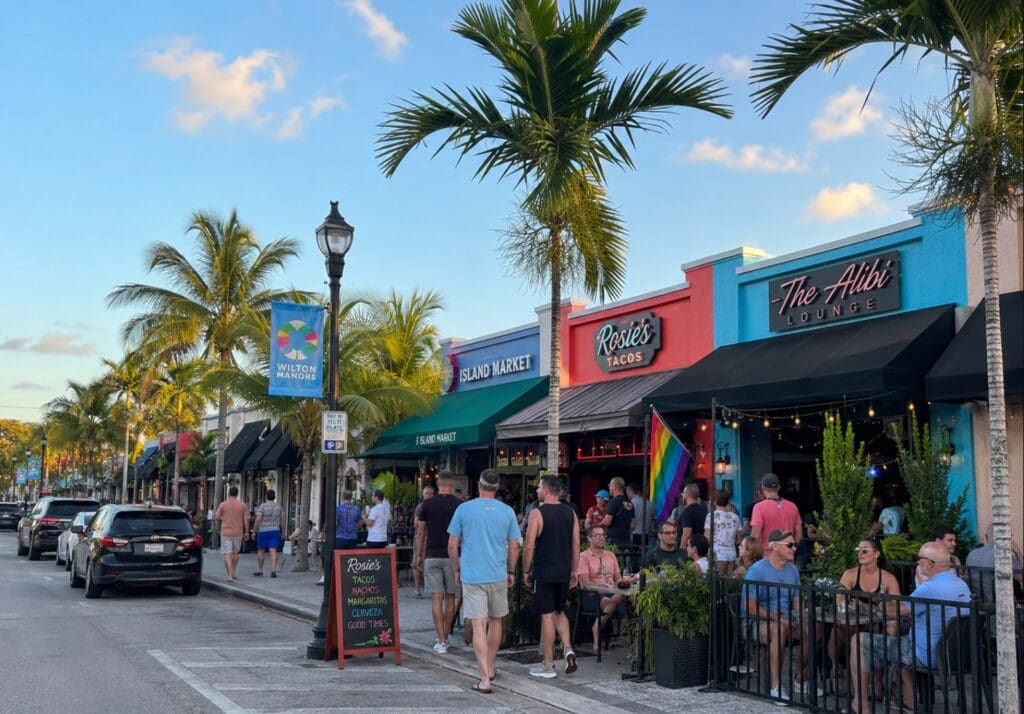
Wilton Manors is a small city within the Greater Fort Lauderdale area, not simply a neighborhood of Fort Lauderdale.
Its main commercial corridor, Wilton Drive, contains one of the country’s highest concentrations of LGBTQ+-owned and LGBTQ+-focused businesses.
Visit Lauderdale calls Wilton Manors South Florida’s best-known gayborhood and highlights its bars, shops, restaurants, and community institutions: https://www.sunny.org/places-to-stay/search-by-region/central-region/wilton-manors/.
The real vibe
Wilton Manors is social, compact, tropical, and community-driven.
Unlike districts that become visibly queer only at night, Wilton Drive maintains an LGBTQ+ presence throughout the day. Visitors will see couples, local residents, business owners, travelers, and community groups moving through the same small area.
Nightlife can be energetic, but the city also supports casual lunches, shopping, events, nonprofit activity, and neighborhood routines.
What to do
Walk Wilton Drive, visit LGBTQ+-owned businesses, eat locally, and check current event calendars.
The Stonewall National Museum, Archives & Library operates in the Fort Lauderdale area and offers important LGBTQ+ historical collections and programming.
Visit Lauderdale’s broader LGBTQ+ guide is useful for combining Wilton Manors with beaches and Fort Lauderdale: https://www.sunny.org/LGBTQ-Travel.
Where to stay
Wilton Manors has guesthouses and short-term accommodations, but many visitors stay closer to Fort Lauderdale Beach.
The Royal Palms Resort & Spa is an LGBTQ+-associated option in North Beach Village.
Choose based on your priorities:
- Wilton Manors for walking to nightlife;
- Fort Lauderdale Beach for ocean access;
- downtown Fort Lauderdale for a central compromise.
How to get around
Wilton Drive is walkable, but the wider Fort Lauderdale region is spread out. Rideshare is often the easiest way to move between the gayborhood, downtown, and the beach.
Do not drink and drive. Nightlife parking may be limited, and South Florida traffic can be unpredictable.
Florida travel context
Wilton Manors and Fort Lauderdale have strong, visible LGBTQ+ communities. At the same time, statewide policy debates and legislation may affect LGBTQ+ residents and visitors differently, particularly trans people and families.
Equality Florida maintains a travel advisory and current resources here: https://www.eqfl.org/florida-travel-advisory.
Trans travelers can also consult Equality Florida’s current travel guidance: https://www.eqfl.org/know-before-you-go.
Insider strategy
Spend at least one afternoon in Wilton Manors before going out at night. The city makes more sense when you see its businesses and community life in daylight.
10. Arenas District, Palm Springs, California
Best for poolside relaxation, mature and Bear travelers, warm weather, and compact nightlife
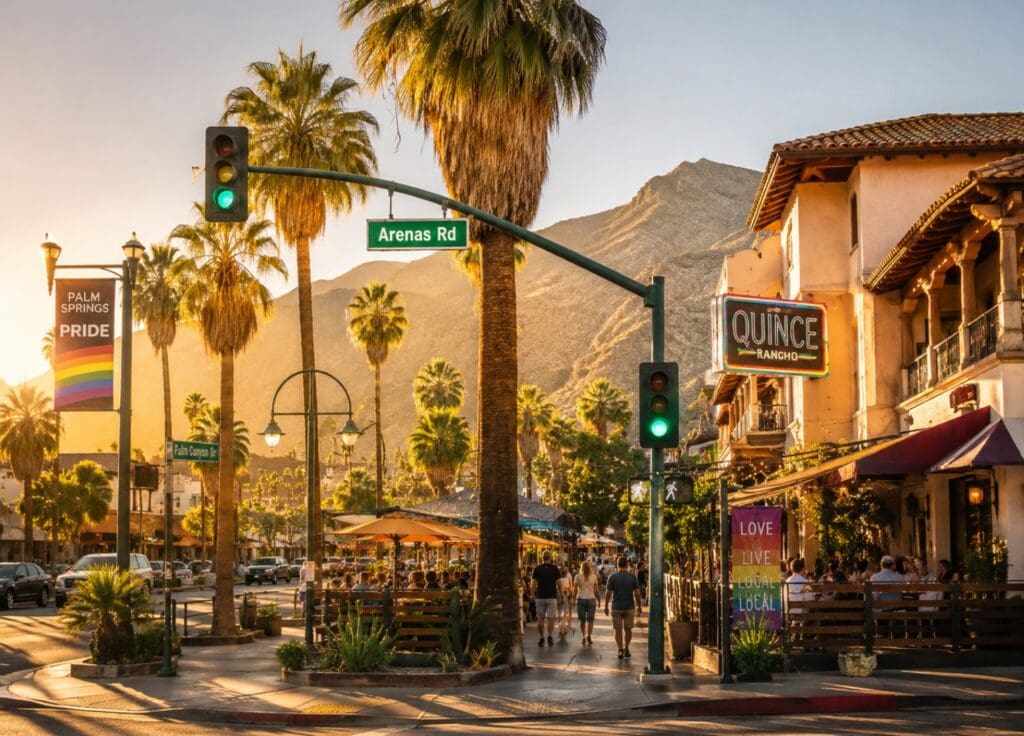
Palm Springs has become one of America’s most recognizable LGBTQ+ leisure destinations.
The Arenas District, located just off Indian Canyon Drive in downtown Palm Springs (Calfornia), is the center of the city’s gay nightlife and dining scene. Visit Greater Palm Springs provides a current guide here: https://www.visitgreaterpalmsprings.com/lgbtq/nightlife-and-dining/arenas-district/.
The real vibe
Palm Springs is relaxed by day and highly social after sunset.
The city attracts a particularly broad age range, including mature travelers, Bears, couples, solo visitors, pool-resort regulars, architecture fans, festival travelers, and people seeking a break from more appearance-driven coastal nightlife scenes.
Arenas Road itself is compact. You can move between bars, restaurants, shops, and patios without transportation.
What to do
Explore downtown, visit the Palm Springs Art Museum, book a modernist architecture tour, ride the aerial tramway, and spend intentional time by the pool.
At night, Arenas Road offers bars, karaoke, dancing, patios, shops, and casual restaurants.
Visit Greater Palm Springs’ current gay-bar guide highlights venues such as Streetbar, Chill Bar, and Blackbook: https://www.visitgreaterpalmsprings.com/lgbtq/nightlife-and-dining/gay-bars/.
Where to stay
Palm Springs has one of the country’s strongest selections of LGBTQ+-focused lodging.
Visit Greater Palm Springs maintains an updated hotel and resort directory: https://www.visitgreaterpalmsprings.com/lgbtq/hotels/.
Options include:
- boutique gay resorts;
- clothing-optional properties;
- luxury hotels;
- midcentury motels;
- romantic couple-oriented resorts;
- larger mainstream properties downtown.
Read each property’s policies carefully. Some resorts are designed specifically for adult men, while others welcome a broader LGBTQ+ clientele.
How to get around
Downtown and Arenas Road are walkable. A rental car is useful for hiking, desert drives, Joshua Tree, or nearby cities.
In summer, walking even short distances during the afternoon can be unsafe due to extreme heat. Use rideshare, hydrate, and plan outdoor activity early.
Insider strategy
Palm Springs rewards a slower schedule. Do not fill every hour.
A successful trip may consist of breakfast, pool, nap, dinner, and Arenas Road. That is not wasting time. It is the point.
11. The French Quarter and Marigny, New Orleans, Louisiana
Best for live performance, queer history, festivals, and nightlife with local character
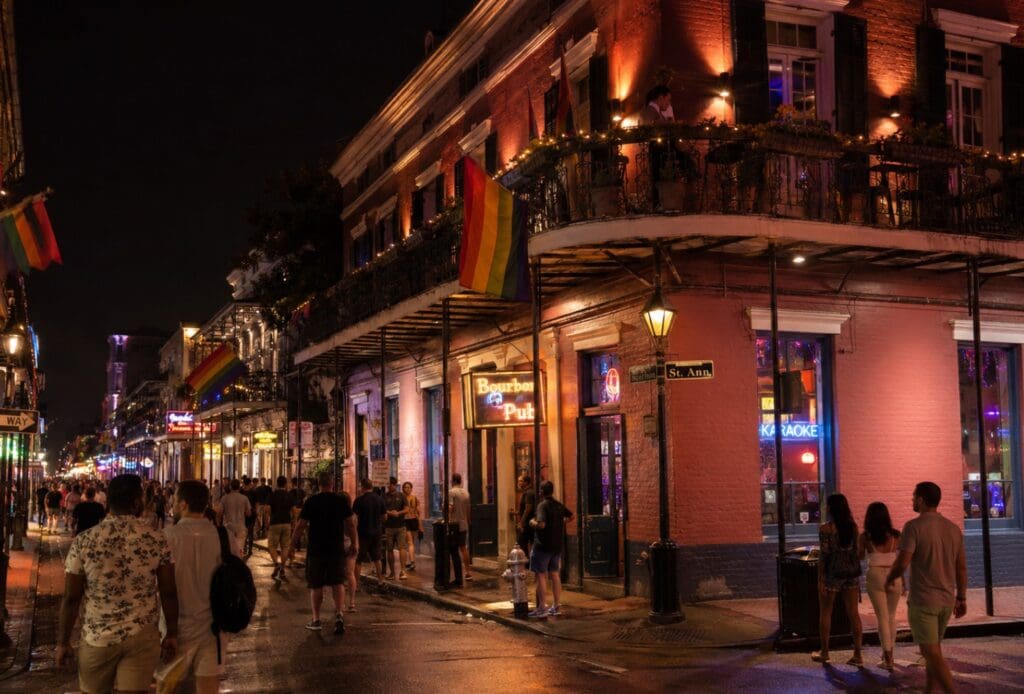
New Orleans (Louisiana)does not separate queer culture neatly from the rest of the city. LGBTQ+ history, costume, music, nightlife, hospitality, and public celebration are deeply woven into local identity.
The French Quarter contains the city’s most concentrated gay nightlife, particularly near Bourbon and St. Ann Streets. The Marigny adds a more performance-driven and neighborhood-oriented queer culture.
New Orleans & Company’s official LGBTQ+ guide is here: https://www.neworleans.com/things-to-do/lgbt/.
The real vibe
The French Quarter is intense, theatrical, tourist-heavy, and open late. It can be joyful and overwhelming in equal measure.
The Marigny feels more local, artistic, and performance-oriented. It is the better choice for cabaret, live shows, queer theater, and a less standardized night out.
Together, the two areas offer one of the most distinctive LGBTQ+ travel experiences in the country.
What to do
In the French Quarter:
- walk Royal Street during the day;
- explore Jackson Square;
- take an LGBTQ+ history tour;
- visit the St. Ann and Bourbon nightlife area;
- attend a drag or live-performance event.
In the Marigny:
- check the calendar at AllWays Lounge and Cabaret;
- explore Frenchmen Street;
- eat locally rather than remaining on Bourbon Street;
- walk residential blocks during daylight.
New Orleans’ official LGBTQ+ itinerary recommends venues, history tours, and neighborhood stops: https://www.neworleans.com/plan/itineraries/lgbt-itinerary/.
Where to stay
Stay in the lower French Quarter if you want access without being directly above the loudest nightlife.
Choose the Marigny for guesthouses, neighborhood character, and a more residential feel. Central Business District hotels often provide quieter rooms and easier rideshare pickup.
Always read recent noise reviews. A charming balcony room can become difficult when music continues into the early morning.
How to get around
The French Quarter and Marigny are walkable. Streetcars are useful for other parts of the city, but they are not always the fastest option.
Use rideshare late at night when traveling beyond busy, well-lit areas.
Safety and weather
New Orleans requires standard urban awareness:
- keep valuables secure;
- avoid poorly lit side streets when alone;
- hydrate in heat and humidity;
- monitor hurricane forecasts during storm season;
- do not leave drinks unattended.
Insider strategy
The neighborhood is best before and after the peak Bourbon Street crowds.
Walk the Quarter in the morning, rest in the afternoon, eat well, then choose a performance or specific venue rather than wandering without a plan all night.
12. Midtown, Atlanta, Georgia
Best for Southern LGBTQ+ culture, parks, arts, dining, and a diverse metropolitan scene
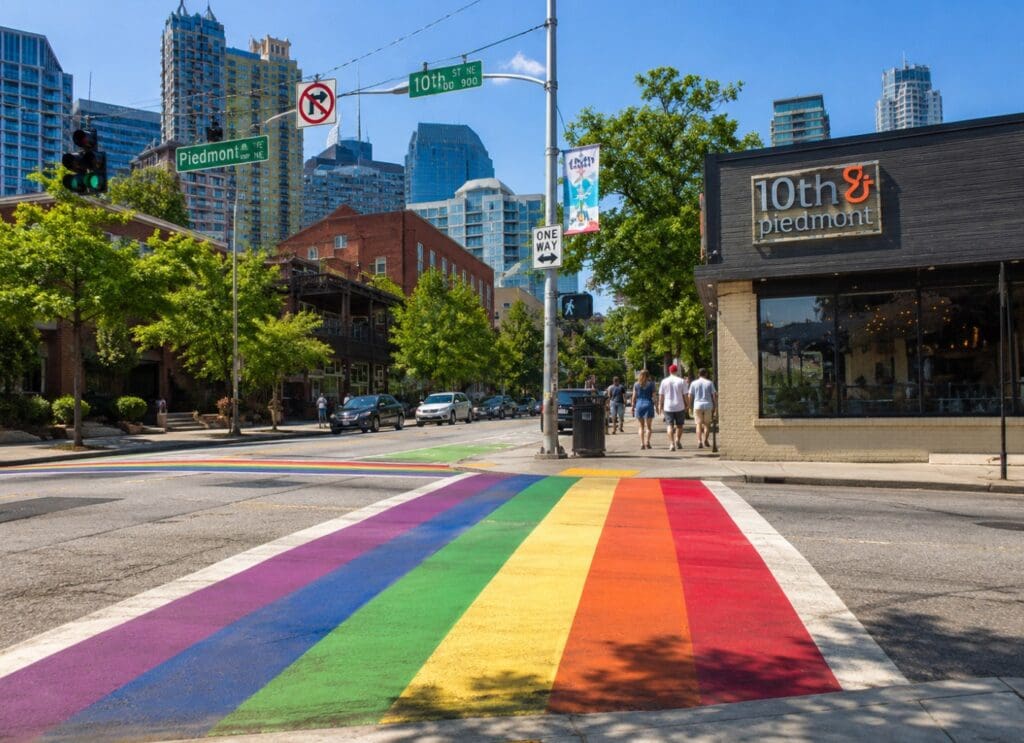
Midtown is Atlanta’s original gayborhood and remains an important starting point for LGBTQ+ visitors.
Discover Atlanta identifies the intersection of 10th Street and Piedmont Avenue as a core landmark in the city’s LGBTQ+ geography: https://discoveratlanta.com/explore/lgbt/neighborhoods/.
The real vibe
Midtown is urban, professional, culturally active, and connected to one of the South’s largest LGBTQ+ populations.
The area combines:
- Piedmont Park;
- arts institutions;
- restaurants;
- bars;
- high-rise residential life;
- hotels;
- the rainbow crosswalk;
- access to Atlanta Pride events.
Atlanta’s LGBTQ+ community is racially and culturally diverse, and queer life extends far beyond Midtown into East Atlanta, Decatur, Cheshire Bridge, West Midtown, and other parts of the metro area.
What to do
Start at the rainbow crosswalk at 10th and Piedmont. Then walk toward Piedmont Park, visit the High Museum of Art, explore nearby restaurants, and check current nightlife listings.
Discover Atlanta’s Midtown LGBTQ+ guide is useful for planning a day: https://discoveratlanta.com/stories/things-to-do/a-travelers-lgbtq-guide-to-midtown-atlanta/.
The city’s current nightlife guide includes venues across several neighborhoods: https://discoveratlanta.com/explore/lgbt/nightlife/.
Where to stay
Midtown is one of Atlanta’s best hotel areas because it combines walkability with MARTA access.
Stay near the Midtown or Arts Center stations. This gives you straightforward airport transportation and easier access to downtown attractions.
How to get around
MARTA connects the airport with Midtown and several central areas. However, Atlanta is geographically large, and many LGBTQ+ venues are outside comfortable walking distance.
Use rideshare strategically and group your plans by neighborhood.
Insider strategy
Do not assume Midtown contains the entire queer city. Spend time there, but also research current events in East Atlanta, Decatur, and other community hubs.
Atlanta rewards visitors who understand its scene as a network rather than a single strip.
13. Riverside, Avondale and Five Points, Jacksonville, Florida
Best for smaller-city queer culture, historic neighborhoods, cafés, markets, and genuine local connection
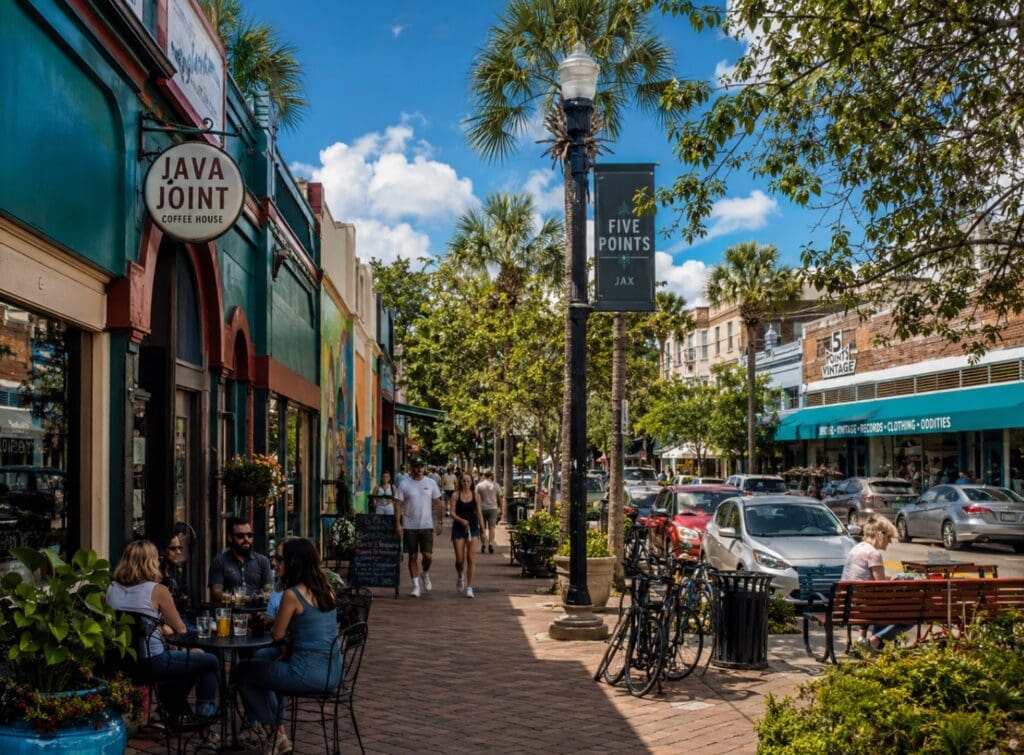
Riverside, Avondale, and Five Points are among the most overlooked LGBTQ+-friendly urban areas in the Southeast.
Visit Jacksonville identifies the historic district as home to LGBTQIA+-owned and friendly businesses and as the place where the city’s community first gathered for its inaugural Pride festivities: https://www.visitjacksonville.com/blog/an-lgbtqia-guide-to-jacksonvilles-riverside-avondale-five-points/.
This is not a dense gay nightlife district comparable to Wilton Manors or West Hollywood. Its appeal is more subtle and, for many travelers, more personal.
The real vibe
Five Points feels alternative, expressive, youthful, and walkable. Riverside adds historic homes, museums, parks, cafés, and neighborhood bars. Avondale is quieter, leafier, and well suited to dinner or an afternoon walk.
Together, they form a queer-friendly cultural zone rather than a single gay commercial strip.
The scene is less anonymous than in larger destinations. Community events, repeat visits, and local conversations matter.
What to do
Start in Five Points with coffee and independent shops. Visit:
- the rainbow crosswalks;
- BREW Five Points;
- Memorial Park;
- the Cummer Museum of Art & Gardens;
- Riverside Arts Market on Saturday;
- neighborhood restaurants and vintage shops.
The Riverside Arts Market operates under the Fuller Warren Bridge on Saturdays and is one of the city’s best inclusive daytime activities.
The Cummer Museum provides art, gardens, and St. Johns River views.
Visit Jacksonville’s LGBTQ+ travel directory is useful for current businesses and events: https://www.visitjacksonville.com/things-to-do/lgbtq-travel-guide/.
Nightlife
Park Place Lounge offers an unpretentious neighborhood-bar atmosphere in Riverside.
For larger drag shows and dance-floor energy, visitors often travel outside the immediate Riverside core, so check current schedules and plan rideshare transportation.
Where to stay
Riverside has limited hotel inventory compared with downtown. Consider:
- a boutique inn or licensed rental in Riverside;
- Brooklyn, just across from Riverside, for modern hotels;
- downtown for broader accommodation choices;
- San Marco for a quieter couple-oriented base.
Do not stay at Jacksonville Beach if Riverside nightlife is your main priority unless you are comfortable with a long rideshare.
How to get around
Jacksonville is geographically enormous. Riverside and Five Points are walkable once you arrive, but the wider city is car-dependent.
Choose one part of the city per half-day. Combining Riverside, Downtown, Murray Hill, and the Beaches in one evening will create more transportation than enjoyment.
Florida travel context
Jacksonville’s local LGBTQ+ community is resilient and visible, while Florida’s statewide legal and political environment remains a concern for some travelers.
Review current information from Equality Florida before travel: https://www.eqfl.org/florida-travel-advisory.
Insider strategy
Visit on a Saturday.
Start at Riverside Arts Market, walk to the Cummer Museum, continue into Five Points, rest before dinner, and end at a neighborhood venue. That sequence reveals why Riverside matters far better than arriving only after midnight.
Honorable mentions: other LGBTQ+ neighborhoods worth considering
A truly complete national guide would also include:
South End, Boston
Historic brownstones, restaurants, arts, and longstanding LGBTQ+ residential culture. Nightlife is less concentrated than it once was, but the neighborhood remains important.
Provincetown, Massachusetts
Not a neighborhood but an entire seasonal LGBTQ+ destination. It is unmatched for pedestrian life, guesthouses, art, beaches, and community density.
Hillcrest, San Diego
A walkable LGBTQ+ district with restaurants, bars, Pride history, and access to Balboa Park.
Montrose, Houston
Historically central to LGBTQ+ Houston, although many venues and residents have dispersed across the metro area.
Oak Lawn, Dallas
A major Texas gay district centered around Cedar Springs Road, with nightlife, restaurants, and Pride events.
East Nashville and Church Street, Nashville
Queer life is spread across several areas rather than contained in one official gayborhood.
Short North, Columbus
A highly walkable arts and nightlife district with strong LGBTQ+ visibility and access to one of the Midwest’s largest Pride celebrations.
Ferndale, Michigan
A smaller, highly visible LGBTQ+-friendly city near Detroit with community events, independent businesses, and a strong local identity.
How to choose the best neighborhood for your trip
Choose the Castro, Philadelphia, or the West Village for history
These neighborhoods reward travelers who want museums, landmarks, walking tours, books, and political context.
Choose West Hollywood, Northalsted, or Hell’s Kitchen for nightlife density
You can move between multiple venues without crossing an entire city.
Choose Andersonville, Riverside, or Capitol Hill for everyday queer culture
These areas work well during daylight and do not require constant nightlife participation.
Choose Palm Springs or Wilton Manors for a dedicated LGBTQ+ getaway
Both destinations allow visitors to remain within a visibly queer hospitality environment for most of the trip.
Choose DC or Atlanta for a broader cultural weekend
Museums, politics, parks, restaurants, and arts can share equal importance with LGBTQ+ nightlife.
Choose New Orleans for performance and festival energy
The city offers an emotional and cultural intensity that cannot be reproduced elsewhere.
Practical safety advice for LGBTQ+ travelers in the United States
LGBTQ+ travel within the United States requires nuance.
Cities can maintain strong local protections and visible queer communities even when state-level policies are hostile. Conversely, a city with progressive laws can still contain harassment, theft, discrimination, or nightlife safety risks.
The Human Rights Campaign’s Municipal Equality Index evaluates local LGBTQ+ policies, services, and protections: https://www.hrc.org/resources/municipal-equality-index.
The ACLU tracks current state legislation affecting LGBTQ+ people: https://www.aclu.org/legislative-attacks-on-lgbtq-rights-2026.
Practical precautions include:
- verify current venue hours before traveling;
- use rideshare late at night in unfamiliar or spread-out cities;
- keep drinks in sight;
- avoid leaving phones unattended on bar or restaurant tables;
- share your location with a trusted person before meeting someone;
- check local trans travel and identification guidance where relevant;
- monitor severe heat, hurricanes, wildfire smoke, snow, or flooding according to region;
- confirm accessibility directly with small venues and older buildings;
- understand that Pride weekends require earlier hotel and restaurant reservations.
A note for trans and nonbinary travelers
The experience of a cisgender gay traveler cannot be treated as universal.
Bathroom access, identification, healthcare, airport screening, public hostility, and state laws may affect trans and nonbinary visitors differently.
Before traveling, consult:
- the ACLU’s state legislation tracker: https://www.aclu.org/legislative-attacks-on-lgbtq-rights-2026;
- the Human Rights Campaign’s municipal resources: https://www.hrc.org/resources/mei-see-your-cities-scores;
- relevant statewide LGBTQ+ organizations;
- the destination’s local LGBTQ+ center;
- current TSA guidance and airline documentation requirements.
Local community organizations often provide more practical information than generic tourism marketing.
How to support a gay neighborhood rather than simply consume it
The survival of LGBTQ+ neighborhoods depends on more than crowded Pride weekends.
Visitors can contribute by:
- buying from LGBTQ+-owned independent businesses;
- visiting historical institutions;
- tipping performers and service workers;
- donating to local community centers;
- attending cultural events, not only bars;
- respecting residential streets;
- avoiding photographing identifiable people without permission;
- learning the neighborhood’s history;
- returning outside Pride season.
A gayborhood is not a theme park. It is someone’s home, workplace, organizing base, and support system.
Final verdict: what is the best gay neighborhood in America?
There is no single winner.
The Castro is the most historically symbolic.
West Hollywood is the most concentrated and theatrical.
Northalsted is one of the strongest festival and nightlife districts.
Andersonville offers one of the most comfortable everyday queer environments.
New York provides unmatched scale and variety.
Philadelphia is the easiest historic gayborhood for a compact weekend.
Dupont and Logan Circle combine queer culture with politics and museums.
Capitol Hill blends LGBTQ+ life with music, coffee, art, and public space.
Wilton Manors offers extraordinary business density and visibility.
Palm Springs is the best restorative LGBTQ+ resort destination.
New Orleans delivers the most distinctive performance and festival culture.
Atlanta represents the depth and diversity of queer Southern urban life.
Jacksonville’s Riverside and Five Points prove that meaningful LGBTQ+ neighborhoods do not need to be enormous to matter.
The best neighborhood is the one that supports the trip you actually want.
Not the trip social media tells you to want.
Not the place with the longest line.
Not necessarily the district with the largest Pride flag.
Choose based on how you want to feel: energized, connected, educated, relaxed, surprised, celebrated, or simply at ease.
That is when a gay neighborhood becomes more than a destination.
It becomes a place you understand.
About the Author
Alan VEST is urban tourism specialist
Their work focuses on LGBTQ+ neighborhoods, nightlife, community institutions, local history, inclusive hospitality, and the effect of urban change on queer public space. This guide combines current official tourism sources, neighborhood organizations, venue information, public-history resources, and practical visit-in-person reporting.
Venue hours, hotel ownership, event schedules, and local regulations can change. Readers should verify essential details through the official links included before traveling.