Gay Brighton is one of those British seaside cities that makes sense the moment you step outside the station and feel the slope pulling you towards the sea. First, there is the smell of salt air. Then, there is the rush of people heading down Queen’s Road. Finally, as you move east towards Kemptown, the city’s LGBTQ+ energy becomes unmistakable: rainbow flags, independent cafés, community venues, late-night bars, sea-facing hotels and that particular Brighton mix of freedom, eccentricity and warmth.
Table of Contents
VisitBrighton describes Brighton & Hove as unofficially known as Britain’s LGBTQIA+ capital, and that reputation is not just a marketing phrase. It is visible in the way the city lives: openly, colourfully and, above all, inclusively. (Visit Brighton)
Brighton LGBTQ+ in 30 Seconds: What First-Time Visitors Need to Know
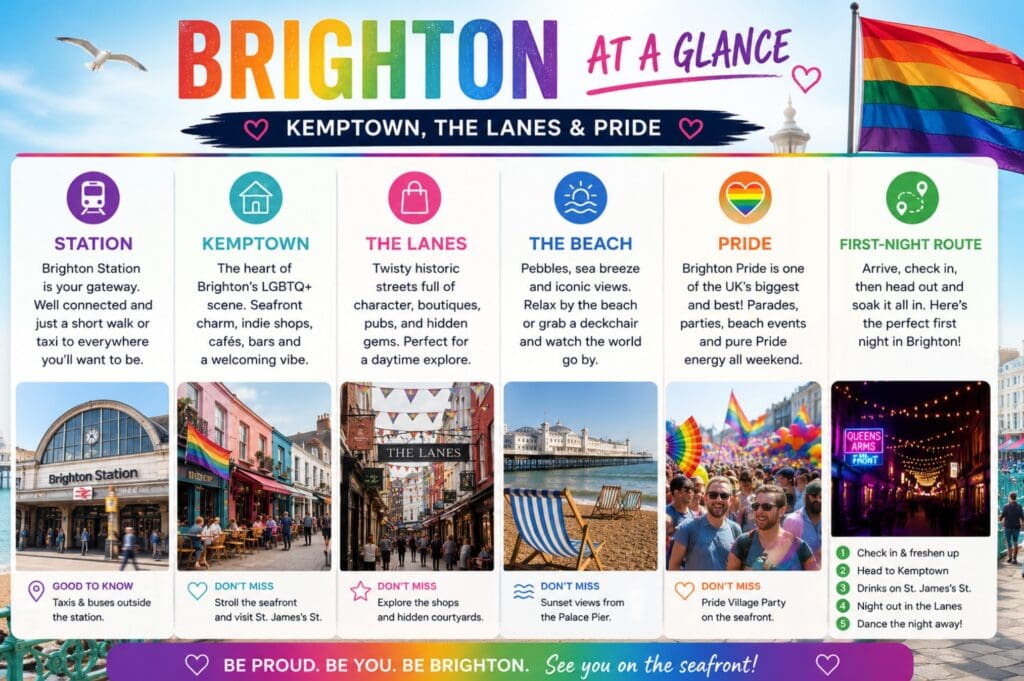
For a first visit, stay near Kemptown, St James’s Street, The Lanes, North Laine, the seafront or the area between Brighton station and the Palace Pier. That way, you can arrive by train, walk downhill into the city, explore the historic centre, reach the beach easily and head into the LGBTQ+ heart of Brighton without relying on taxis.
In practical terms, Kemptown is the strongest base for LGBTQ+ nightlife and community atmosphere, while The Lanes are better for shopping, food, old Brighton charm and wandering. Meanwhile, the beachfront is where everything opens up: pebbles, sea wind, pier lights, Pride crowds, morning swimmers, families, couples, solo travellers and groups of friends all sharing the same strip of coast.
Why Brighton Feels Different
Brighton is not a city that hides its personality. In fact, its beauty lies in the contrast. On one hand, you have Regency façades, the Royal Pavilion, antique shops and narrow historic lanes. On the other hand, you have drag brunches, queer bookshops, Pride flags, sea swimmers, vintage markets and nights that spill gently from bars onto the pavement.
Moreover, Brighton works especially well for LGBTQ+ travellers because it is compact. You can arrive at the station, walk to The Lanes, cross towards the Royal Pavilion, continue into Kemptown, and end up on the beach without needing a complicated transport plan. Consequently, even a short weekend feels full.
However, Brighton is not only a party destination. It is also a place of community, memory and everyday queer life. VisitBritain’s LGBTQIA+ guide highlights Brighton’s welcoming character, its Pride celebrations and its strong cultural identity as one of the UK’s most recognisable LGBTQ+ destinations. (VisitBritain)
Arriving in Brighton: From the Station to the Sea
The first walk from Brighton station
Brighton station sits above the city centre, which means your first walk is usually downhill. To begin with, follow Queen’s Road towards the clock tower and the sea. From there, you can turn left towards North Laine, continue towards The Lanes, or keep going until the horizon opens and the English Channel appears ahead.
This first walk is useful because it teaches you Brighton’s basic geography. The station is north. The sea is south. The Lanes sit between the shopping streets and the seafront. Kemptown sits east, towards St James’s Street and beyond. Once you understand that, Brighton becomes much easier to navigate.
Getting from the station to Kemptown
If you are travelling light, you can walk from Brighton station to Kemptown in roughly 20 to 30 minutes, depending on your exact destination and pace. A practical route is to walk down Queen’s Road, pass towards North Street, then continue east through the Old Steine area towards St James’s Street. Nevertheless, if you have luggage, if it is raining, or if you are staying further into Kemptown, the bus is easier.
Brighton & Hove Buses provide live information, journey planning and network maps on their official site, while their St James’s Street stop page lists services including routes 1, 2, 7, 20, 37, 47, 52, N1 and N7. (buses.co.uk) In other words, Kemptown is not isolated; it is part of the city’s everyday transport rhythm.
Exploring Kemptown: The Beating Heart of LGBTQ+ Brighton
What Kemptown feels like
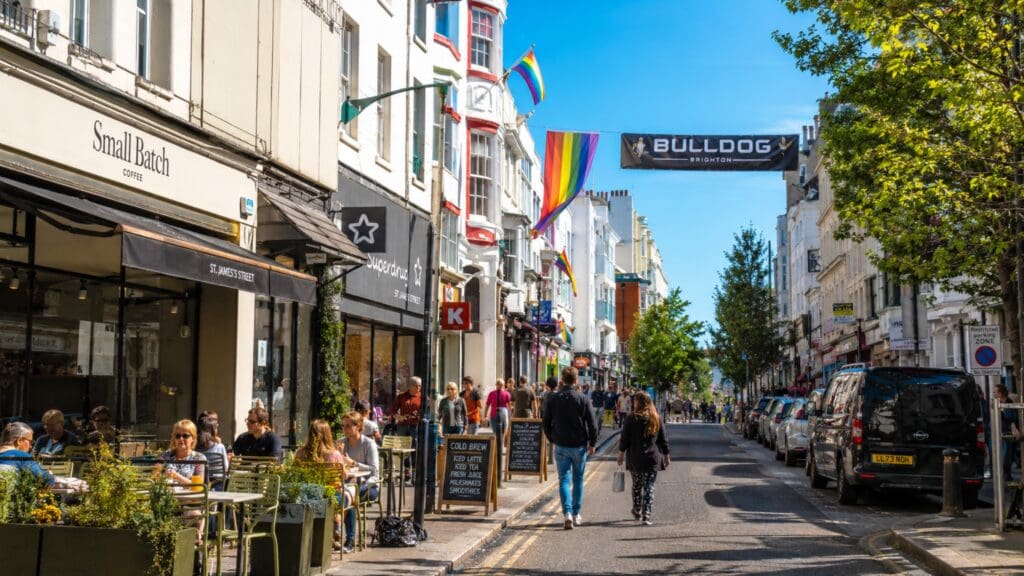
Kemptown is not polished in a bland, corporate way. Instead, it feels lived-in, layered and human. Along St James’s Street, you will find cafés, pubs, independent shops, small supermarkets, community venues, takeaways, bars and guesthouses. During the day, the street can feel casual and local. Then, as the evening begins, it becomes brighter, louder and more social.
VisitBrighton describes Kemptown as stretching east from the city centre towards Brighton Marina, with “village charm, community spirit, inclusivity, sustainability and fun”. It also notes that Kemptown sits at the heart of Pride celebrations every summer. (Visit Brighton) That description matches the lived feel of the area: relaxed in the morning, sociable in the afternoon and unmistakably queer after dark.
St James’s Street: how to read the street
At first, St James’s Street can feel busy because it is both a neighbourhood high street and a nightlife corridor. Therefore, do not treat it like a single venue. Instead, walk it once in daylight. Notice where the cafés are, where the bus stops are, where the side streets lead, and how close the seafront is.
In the evening, start gently. Have dinner first, then choose a bar according to the mood you want: a relaxed drink, a pub-style atmosphere, live entertainment, a social terrace or somewhere livelier later on. Furthermore, if you are travelling solo, an early-evening visit is often easier than arriving late when groups have already formed.
Kemptown by day versus night
By day, Kemptown is ideal for coffee, brunch, charity shops, independent browsing and slow walks towards the seafront. By night, it becomes one of the UK’s most recognisable LGBTQ+ social districts. Nevertheless, it remains mixed and lived-in, so respect the neighbourhood: keep noise considerate outside venues, avoid photographing strangers without permission, and remember that this is home for many residents.
The Lanes: Shopping, History and Queer-Friendly Wandering
How to navigate the maze
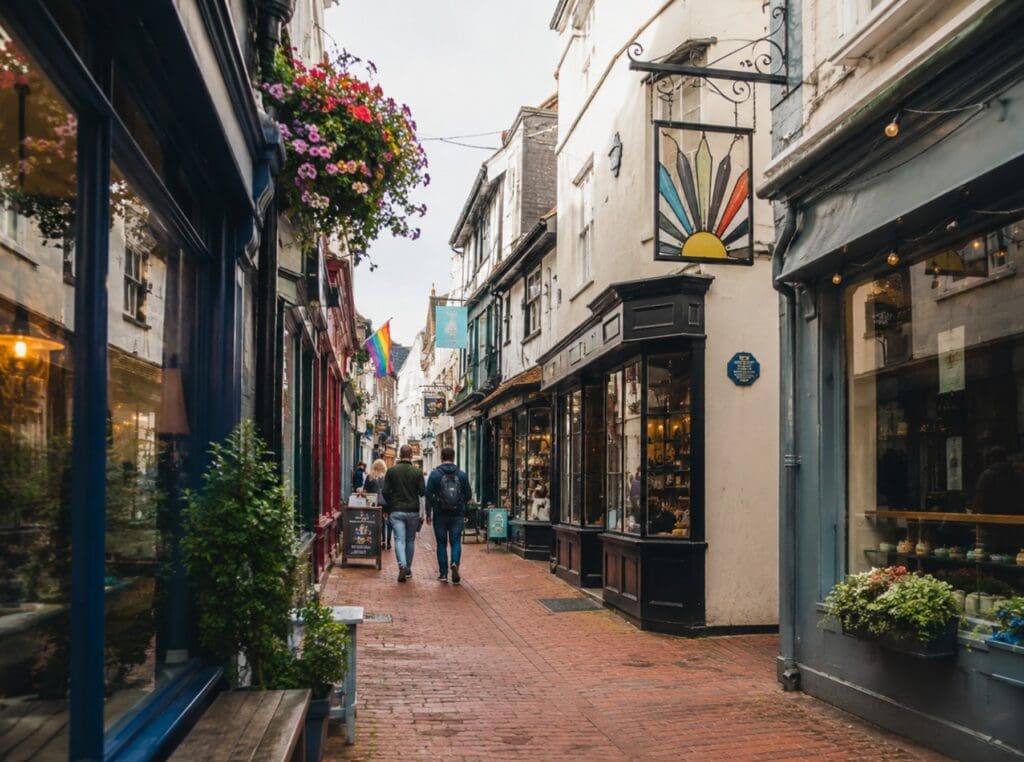
The Lanes are Brighton’s old, winding heart. They are not laid out like a grid, and that is part of the charm. VisitBrighton calls The Lanes a “quirky labyrinthian area” of narrow alleyways, hidden squares, shops, jewellers, restaurants and places to watch the world go by. (Visit Brighton)
To avoid getting frustrated, do not try to “complete” The Lanes. Instead, use landmarks. Keep the seafront to the south, North Street to the north, East Street and Ship Street as anchors, and the Royal Pavilion nearby as your cultural compass. Moreover, allow yourself to get slightly lost. In Brighton, that is often how you find the best window displays, courtyards and lunch stops.
What to do in The Lanes
The Lanes are best for a slow middle part of the day. First, browse jewellery shops, vintage corners and independent boutiques. Then, stop for coffee or lunch. Afterwards, move towards the Royal Pavilion or down to the beach.
Although The Lanes are not “the gay village” in the way Kemptown is, they are part of Brighton’s wider queer-friendly city culture. As a result, they work beautifully for visitors who want a softer, daytime Brighton before heading east to St James’s Street in the evening.
The Lanes or North Laine?
A small but useful distinction: The Lanes are the historic, narrow, jewellery-and-restaurant quarter near the seafront and Pavilion. North Laine, meanwhile, is the colourful, alternative shopping area north of North Street, with vintage clothing, cafés, record shops, street art and independent culture. Both are worth visiting. However, if you have only two hours, start with The Lanes, then drift north if you still have energy.
The Royal Pavilion and Cultural Brighton
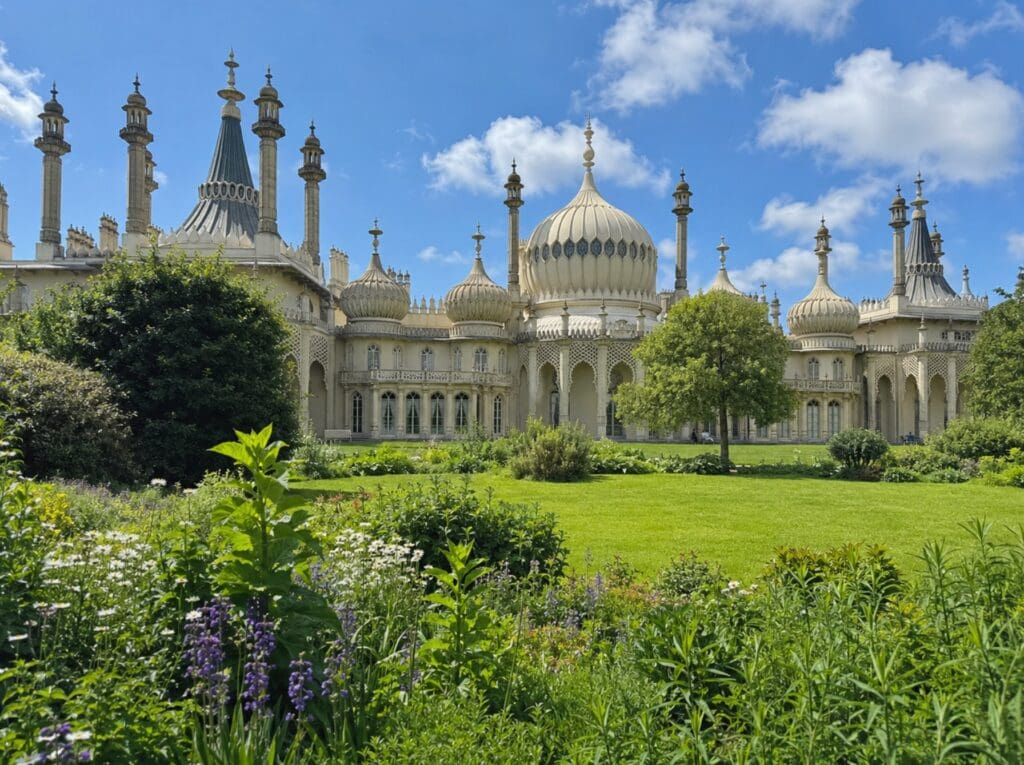
No LGBTQ+ Brighton guide should ignore the Royal Pavilion, because it explains something about the city’s taste for theatricality. The Royal Pavilion & Garden’s official visitor information highlights opening times, access information and the building’s “jaw-dropping design”, while Brighton & Hove City Council describes the Royal Pavilion Estate as the cultural heart of Brighton & Hove. (Brighton & Hove Museums)
In practical terms, the Pavilion is perfectly placed between the station, The Lanes and Kemptown. Therefore, it makes sense to visit before lunch, after The Lanes, or on a rainy afternoon. In addition, its gardens offer a useful pause if you want to sit down before walking towards St James’s Street.
Brighton Beach: Pebbles, Pier and Sea Air
What to expect from the beach
Brighton beach is pebbly, open, sociable and wonderfully democratic. It is not the kind of beach where you sink into soft sand with a book and forget the world. Rather, it is a promenade beach: deckchairs, swimmers, cyclists, volleyball, seafront bars, families, friends, couples, visitors and locals all moving along the same coastal line.
VisitBrighton’s beachfront guide notes that visitors can enjoy watersports such as kayaking and stand-up paddleboarding, classic beach activities such as volleyball, or simply a paddle and a deckchair. (Visit Brighton) Therefore, plan for comfort: bring shoes that work on pebbles, a layer for the wind and, if you want to sit for long, consider a deckchair rather than only a towel.
[Insert a high-quality, SFW photograph of Brighton beach with the Palace Pier in the distance]
Brighton Palace Pier
The Palace Pier is Brighton’s classic seaside landmark. VisitBrighton describes it as a Victorian pier measuring 1,722 feet, while Brighton Palace Pier’s own website promotes rides, food, arcade games and seafront views. (Visit Brighton)
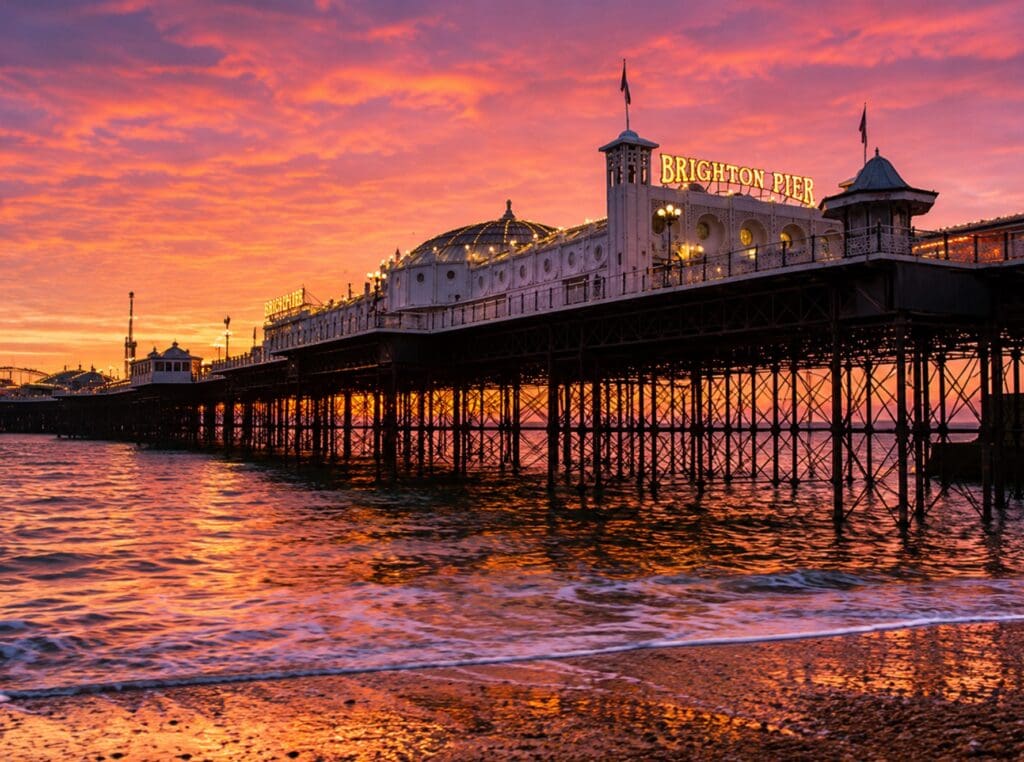
For a first visit, go once in daylight and once at dusk if you can. During the day, it is nostalgic and touristy. At sunset, however, the lights and sea views make it feel cinematic. Moreover, because it sits between The Lanes and Kemptown, it is an easy meeting point before heading east along the seafront.
The LGBTQ+ beach rhythm
Brighton’s beach culture is broad, mixed and inclusive. On sunny weekends, it can become crowded very quickly. Consequently, arrive earlier if you want space, especially during Pride, bank holidays or summer weekends. In addition, do not rely on the weather forecast alone: Brighton wind can make a warm day feel cooler, and a grey morning can turn bright by afternoon.
Brighton Pride: Planning the Big Weekend
Key 2026 dates
Brighton & Hove Pride’s official parade page states that the LGBTQ+ Community Parade returns on Saturday 1 August 2026 with the theme “The Power of Love”. It also notes that 2026 marks 35 years of Pride as it is known today in the city, while acknowledging earlier Pride history dating back to 1973. (brighton-pride.org)
Meanwhile, VisitBritain explains that the free Community Parade takes place on 1 August 2026, while Pride On The Park and the Pride Street Party are ticketed events. (VisitBritain) Therefore, check the exact ticketing and access rules before you travel, because the parade, park events and street party do not work in the same way.
Where to stay during Pride
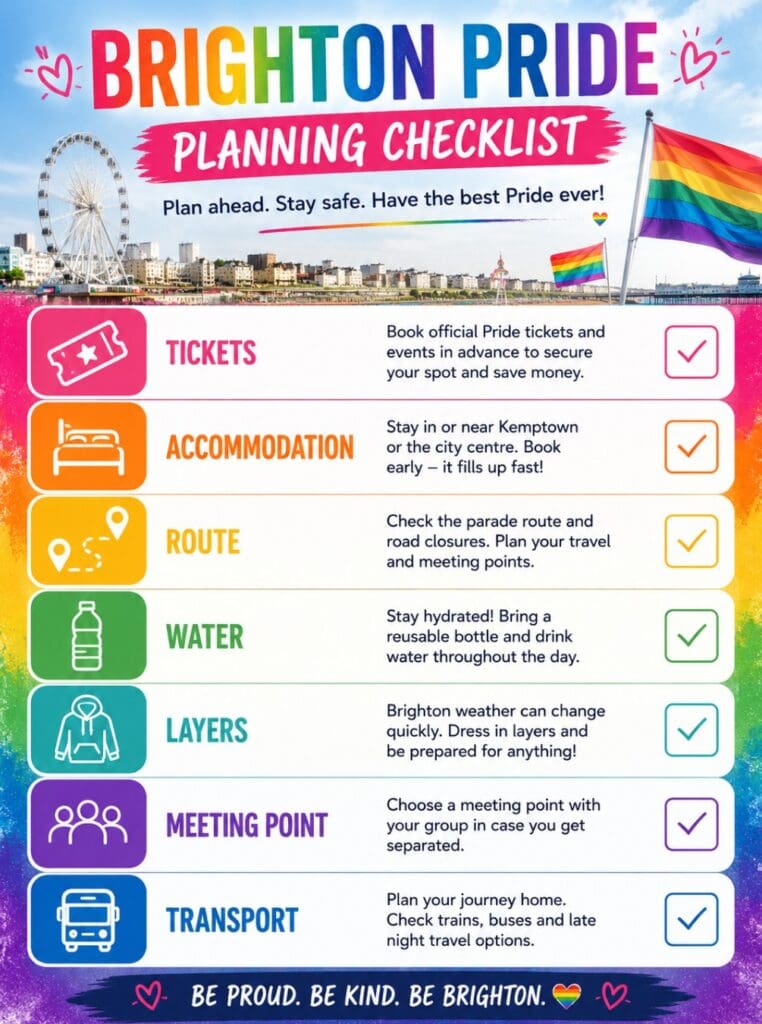
Book early. This is not optional advice; it is the difference between staying close to the action and paying too much for somewhere inconvenient. For maximum ease, look at Kemptown, seafront hotels east of the pier, central Brighton, North Laine, or the area between the station and the Pavilion.
However, if prices become too high, consider Hove, Seven Dials or areas near frequent bus routes. Nevertheless, always check your late-night route back. Brighton is walkable, but after a full Pride day, a 30-minute uphill walk can feel much longer.
Practical Pride tips
First, choose a meeting point that is specific: not “near the beach”, but “outside this café”, “by this hotel entrance” or “at this exact street corner”. Next, bring a portable charger, water, a light layer and comfortable shoes. Furthermore, if you are attending ticketed events, download tickets in advance because mobile signal can become unreliable in crowds. Finally, remember that Pride is both a celebration and a community event: respect stewards, residents, performers and fellow visitors.
Where to Stay: Best Areas for LGBTQ+ Travellers
Kemptown
Kemptown is the best choice if you want to be close to LGBTQ+ nightlife, St James’s Street and the seafront east of the pier. It is especially useful for solo travellers and couples who want to walk home easily after an evening out.
Seafront near the Palace Pier
This area works well if you want classic Brighton views, easy beach access and short walks to both The Lanes and Kemptown. However, it can be noisy in peak season, so check recent reviews before booking.
The Lanes and Old Town
This is ideal if you want restaurants, shopping, history and a central base. You will be slightly less immersed in the Kemptown scene, but still close enough to walk.
North Laine
North Laine suits visitors who prefer cafés, vintage shops, street art, vegetarian food, independent culture and a more alternative atmosphere. From here, you can walk to Kemptown, although you may prefer a bus or taxi late at night.
Hove
Hove is calmer, broader and more residential. It is a good choice for longer stays, couples and travellers who want a quieter base. On the other hand, it is less convenient if your priority is nightly Kemptown socialising.
A First-Time Weekend Itinerary
Day 1: Station, The Lanes and Kemptown
Arrive by train, leave your bags, then walk downhill towards The Lanes. First, browse without rushing. Then, have lunch near the historic centre. Afterwards, visit the Royal Pavilion Gardens. Finally, continue east towards St James’s Street for an early-evening drink and a gentle first look at Kemptown.
Day 2: Beach, Palace Pier and Pride-style Brighton
Start with the seafront before it gets too busy. Next, walk along the beach towards the Palace Pier. Then, if the weather is good, continue east towards Kemptown or west towards Hove. In the afternoon, return to your hotel for a rest, because Brighton evenings are better when you do not arrive already exhausted. Later, go out in Kemptown and let the night build naturally.
Day 3: North Laine, coffee and a slow goodbye
On your final morning, head to North Laine for coffee, vintage shops and a different Brighton mood. Then, if time allows, walk back through The Lanes one last time before climbing back up to the station. As a result, your weekend ends with the city’s two signatures: independent creativity and sea air.
Food, Coffee and Low-Pressure Socialising
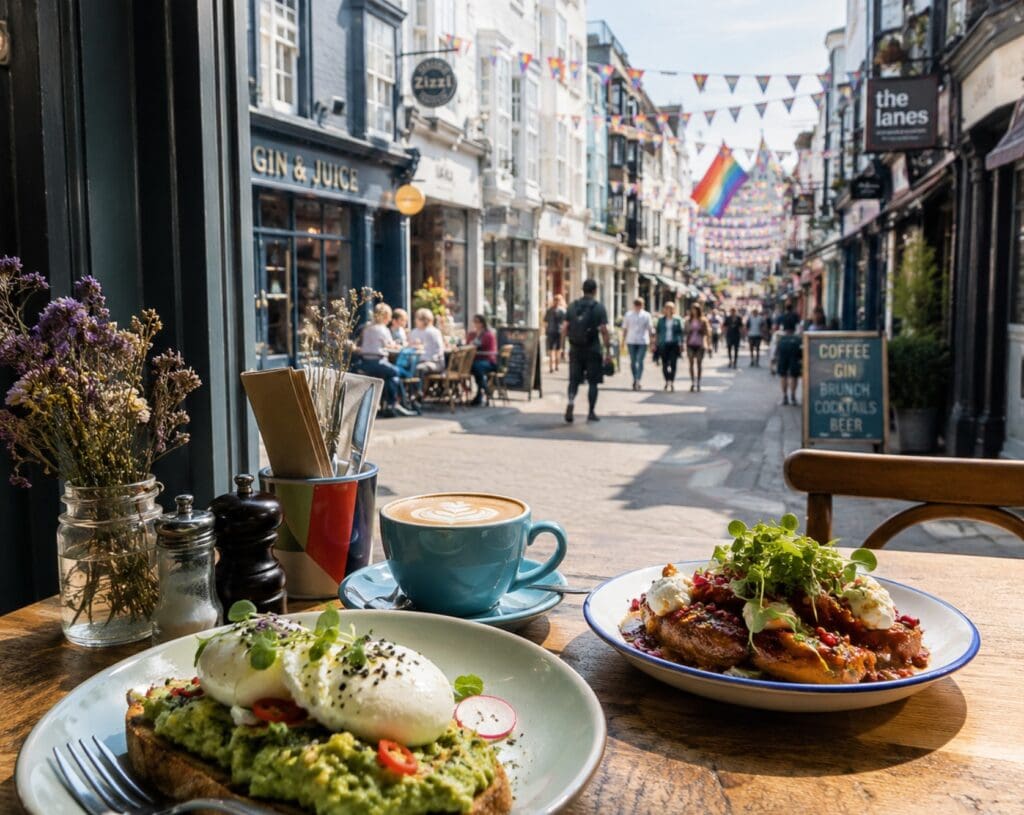
Brighton is excellent for travellers who like to build a day around food. In The Lanes, you will find restaurants, cafés and tucked-away lunch spots. In North Laine, you will find independent coffee, vegetarian-friendly menus and vintage browsing. Meanwhile, in Kemptown, you can move easily from brunch to afternoon drinks to evening venues without crossing the whole city.
For a first night, it is usually better to eat before going out. That way, you arrive relaxed rather than hungry and overstimulated. Moreover, if you are travelling alone, a café, terrace or food-led venue can be an easier place to begin than a busy late-night bar.
Safety, Respect and LGBTQ+ Travel Etiquette
Brighton is welcoming, but respectful behaviour still matters. Do not photograph people in LGBTQ+ venues without permission. Do not assume anyone’s identity, pronouns or relationship status. If someone does not want to chat, accept that gracefully. In addition, during Pride or busy summer nights, keep your phone charged and know how you are getting back to your accommodation.
Because Brighton is compact, walking is often the easiest option. Nevertheless, if you are tired, if the weather turns, or if you are staying outside the centre, use buses, licensed taxis or trusted ride options. Furthermore, if you are visiting during Pride, plan for crowds and give yourself more time than usual.
BEARWWW in Brighton: Connect Before You Arrive
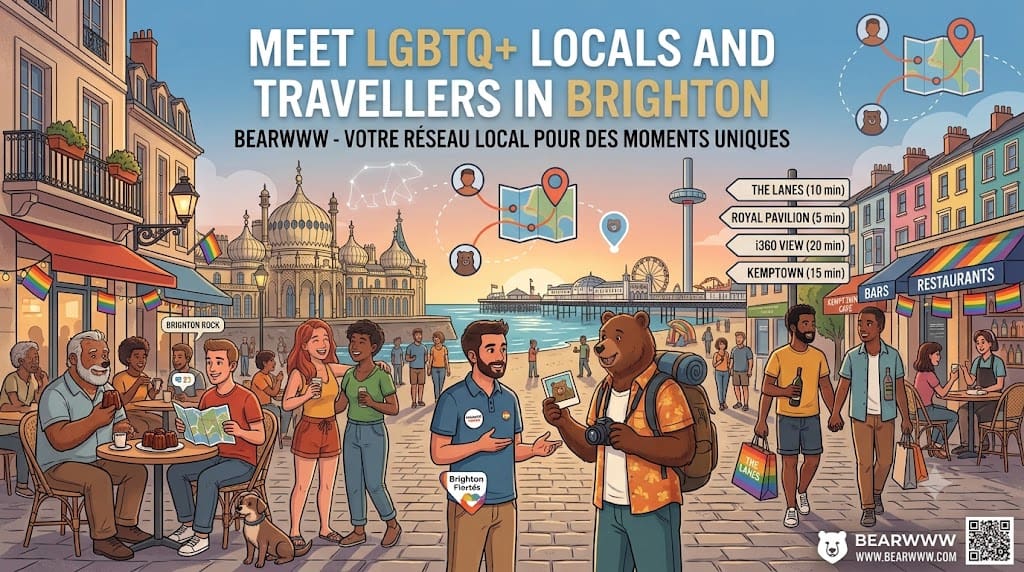
Before you travel, open BEARWWW to connect with UK gay, bi and queer men in Brighton and across the UK. You can ask locals which night suits your mood, find someone for coffee near The Lanes, arrange a relaxed beach walk, or plan a Pride meetup before the crowds arrive.
Download BEARWWW and discover Brighton through real conversations, local tips and LGBTQ+ community connection. Because, in a city this social, the best travel memories often begin before the first drink, the first sea view or the first hello.
FAQ: Gay Brighton
Brighton & Hove is widely described as the UK’s unofficial LGBTQIA+ capital, and VisitBrighton uses that phrasing in its visitor guidance. The city’s reputation comes from its visible LGBTQ+ community, Pride celebrations, queer-friendly nightlife, inclusive culture and long history of alternative seaside life.
The strongest LGBTQ+ concentration is around Kemptown, especially St James’s Street and the streets leading towards the seafront. However, LGBTQ+ visibility is not limited to one street; it is woven through the wider city, including The Lanes, North Laine and the beachfront.
You can walk downhill through the city centre towards St James’s Street, which usually takes around 20 to 30 minutes depending on luggage and pace. Alternatively, Brighton & Hove Buses serve St James’s Street and the wider Kemptown area, with live departure information available online.
The Lanes are best for atmospheric wandering, jewellery shops, independent boutiques, restaurants, cafés and old Brighton charm. VisitBrighton describes them as a labyrinth of narrow alleyways, hidden squares, shops and places to eat and drink. (Visit Brighton)
The Brighton & Hove Pride LGBTQ+ Community Parade returns on Saturday 1 August 2026. Pride On The Park and other events are ticketed separately, so check official event pages before booking travel. (brighton-pride.org)
Yes. Brighton is compact, walkable and socially open, which makes it a strong choice for solo LGBTQ+ travellers. Nevertheless, choose central accommodation, start with daytime exploration, plan your route home at night and use specific meeting points during busy events.
Sources to Check Before You Go
For the most reliable planning, use VisitBrighton for neighbourhood guides, LGBTQIA+ information, The Lanes and Kemptown; Brighton & Hove Pride for parade and event details; VisitBritain for broader LGBTQ+ travel context; Brighton & Hove Buses for live transport information; Brighton Museums for the Royal Pavilion; and Brighton Palace Pier for pier attractions, access and visitor updates.
About the Author
Alain VEST / BEARWWW Editorial Team writes LGBTQ+ travel and lifestyle guides focused on real visitor needs: where to stay, how to move through a city, what a neighbourhood feels like at different times of day, and how to enjoy queer culture with respect. This Brighton guide is written in a field-note style shaped by frequent travel on England’s south coast, careful local research and a people-first commitment to safe, inclusive, practical LGBTQ+ travel.
Check out our Gay Guides to Manchester, Birmingham, and Gay London Guide