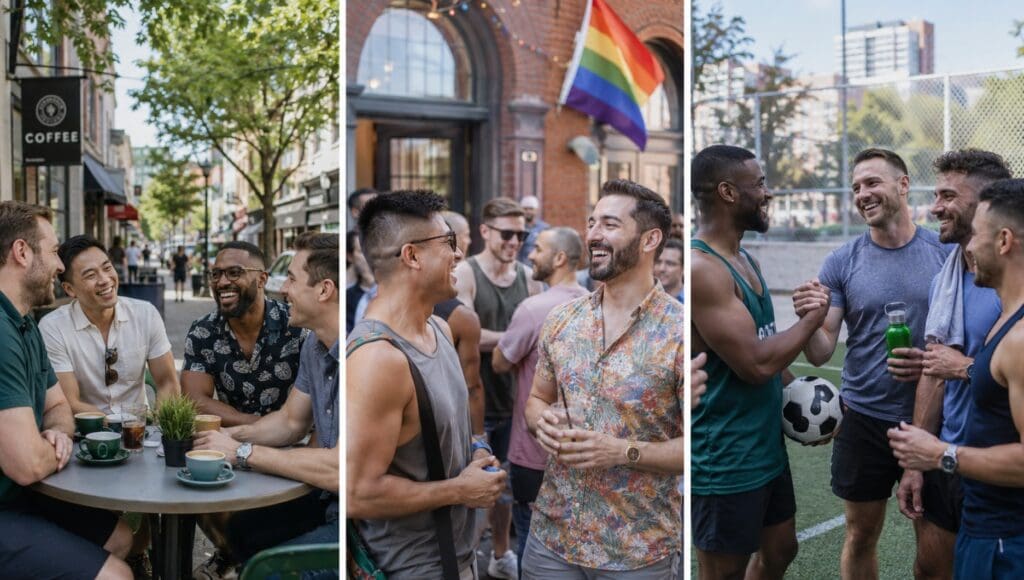
Being a gay single in the United States can feel paradoxical.
Table of Contents
There are more dating apps, more visible LGBTQ+ neighborhoods, and more ways to identify compatible people than at any previous point in modern dating history. Yet many gay men describe the same experience: dozens of matches, repeated opening lines, long conversations that never become dates, and a growing sense that everyone is available but no one is truly present.
That is dating fatigue.
It is not proof that gay men are incapable of commitment, nor is it evidence that apps have “ruined” an entire community. Gay Dating Apps such as Grindr, Tinder, Hinge, Scruff, and community-focused platforms can be useful tools. They help people meet outside traditional nightlife, connect in smaller cities, and find others who share specific identities or relationship goals.
The problem begins when the app becomes the whole dating environment.
A good city for gay singles offers something technology cannot reproduce: repeated, low-pressure contact. You see the same people at a running club, bookstore, community center, volunteer shift, neighborhood café, sports league, or cultural event. Attraction has time to become familiarity. Familiarity can become trust. And trust gives a relationship somewhere to grow.
This guide does not rank cities by the number of profiles within one mile. Instead, it evaluates what life actually feels like for a gay single who may be considering a trip, a temporary stay, or a full relocation.
The key questions are:
- Can you meet people without relying entirely on dating apps?
- Are there community institutions that operate year-round?
- Is the city easy enough to navigate for a real social life?
- Can an ordinary person afford to participate in that life?
- Does the local scene offer more than one version of gay identity?
- Are there clubs, cafés, arts spaces, volunteer opportunities, and recurring groups?
- Does the city support both nightlife and quieter forms of connection?
- How do state and local politics affect daily life?
🗺️ Featured U.S. Cities & LGBTQ+ Neighborhoods 12 cities
Every city and its primary LGBTQ+ neighborhoods from the guide — from the West Coast to the East Coast.
📌 Click any pin on the map to see the neighborhood names and a quick summary.
Data source: Ultimate LGBTQ+ Neighborhood Guide · Map data: OpenStreetMap
How this guide evaluates affordability
Exact rents change constantly and can vary dramatically from one neighborhood to the next. Therefore, this guide uses relative cost tiers rather than presenting a misleading “average rent” that may already be obsolete by publication.
The U.S. Bureau of Economic Analysis publishes Regional Price Parities, which compare price levels across states and metropolitan areas. Its current release explains that housing rents are often the largest driver of regional cost differences: https://www.bea.gov/data/prices-inflation/regional-price-parities-state-and-metro-area.
The cost labels used below are:
- Very high: housing and everyday costs are among the most expensive in the country.
- High: significant income is needed to live near the most desirable LGBTQ+ neighborhoods.
- Moderate: still not inexpensive, but more manageable than the largest coastal markets.
- More attainable: comparatively accessible, although neighborhood demand and car ownership can raise the real monthly cost.
Always compare current listings, transportation expenses, local taxes, healthcare, and expected salary before relocating.
What makes a city genuinely good for a gay single?
The best dating city is not necessarily the city with the largest LGBTQ+ population.
A huge city can produce loneliness through anonymity. A smaller city can create better relationships because people see one another repeatedly. Likewise, a famous nightlife district can generate thousands of introductions but few durable connections, while a community center or recreational league may quietly produce friendships, dates, roommates, and long-term partners.
A strong city for gay singles usually has five ingredients.
A visible but varied queer community
One narrow social scene is rarely enough. The strongest cities offer spaces for different ages, races, body types, gender expressions, incomes, interests, and relationship goals.
Recurring IRL activities
A single Pride weekend does not create community. Weekly sports, book clubs, volunteer programs, rehearsals, classes, cafés, and neighborhood events do.
A workable urban geography
The easier it is to see friends and attend events, the more likely you are to build a social network. A cheap apartment located 90 minutes from every queer gathering may not create a better life.
Institutions that survive beyond nightlife
Community centers, archives, health organizations, cultural groups, and nonprofits give a city depth. They also provide ways to meet people without the pressure of immediate attraction.
Enough affordability to participate
A city may have incredible nightlife, but if rent consumes nearly all your income, dating becomes financially and emotionally exhausting. A sustainable social life requires time, mobility, and discretionary money.
1. San Francisco: The Historic Hub
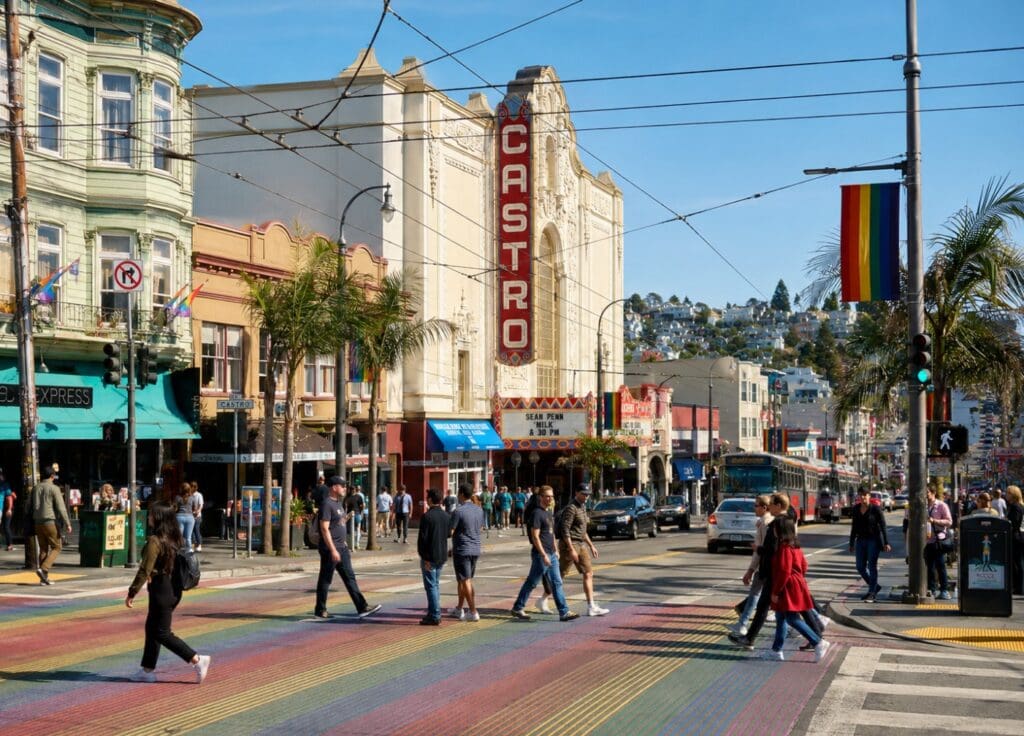
San Francisco remains one of the most symbolically important cities in LGBTQ+ America.
The Castro is still the city’s best-known gay neighborhood, but queer life extends into SoMa, the Mission, the Tenderloin, Oakland, and the broader Bay Area. San Francisco Travel describes the Castro as the city’s LGBTQ+ cultural hub, with historic landmarks, businesses, nightlife, and Victorian streets: https://www.sftravel.com/neighborhoods/castro.
For a gay single, the city’s biggest advantage is not simply visibility. It is infrastructure.
The San Francisco LGBT Center offers programs, events, employment support, cultural activities, and community resources. The GLBT Historical Society provides a connection to the region’s political and cultural past. The city also supports queer athletic groups, volunteer networks, arts organizations, leather communities, trans-led spaces, neighborhood bars, and professional associations.
The dating vibe
San Francisco dating can feel intellectually curious, politically aware, and highly identity-conscious.
People often have clearly articulated values, boundaries, relationship models, and community affiliations. That can make compatibility conversations easier. It can also make dating feel analytical, especially when professional ambition, technology culture, and highly curated identities enter the mix.
The city is especially strong for gay singles who want:
- politically engaged partners;
- alternative relationship communities;
- arts and cultural scenes;
- body-positive or subcultural spaces;
- an openly queer everyday environment;
- access to both nightlife and activism.
The challenge is size. San Francisco is globally famous, but the city itself is geographically small. Social circles overlap quickly. Many people commute from Oakland, Berkeley, or farther parts of the Bay Area, which can turn a simple date into a transportation plan.
Where to live
The Castro and Duboce Triangle
Best for immediate access to gay history, neighborhood bars, public transportation, and established queer social life.
The tradeoff is cost. Inventory is limited, and the neighborhood’s cultural prominence keeps demand high.
The Mission
Best for restaurants, music, nightlife, arts, and a broader social mix. It offers more energy than the Castro and connects easily to Dolores Park.
SoMa
Best for nightlife, leather history, clubs, larger events, and newer apartment buildings. Some blocks feel quiet outside event hours, so examine the exact location.
Oakland
Often a better fit for people seeking more space, racial diversity, arts culture, and community-oriented queer life. However, commuting across the Bay can affect dating spontaneity.
How to meet people beyond apps
A good San Francisco strategy is to choose one recurring community rather than attending endless one-off events.
Try:
- programs at the SF LGBT Center;
- queer sports leagues;
- volunteer work with health or housing organizations;
- classes and cultural events;
- neighborhood gatherings in the Castro or Mission;
- book talks, film programs, and historical events;
- regular afternoons at Dolores Park rather than waiting for a major festival.
Cost and quality of life
Cost level: Very high
California had the highest statewide price level in the BEA’s 2024 Regional Price Parity data, and housing remains the primary barrier to entry: https://www.bea.gov/data/prices-inflation/regional-price-parities-state-and-metro-area.
San Francisco works best for a gay single whose income, housing arrangement, or remote-work flexibility makes the city sustainable. Sharing an apartment is still common among adults who could live alone elsewhere.
The reward is a city where LGBTQ+ identity is part of public history rather than a hidden subculture.
Best for
A gay single who values history, progressive politics, community institutions, public transportation, and a deeply queer urban environment more than affordability.
2. Los Angeles and West Hollywood: Maximum Choice, Maximum Effort
🏳️🌈 Queer Social Spaces – Los Angeles & Long Beach 25+ venues
West Hollywood, Silver Lake, Los Feliz, Downtown LA, and Long Beach — every LGBTQ+ bar, club, and community space from the guide.
Los Angeles offers one of the largest and most varied LGBTQ+ populations in the country, but it requires geographic discipline.
West Hollywood’s Rainbow District contains more than 50 LGBTQ+-owned or allied businesses, according to Visit West Hollywood: https://www.visitwesthollywood.com/neighborhoods/rainbow-district/.
That density makes WeHo the easiest entry point for a visitor or new resident. Yet it represents only one version of queer Los Angeles.
Silver Lake and Los Feliz attract creative and alternative crowds. Downtown hosts events and nightlife. Long Beach has its own established LGBTQ+ community. Different racial, cultural, professional, and gender communities maintain separate but overlapping social ecosystems across the region.
The dating vibe
Los Angeles offers an enormous dating pool, but it can feel segmented.
A person’s neighborhood, career, schedule, and willingness to drive often matter as much as attraction. Two men may live in the same metropolitan area and still treat the distance between them like a long-distance relationship.
West Hollywood can also intensify appearance-related pressure. Patios, nightlife, entertainment culture, fitness culture, and social media visibility shape the scene. However, reducing Los Angeles to superficiality would be inaccurate. The city also contains serious artists, activists, community organizers, immigrants, professionals, parents, and large body-positive and subcultural communities.
Where to live
West Hollywood
Best for walkable gay nightlife, restaurants, gyms, events, and immediate visibility.
The disadvantage is cost and the possibility of becoming trapped in a social bubble centered around nightlife.
Silver Lake and Los Feliz
Best for creative professionals, neighborhood cafés, music, independent culture, and people who prefer a less polished social atmosphere.
Koreatown
More central and often comparatively practical for renters, with strong nightlife and transportation access. It is not a gay neighborhood, but its location can make multiple social areas reachable.
Long Beach
A valuable alternative for people seeking a more residential LGBTQ+ community, ocean access, and a somewhat less intense lifestyle.
How to meet people beyond apps
The Los Angeles LGBT Center is one of the largest LGBTQ+ organizations in the world and offers cultural events, volunteer opportunities, health services, classes, and community programs.
Other effective paths include:
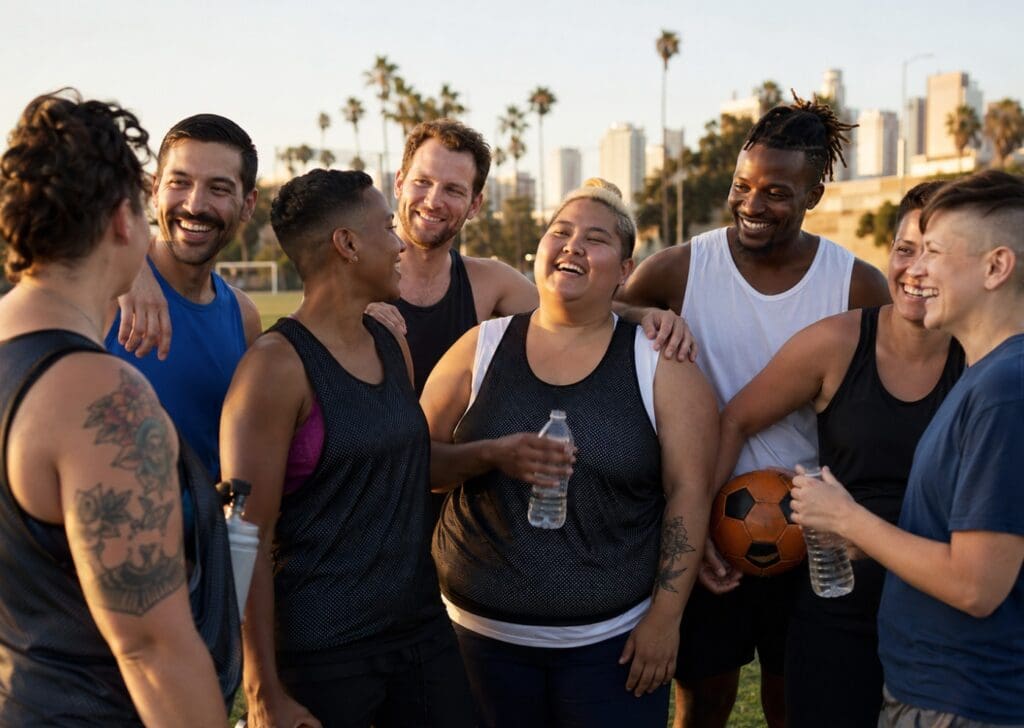
- queer recreational sports;
- film and entertainment groups;
- volunteer programs;
- sober LGBTQ+ communities;
- hiking groups;
- neighborhood cafés;
- professional networks;
- cultural organizations serving Black, Latino, Asian, trans, and immigrant communities.
The anti-fatigue strategy
Do not swipe across the entire metropolitan area.
Set a realistic geographic radius based on where you would actually travel on a weeknight. Then choose one recurring activity close to home. Los Angeles becomes less emotionally exhausting when your social life is built around a neighborhood rather than the full region.
Cost and quality of life
Cost level: Very high
Housing is expensive, and the real cost of Los Angeles includes transportation. Even when rent is lower outside West Hollywood, car payments, insurance, parking, fuel, and rideshare can eliminate the savings.
The city offers extraordinary weather, food, culture, beaches, and career opportunity. However, a gay single should evaluate commute time as carefully as rent.
Best for
Someone who wants maximum social variety, entertainment culture, warm weather, and multiple queer subcultures—and who is willing to organize life around distance.
3. New York City: The Largest Pool, but Not Always the Easiest Connection
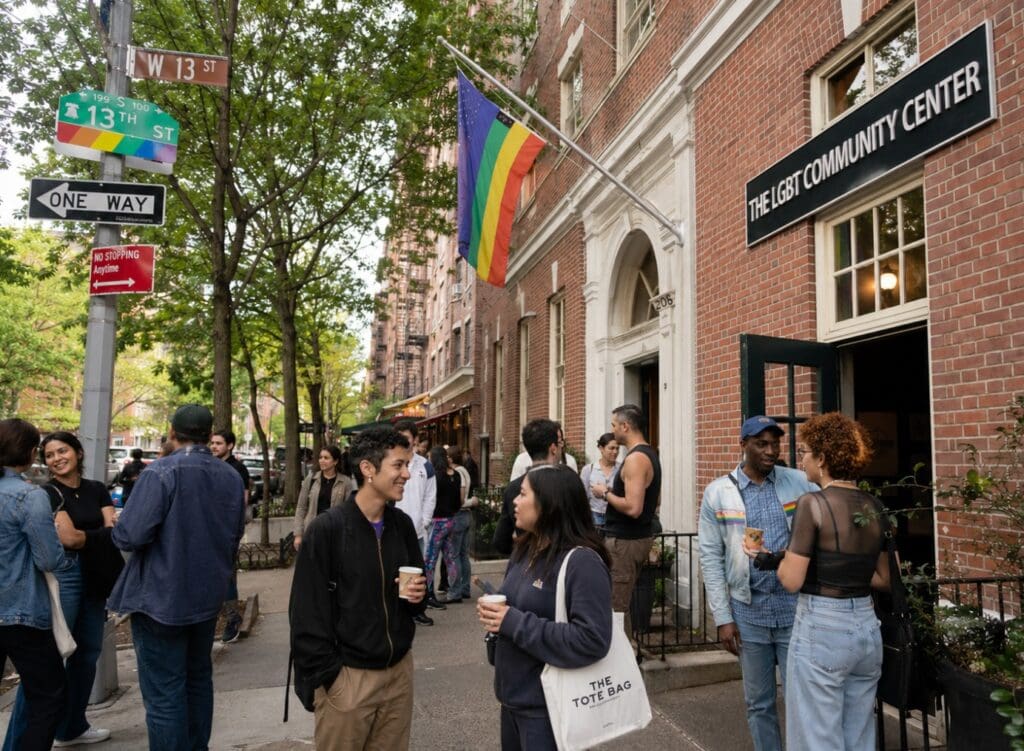
New York gives gay singles more possibilities than almost any other city in the country.
The West Village offers history and community institutions. Hell’s Kitchen provides dense nightlife. Chelsea retains longstanding LGBTQ+ associations. Brooklyn, Queens, Harlem, and the Bronx support distinct queer scenes shaped by race, class, age, art, nightlife, family, and migration.
The city’s LGBT Community Center offers services, support, arts programming, social events, and meeting space. It is one of the best places for a new resident to begin building community without relying on nightlife.
The dating vibe
New York dating is fast.
People have demanding schedules, strong preferences, multiple social circles, and an awareness that another option is always nearby. The city can therefore amplify the paradox of choice: high access combined with low patience.
However, New York also makes it possible to meet extremely specific people. Whatever your interests—choral music, basketball, publishing, activism, fashion, running, gaming, recovery, film, volunteering, faith, or food—there is likely an LGBTQ+ group built around them.
Stonewall Sports has chapters and national programming that connect LGBTQ+ people through recreational athletics: https://stonewallsports.org/.
Where to live
Hell’s Kitchen
Best for gay nightlife, Broadway, restaurants, and easy access to Midtown. It is convenient but expensive and can feel highly transient.
West Village and Chelsea
Best for history, downtown culture, and walkability. Prices are among the highest in the city.
Brooklyn
Neighborhoods such as Williamsburg, Bushwick, Crown Heights, Park Slope, and Bedford-Stuyvesant offer different queer communities and more residential social life.
Queens
Astoria, Jackson Heights, Sunnyside, and Long Island City offer cultural diversity, strong food scenes, and—in some cases—better value than central Manhattan.
How to meet people beyond apps
Use New York’s scale to join smaller communities.
Good options include:
- sports leagues;
- classes at The Center;
- queer book clubs;
- neighborhood volunteer organizations;
- choirs;
- museum and theater groups;
- political organizations;
- identity-specific meetups;
- recurring nightlife events with a consistent local crowd.
The anti-fatigue strategy
Limit the number of people you message simultaneously. New York makes match collection dangerously easy.
A more sustainable system is:
- Use one or two apps.
- Suggest a simple date quickly.
- Choose people within a realistic transit distance.
- Maintain one recurring IRL community.
- Stop treating every borough as equally convenient.
Cost and quality of life
Cost level: Very high
Housing, dining, and entertainment are expensive, but New York allows many residents to live without a car. Public transportation also makes an enormous social network accessible.
The city offers unparalleled cultural opportunity, but it can overwhelm people who need calm, routine, or large amounts of private space.
Best for
A gay single who thrives on diversity, ambition, culture, and constant possibility—and who can resist turning endless choice into endless dissatisfaction.
4. Chicago: The Best Overall Balance
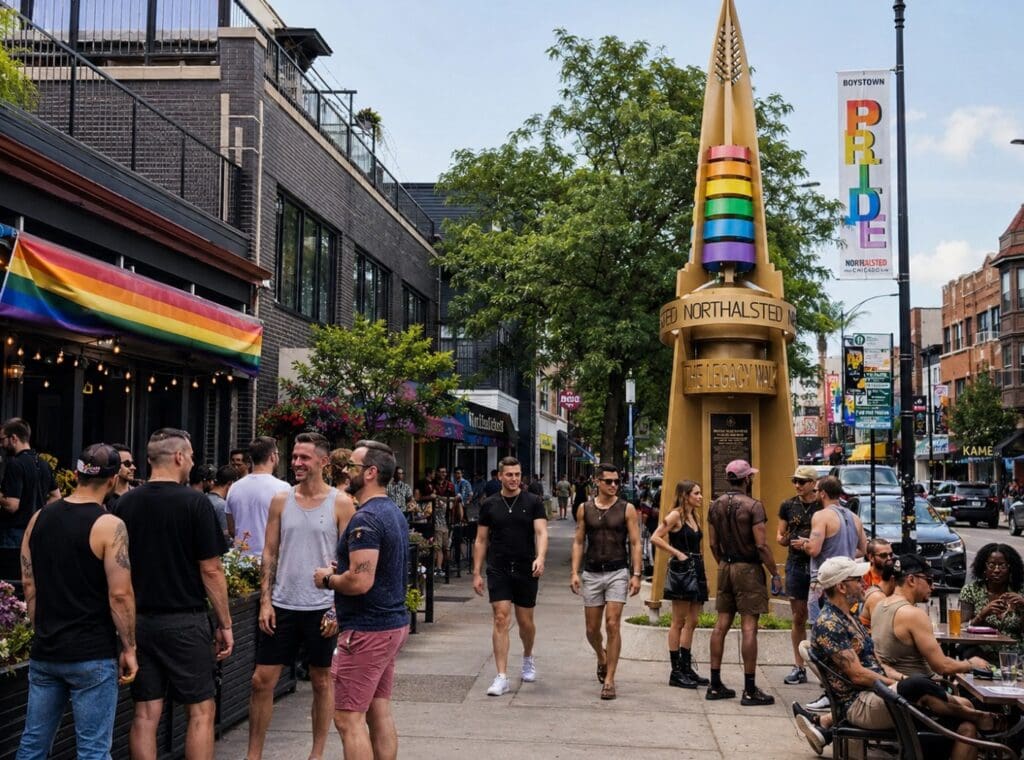
Chicago may offer the strongest overall balance for gay singles.
It has a large LGBTQ+ population, established neighborhoods, major cultural institutions, extensive public transportation, serious nightlife, queer sports, community programming, and housing costs that—while substantial—remain more attainable than San Francisco, Los Angeles, or New York.
Northalsted is the city’s most visible gay nightlife district. Choose Chicago describes it as one of the Midwest’s largest LGBTQ+ communities and the center of major Pride events: https://www.choosechicago.com/neighborhoods/boystown/.
Andersonville offers a calmer, more residential queer atmosphere, with independent businesses, cafés, restaurants, and a broader community mix: https://www.choosechicago.com/neighborhoods/andersonville/.
The dating vibe
Chicago feels social in a way many larger cities do not.
Neighborhood identity is strong. Sports culture creates easy conversation. Summer festivals bring people outside. Bars range from large dance venues to quiet neighborhood institutions. There is enough population for variety, but social circles are not so endless that every interaction feels disposable.
The Center on Halsted provides community programs, cultural events, support, and public space. It gives newcomers a route into the city beyond nightlife.
Where to live
Northalsted and Lakeview
Best for nightlife, younger crowds, gay businesses, transit, and first-time residents who want immediate access.
Andersonville and Edgewater
Best for quieter routines, mature social life, independent businesses, and a stronger neighborhood feel.
Uptown
Well connected and diverse, with easier access to both Northalsted and Andersonville.
Logan Square and Avondale
Attract creative residents and offer restaurants, music, and nightlife beyond explicitly gay spaces.
How to meet people beyond apps
Chicago is especially good for sports-based socializing.
Try:
- recreational softball, volleyball, kickball, running, and bowling;
- Center on Halsted programs;
- neighborhood street festivals;
- queer choirs;
- theater communities;
- volunteer organizations;
- recurring trivia and game nights.
The anti-fatigue strategy
Chicago rewards regularity. Go to the same place or activity more than once.
A weekly sports league or volunteer shift will usually produce better connections than attending a different party every weekend.
Cost and quality of life
Cost level: High, but comparatively balanced
Popular North Side neighborhoods are not cheap. However, Chicago offers a wider range of housing and public transportation than the most expensive coastal cities.
The main lifestyle challenge is winter. Cold weather compresses social life and can intensify isolation, especially for newcomers. Joining a recurring indoor activity before winter begins is a practical relationship strategy, not merely a hobby suggestion.
Best for
A gay single seeking a large dating pool, strong IRL community, major-city culture, and a more sustainable cost-to-opportunity ratio.
5. Philadelphia: Compact, Social, and Easier to Enter
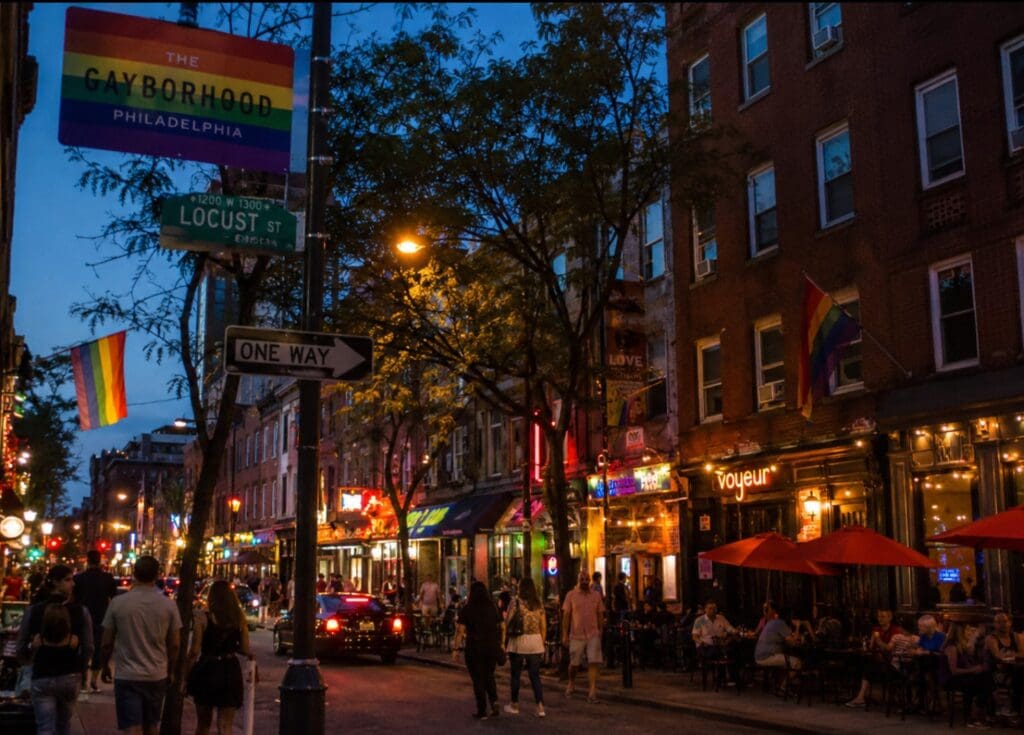
Philadelphia’s Gayborhood offers something many larger cities lack: concentration without total overwhelm.
The neighborhood sits in and around Washington Square West and Midtown Village, allowing residents to move easily between cafés, bars, restaurants, cultural institutions, and community resources.
The William Way LGBT Community Center has served the local community since 1976 and offers meeting spaces, archives, programs, exhibitions, and opportunities to connect.
In 2026, Philadelphia also opened a dedicated Pride Visitor Center at 12th and Locust Streets, giving LGBTQ+ visitors and residents another visible point of entry into the city’s culture.
The dating vibe
Philadelphia can feel more direct and less performative than New York.
The scene is large enough to offer options but compact enough for people to become familiar. You may see someone at a bar, then at a community event, then through a friend. That repetition creates social accountability and makes it easier for attraction to develop outside immediate app judgment.
The city is particularly good for gay singles who enjoy:
- history;
- visual arts;
- theater;
- food;
- neighborhood bars;
- walkable routines;
- East Coast access without New York’s intensity.
Where to live
Washington Square West and the Gayborhood
Best for immediate LGBTQ+ access and a car-free lifestyle. The tradeoff is higher rent.
South Philadelphia
Offers strong neighborhood identity, food culture, and access to Center City.
Fishtown and Northern Liberties
Popular with creative professionals, with music venues, restaurants, and nightlife.
West Philadelphia
More spacious in places, culturally diverse, and connected to universities and arts communities.
How to meet people beyond apps
Useful pathways include:
- William Way events;
- LGBTQ+ sports leagues;
- book clubs;
- arts programs;
- neighborhood volunteering;
- queer history events;
- community fundraising;
- the Philly Pride Visitor Center’s local recommendations.
The anti-fatigue strategy
Use Philadelphia’s compactness.
Choose first dates that allow a walk afterward: coffee near Washington Square, a bookstore, a gallery, or a casual dinner followed by a neighborhood bar. The city supports dates that can expand naturally without becoming expensive productions.
Cost and quality of life
Cost level: Moderate to high
Philadelphia is not inexpensive, but housing and daily life can be more manageable than New York, Washington, San Francisco, or Los Angeles.
It also offers direct rail access to New York and Washington, expanding professional and cultural options without requiring residents to live in those markets.
Best for
A gay single who wants an East Coast city with history, walkability, strong queer institutions, and less emotional noise than New York.
6. Washington, DC: Ambitious, Engaged, and Highly Scheduled
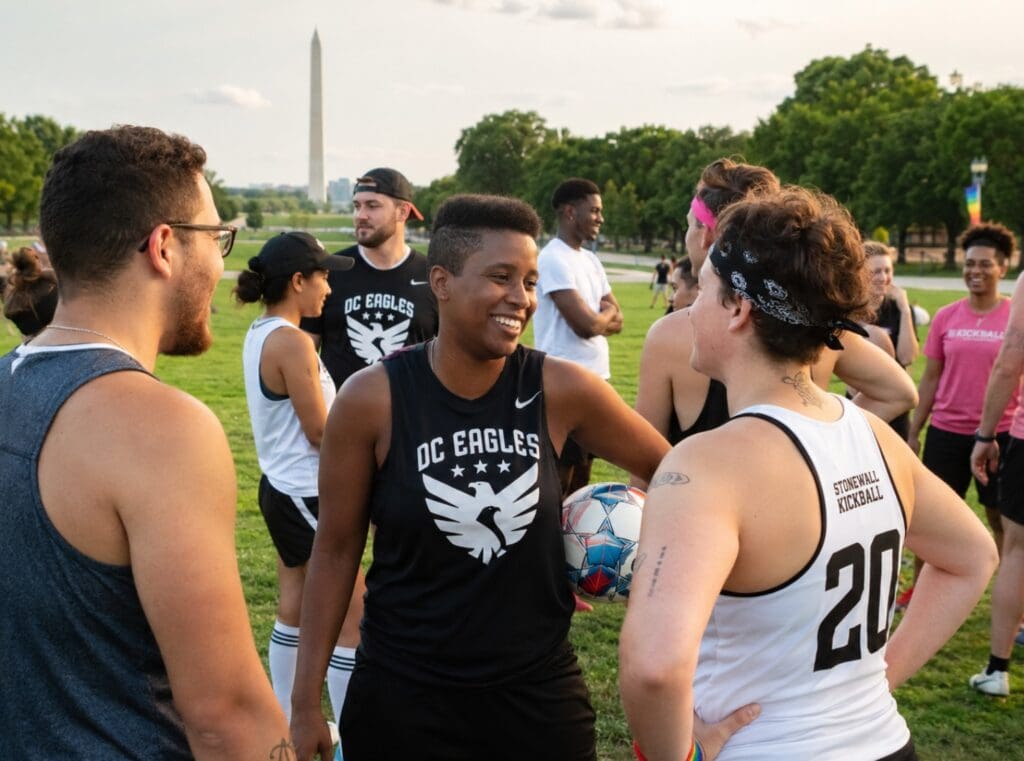
Washington attracts people who care intensely about something.
Politics, public policy, law, international affairs, nonprofits, media, healthcare, education, technology, and advocacy shape the city’s professional culture. This creates a highly educated and globally connected dating pool.
Dupont Circle remains central to DC’s LGBTQ+ history, while Logan Circle, Shaw, U Street, Adams Morgan, and other neighborhoods support nightlife and community life.
Destination DC offers a useful overview of local LGBTQ+ history and neighborhoods: https://washington.org/dc-itinerary/2-days-lgbtq-history.
The dating vibe
DC dating can feel polished, ambitious, and calendar-driven.
Many residents have demanding jobs, travel frequently, or expect to leave the city after an election cycle, fellowship, administration, contract, or graduate program. This transience can complicate commitment.
At the same time, the city is unusually strong for meeting people through structured communities.
Stonewall Kickball DC is the founding chapter of Stonewall Sports and illustrates how recreational leagues become major social ecosystems. People join for exercise and often leave with friends, dates, professional contacts, and a wider sense of belonging.
Where to live
Dupont Circle
Best for LGBTQ+ history, transit, cafés, and central access.
Logan Circle and Shaw
Best for restaurants, nightlife, and contemporary urban life.
Columbia Heights and Petworth
More residential, diverse, and connected by Metro, although pricing varies widely.
Arlington or Alexandria
Potentially useful for residents whose jobs or housing budgets point toward Northern Virginia. Social plans require more transit coordination.
How to meet people beyond apps
DC is excellent for:
- sports leagues;
- volunteer organizations;
- professional LGBTQ+ associations;
- museum events;
- policy talks;
- advocacy groups;
- choirs;
- neighborhood happy hours;
- international cultural organizations.
The anti-fatigue strategy
Stop trying to schedule dates three weeks in advance with someone you have never met.
A quick coffee after work or a weekend walk is often better than building a full emotional connection through messages while calendars remain unresolved.
Cost and quality of life
Cost level: High
The District of Columbia had one of the country’s highest overall price levels and housing-rent indexes in the BEA’s current Regional Price Parity release: https://www.bea.gov/data/prices-inflation/regional-price-parities-state-and-metro-area.
Public transportation helps, but popular central neighborhoods remain expensive.
Best for
A gay single who enjoys ambitious people, public life, international culture, advocacy, and activity-based social networks.
7. Seattle: Queer Culture for People Who Prefer Activities to Small Talk
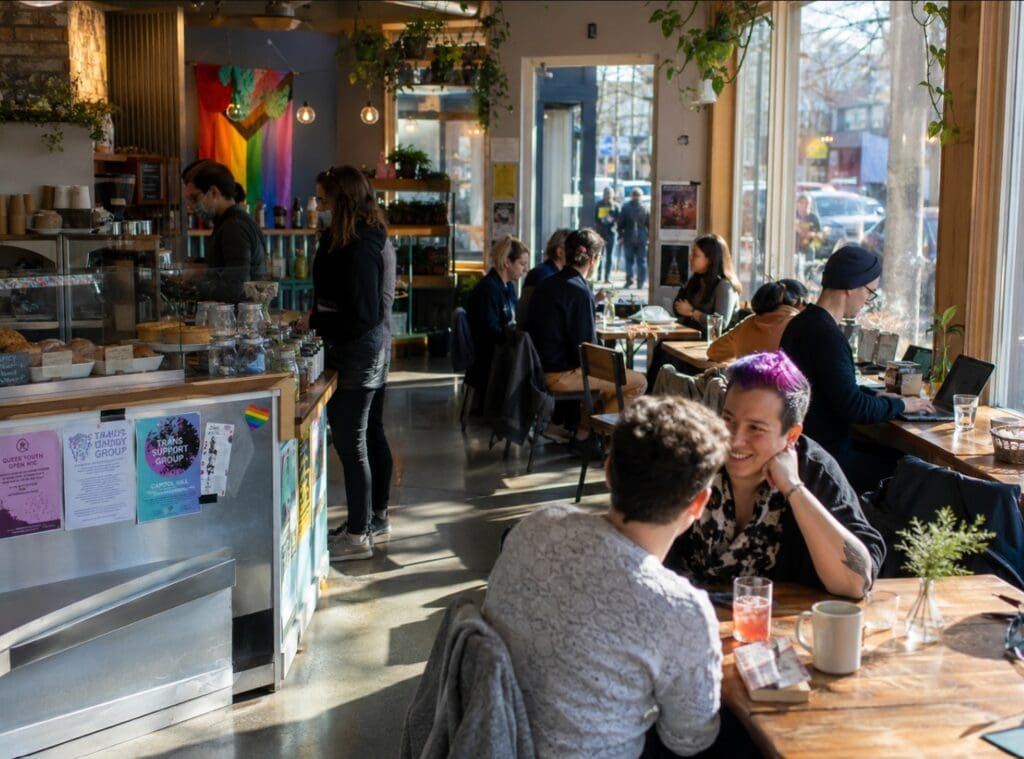
Seattle’s Capitol Hill remains the heart of the city’s LGBTQ+ scene.
Visit Seattle describes it as the city’s gay epicenter, with rainbow crosswalks, businesses, nightlife, culture, and community resources: https://visitseattle.org/things-to-do/lgbtq/.
The city’s Gay City: Seattle’s LGBTQ Center provides health, arts, cultural, educational, and community programming.
The dating vibe
Seattle has a reputation for social reserve—the so-called “Seattle Freeze.” While that label can become an oversimplification, many newcomers find that people are polite but slow to invite new acquaintances into established friend groups.
For a gay single, apps can therefore produce many conversations that remain distant or tentative.
The best solution is activity-based connection.
Seattle residents often organize social life around hiking, cycling, climbing, gaming, music, volunteering, coffee, arts, and neighborhood events. Relationships grow more easily when there is a shared reason to meet repeatedly.
Where to live
Capitol Hill
Best for LGBTQ+ visibility, nightlife, restaurants, light rail, and walkability.
First Hill and Central District
Close to Capitol Hill with different housing options and neighborhood environments.
Columbia City
More residential, culturally diverse, and connected by light rail.
Beacon Hill
Useful for airport and downtown access, with a strong community feel.
How to meet people beyond apps
Try:
- Gay City events;
- queer hiking or outdoor groups;
- board-game communities;
- music and performance events;
- volunteer organizations;
- LGBTQ+ sports;
- Capitol Hill arts programming;
- Seattle Pride activities, which operate alongside year-round advocacy: https://seattlepride.org/.
The anti-fatigue strategy
Choose a group that meets at least twice per month. Seattle’s social rhythm rewards patience. Familiarity often matters more than instant charm.
Cost and quality of life
Cost level: Very high
Seattle offers strong salaries in several industries, public transportation in central areas, extraordinary natural access, and a progressive civic culture. Housing remains expensive, particularly near Capitol Hill and major employment centers.
The climate can also affect mental health. Dark winters are real. A structured social routine is especially important for newcomers arriving in fall.
Best for
A gay single who values progressive culture, outdoor life, coffee, music, and deeper relationships built gradually through shared interests.
8. Atlanta: The Queer Capital of the South
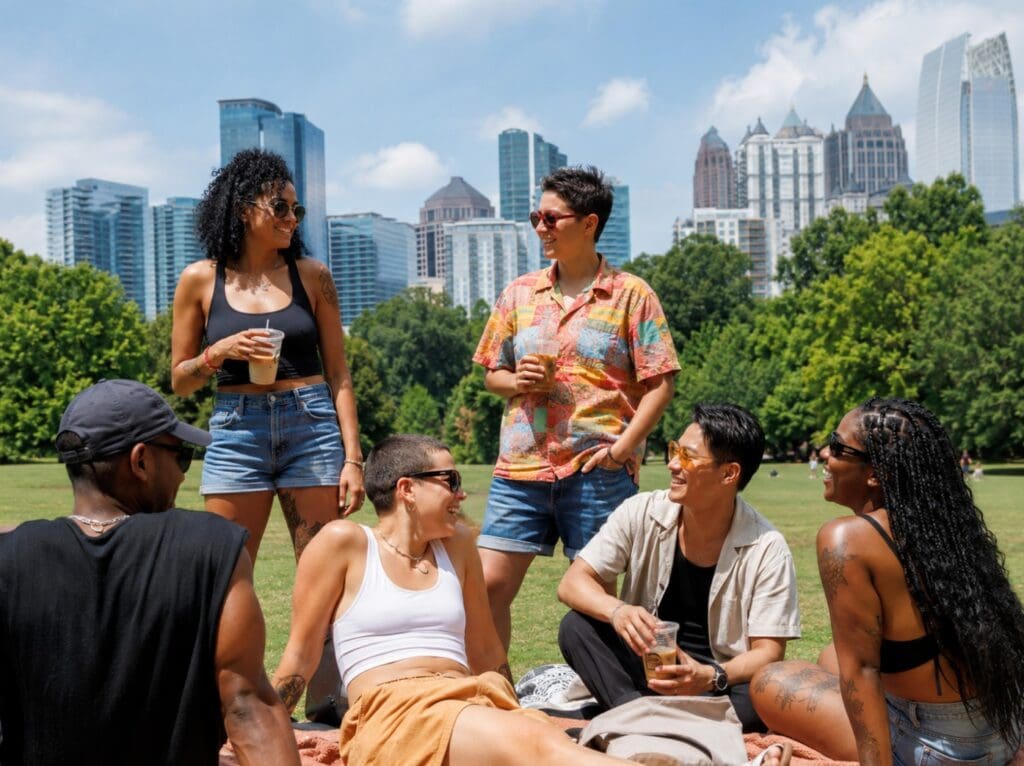
Atlanta is one of the most important LGBTQ+ cities in the United States, particularly for Black gay, bi, trans, and queer communities across the South.
Midtown remains a visible starting point, with Piedmont Park, the rainbow crosswalk at 10th and Piedmont, restaurants, nightlife, and major Pride events. Yet queer Atlanta extends through East Atlanta, Decatur, Old Fourth Ward, West Midtown, and multiple cultural and social networks.
Atlanta Pride describes itself as Georgia’s oldest nonprofit organization serving LGBTQ+ people across metro Atlanta and the South: https://atlantapride.org/.
The dating vibe
Atlanta is socially expansive.
People arrive from smaller Southern cities seeking community, career opportunity, cultural expression, and a place where they can live more openly. This gives the city a strong sense of regional gravity.
The dating pool is diverse in race, age, profession, style, and relationship goals. There are major nightlife scenes, church communities, arts organizations, professional groups, sports leagues, and social networks built through friends.
Stonewall Sports Atlanta offers kickball, volleyball, tennis, and other recreational leagues for a wide range of skill levels.
Where to live
Midtown
Best for walkability, Piedmont Park, nightlife, MARTA, and immediate LGBTQ+ visibility.
Old Fourth Ward
Best for the BeltLine, restaurants, social activity, and central access.
Decatur
More residential and community-oriented, with an established LGBTQ+-friendly reputation.
East Atlanta
Creative, nightlife-focused, and less corporate in atmosphere.
How to meet people beyond apps
Atlanta is strong for:
- recreational sports;
- Black LGBTQ+ professional and cultural networks;
- arts events;
- church and faith-based communities;
- volunteering;
- Pride programming;
- neighborhood festivals;
- friend-of-friend introductions.
The anti-fatigue strategy
Do not assume the visible Midtown nightlife scene represents everyone.
Explore groups aligned with your racial, cultural, professional, spiritual, or recreational identity. Atlanta’s strongest relationships often develop through community networks rather than random app discovery.
Cost and quality of life
Cost level: Moderate to high
Atlanta remains more attainable than the largest coastal cities, but rapid growth has increased housing costs in central neighborhoods.
A car is useful for many residents, although Midtown and selected areas are more manageable with MARTA, walking, and rideshare. Transportation expenses must be included in relocation planning.
Safety and political context
Atlanta offers extensive local LGBTQ+ community infrastructure, while Georgia’s statewide political environment may create additional concerns, particularly for trans residents.
Before moving, review current state legislation through the ACLU tracker: https://www.aclu.org/legislative-attacks-on-lgbtq-rights-2026.
Best for
A gay single seeking a large, culturally diverse Southern community with strong Black LGBTQ+ life, social networks, nightlife, and professional opportunity.
9. Minneapolis–St. Paul: Community Before Performance
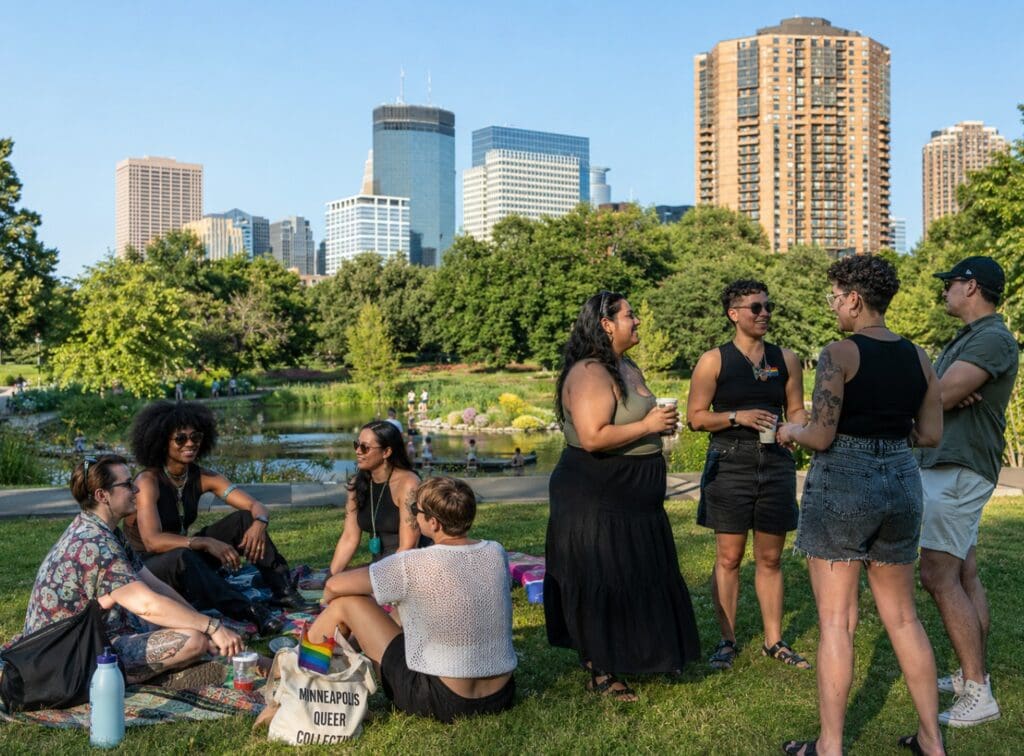
The Twin Cities offer one of the country’s strongest combinations of arts, parks, community participation, and LGBTQ+ visibility.
Meet Minneapolis maintains a dedicated LGBTQ+ guide and highlights the region’s large Pride infrastructure: https://www.minneapolis.org/lgbtq-community/.
Twin Cities Pride operates a major free festival with hundreds of vendors, community resources, and performers: https://tcpride.org/.
The dating vibe
Minneapolis social life is less centered on being seen.
People often connect through music, theater, education, activism, cycling, outdoor activities, food, and volunteer networks. The scene can feel calmer and more relationship-oriented than those of larger coastal cities.
However, newcomers may need to make a deliberate effort. Long-established friendship groups can be difficult to enter without recurring contact.
Where to live
Loring Park
Historically connected to Pride and close to downtown cultural institutions.
Uptown
Walkable in parts, with lakes, restaurants, and social activity, though the neighborhood continues to evolve.
Northeast Minneapolis
Best for arts, breweries, studios, and a more creative social environment.
St. Paul neighborhoods
Often quieter and more residential, with their own cultural scenes and potentially different housing tradeoffs.
How to meet people beyond apps
Strong options include:
- arts organizations;
- recreational sports;
- Twin Cities Pride volunteering;
- cycling and outdoor groups;
- community education;
- theater and music;
- queer book and cultural events;
- neighborhood festivals.
The anti-fatigue strategy
Use winter intentionally.
Join an indoor league, class, rehearsal group, or volunteer program before the coldest months. Waiting until February to build a social circle can make the season feel much longer.
Cost and quality of life
Cost level: Moderate
Housing is generally more attainable than in San Francisco, Seattle, Los Angeles, New York, or Washington. The region also offers strong parks, cultural institutions, and public services.
The primary lifestyle consideration is winter. Climate affects mobility, mood, dating frequency, and how far people are willing to travel for a first meeting.
Best for
A gay single who values arts, community participation, parks, a calmer dating rhythm, and a more sustainable cost of living.
10. Columbus: The Approachable Midwestern Option
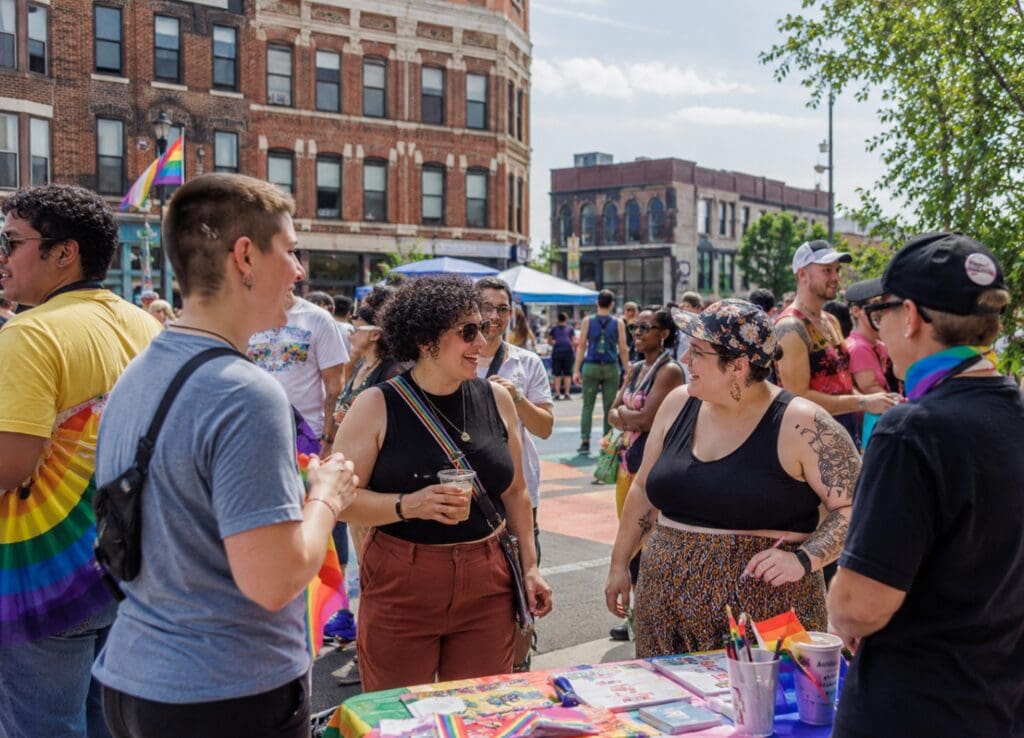
Columbus is frequently underestimated.
It has a large university, major employers, an active LGBTQ+ community, extensive Pride programming, queer sports, arts, and a social scene that is easier to enter than those of many larger cities.
Stonewall Columbus operates as a community center and organizes events throughout the year, including book clubs, yoga, discussion groups, social nights, and speed-dating-style events.
Stonewall Sports Columbus creates inclusive leagues and community activities.
The dating vibe
Columbus offers enough scale to meet new people without creating the same degree of choice overload as New York or Los Angeles.
People are more likely to share mutual connections, attend the same community events, or become familiar through repeated neighborhood routines. That can make dating feel more accountable and less disposable.
Where to live
Short North
Best for nightlife, arts, restaurants, Pride access, and walkability. It is also one of the more expensive central areas.
German Village
Historic, attractive, and suited to people who want a quieter urban lifestyle.
Clintonville
Popular with residents who value neighborhood life, local businesses, and a more residential pace.
Olde Towne East
Architecturally distinctive and connected to central Columbus, with an evolving social scene.
How to meet people beyond apps
Columbus is especially effective for:
- Stonewall Columbus programs;
- queer sports;
- Ohio State-related cultural events;
- volunteer organizations;
- arts and theater;
- local bookshops;
- Pride planning and service work.
The anti-fatigue strategy
Become a regular.
In a city of this size, returning to the same class, center, café, or league creates recognition quickly. That recognition is one of the strongest antidotes to app-based anonymity.
Cost and quality of life
Cost level: More attainable
Columbus has experienced rapid growth, so affordability should not be romanticized. However, it remains more accessible than the largest coastal markets.
Car ownership is useful for many neighborhoods. The monthly cost of transportation should be included in any comparison with denser but more expensive cities.
Best for
A gay single who wants a substantial LGBTQ+ community, regular social programming, professional opportunity, and a more approachable cost structure.
11. Jacksonville: The Close-Knit Community
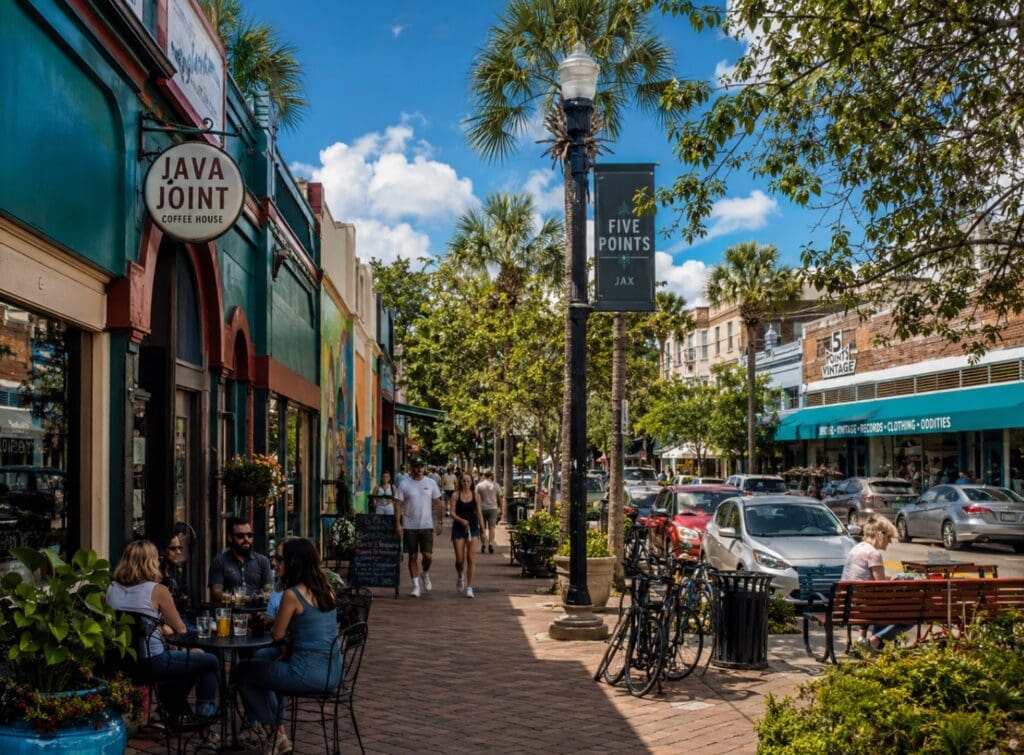
Jacksonville is not an obvious national gay destination. That is precisely why it belongs in this guide.
The city’s LGBTQ+ life is less commercialized and more dependent on community relationships. Riverside, Avondale, and Five Points form the most visible queer-friendly cultural zone.
Visit Jacksonville describes these historic neighborhoods as home to LGBTQIA+-owned and friendly businesses and as the area where the city’s community gathered for its first Pride festivities: https://www.visitjacksonville.com/blog/an-lgbtqia-guide-to-jacksonvilles-riverside-avondale-five-points/.
River City Pride continues to organize celebrations, community events, a parade, and local resources: https://jaxrcpride.org/.
The dating vibe
Jacksonville is a city where people can become familiar.
You may see the same person at the Riverside Arts Market, a Five Points coffee shop, Park Place Lounge, a community fundraiser, an arts event, or Pride programming. That repetition creates an intimacy that is harder to find in cities where every social environment contains thousands of strangers.
The scene also rewards initiative. A newcomer cannot simply wait for a perfectly formed gay neighborhood to deliver a social life. You have to attend events, start conversations, volunteer, and return.
Riverside and Five Points
Five Points has an alternative, artistic, and relaxed atmosphere. It offers coffee shops, independent stores, neighborhood restaurants, rainbow crosswalks, and proximity to Memorial Park and the Cummer Museum.
The Riverside Arts Market creates one of the best recurring daytime social environments in the city.
The Cummer Museum of Art & Gardens provides cultural programming and riverfront space.
Park Place Lounge offers a neighborhood-bar setting rather than a highly produced club experience: https://parkplaceloungejax.com/.
Community institutions
JASMYN provides services, advocacy, health resources, housing support, mental health services, and young-adult programming.
For younger gay singles or people arriving without an established network, organizations like JASMYN can be far more valuable than nightlife.
Where to live
Riverside and Five Points
Best for cafés, arts, historic homes, queer-friendly businesses, and walkable local routines.
Avondale
Quieter, more polished, and well suited to couples or people who want neighborhood charm near Riverside.
Brooklyn
Useful for newer apartments, downtown access, and proximity to Riverside.
San Marco
A strong option for restaurants, date-night atmosphere, and a somewhat calmer lifestyle.
How to meet people beyond apps
Jacksonville works best through:
- River City Pride events;
- JASMYN young-adult programming;
- Riverside Arts Market;
- arts and museum events;
- volunteer organizations;
- neighborhood bars;
- local sports and outdoor groups;
- repeated visits to Five Points businesses.
The anti-fatigue strategy
Use apps to identify people, but build the relationship in the neighborhood.
Suggest a coffee in Five Points, the Saturday market, the Cummer gardens, a walk in Memorial Park, or an early drink at a relaxed venue. Jacksonville is particularly well suited to low-pressure dates that do not feel like auditions.
Cost and quality of life
Cost level: More attainable
Jacksonville is generally more accessible than San Francisco, New York, Los Angeles, Seattle, or Washington. However, the city is geographically enormous, and car ownership can become a major hidden expense.
Choose housing based on where you expect to socialize. A cheaper apartment far from Riverside, Downtown, work, and the Beaches can create an isolated lifestyle.
Florida political context
Jacksonville has visible community organizations and local Pride infrastructure, while Florida’s statewide policies remain a concern for many LGBTQ+ residents, especially trans people and families.
Equality Florida maintains current travel and policy guidance: https://www.eqfl.org/florida-travel-advisory.
Best for
A gay single who wants a smaller, relationship-driven community, warmer weather, historic neighborhoods, beaches, and a slower social pace.
Which city is best for your dating personality?
Choose San Francisco if you want history, activism, and a deeply queer civic culture
You will gain strong institutions and public visibility but need a realistic housing strategy.
Choose Los Angeles if you want variety and can manage distance
It offers almost every possible subculture, but geography can make dating feel like logistics.
Choose New York if you want the largest possible pool
It is unmatched for diversity, but you must actively resist choice overload.
Choose Chicago if you want the best overall balance
It combines community institutions, sports, nightlife, transit, and comparatively sustainable city living.
Choose Philadelphia if you want compact, walkable queer life
It is ideal for people who like East Coast culture without New York’s full intensity.
Choose Washington if you connect through ambition and shared causes
Professional and advocacy communities provide strong IRL entry points.
Choose Seattle if you prefer shared activities to performative socializing
Connection grows slowly but can become substantial.
Choose Atlanta if cultural diversity and Southern queer community matter most
It offers major social reach, especially for Black LGBTQ+ singles, but requires transportation planning.
Choose Minneapolis if you want calm, culture, and quality of life
It rewards people who build consistent routines and can tolerate winter.
Choose Columbus if you want an approachable community with lower barriers to entry
It is one of the strongest options for becoming a recognized local rather than an anonymous profile.
Choose Jacksonville if you want a close-knit community and a slower pace
It requires initiative, but the relationships can feel less disposable.
A practical relocation test before moving
📋 Should I Move Here as a Gay Single?
Social & Dating Scene
/ 20Legal & Safety
/ 15Cost of Living & Opportunity
/ 10Community & Culture
/ 10Lifestyle & Wellness
/ 5📊 What Your Score Means
Do not relocate based solely on a Pride weekend or a three-day vacation.
Before committing, spend at least one ordinary week in the city and test the following:
Housing reality
Tour apartments in neighborhoods you could genuinely afford. Calculate utilities, transportation, insurance, parking, and local taxes.
Weeknight mobility
Travel from a potential home to a community event at 6:30 p.m. The experience may be completely different from a weekend tourist route.
Daytime queer life
Visit a community center, café, bookstore, sports league, volunteer event, or cultural program. Nightlife alone will not show whether you can build a life there.
Emotional fit
Ask yourself:
- Do I feel energized or overstimulated?
- Can I imagine ordinary Tuesdays here?
- Does the scene contain people like me?
- Would I be able to make friends if dating went badly?
- Can I afford to participate without financial panic?
- Is the local political environment acceptable for my needs?
Local safety and legal context
The Human Rights Campaign’s Municipal Equality Index compares local LGBTQ+ policies and services: https://www.hrc.org/resources/municipal-equality-index.
The ACLU tracks current state legislation affecting LGBTQ+ people: https://www.aclu.org/legislative-attacks-on-lgbtq-rights-2026.
Local legal protections and state laws can point in different directions, so review both.
How to beat dating fatigue after you move
Moving to a better city does not automatically repair an unhealthy dating pattern.
A person can reproduce the same swipe fatigue in San Francisco, Chicago, Jacksonville, or anywhere else. The solution is to change the structure of your dating life.
Use no more than two apps
Choose tools with different functions. One may offer a broad dating pool; another may focus on relationship prompts, community, or a specific identity group.
Join one recurring IRL activity immediately
Do not wait until you “settle in.” A sports league, class, volunteer role, choir, book club, or community-center program creates structure before isolation takes hold.
Build friendship alongside dating
A boyfriend should not be your only route into the city. Friends create invitations, introductions, emotional support, and a sense of belonging that reduces pressure on every date.
Date geographically
Choose people you can realistically see. Attraction cannot overcome a two-hour weeknight commute forever.
Prefer repetition over constant novelty
Seeing the same people regularly may feel less exciting than opening a new grid of profiles. It is also how trust, reputation, friendship, and real compatibility become visible.
Treat the city as a relationship ecosystem
Your best romantic connection may come through:
- a teammate;
- a friend’s roommate;
- a volunteer project;
- a cultural event;
- a regular café;
- a former app match who becomes a friend;
- someone you did not initially consider your “type.”
The point is not to stop using apps. It is to give love more than one route to find you.
Final verdict: the best U.S. city for a gay single
There is no universal winner.
Chicago offers the strongest overall balance.
New York provides the most options.
San Francisco offers the deepest historic and civic LGBTQ+ identity.
Los Angeles provides the widest range of social niches.
Philadelphia is one of the easiest cities for building a walkable queer routine.
Washington rewards people who connect through work, advocacy, and organized groups.
Seattle suits activity-based, slower-forming relationships.
Atlanta offers one of the country’s most important and diverse queer social ecosystems.
Minneapolis combines community, culture, and relative stability.
Columbus makes it easier to become part of something.
Jacksonville proves that a smaller and less famous scene can still create meaningful love and community.
The best city is not the place where you receive the most matches.
It is the place where you can become a regular.
A regular at a café.
A regular at a community center.
A regular on a team.
A regular at a neighborhood event.
A regular in the lives of people who begin to know you.
That is the difference between being visible and being connected.
For a gay single trying to find love in 2026, the goal is not simply to live where the dating pool is largest. It is to choose a city where your daily life creates enough repeated, human contact for someone to become more than a profile.
About the Author
Alan VEST is an independent LGBTQ+ lifestyle journalist.
Their work focuses on gay single life, dating-app fatigue, queer urban sociology, community institutions, neighborhood culture, relocation, and the ways LGBTQ+ people build lasting relationships beyond digital platforms.
This guide combines current information from official tourism organizations, LGBTQ+ community centers, sports leagues, Pride organizations, federal cost-of-living data, and civil-rights resources. Housing costs, venue schedules, and state laws change frequently, so readers should verify essential details before traveling or relocating.