Updated: July 2026
Table of Contents
San Jose’s queer scene is easy to underestimate.
San Jose, California Rainbow Index & Weather Dashboard
The city scored 100 in 2023, up from 97 in 2022, and has maintained a perfect score for multiple consecutive years.[reference:0]
It does not announce itself with a vast, internationally famous gayborhood like San Francisco’s Castro. Nor does it offer the dense concentration of nightlife found in West Hollywood or Chicago’s Northalsted. Instead, LGBTQ+ life in San Jose is built through a smaller downtown district, a handful of enduring bars, community institutions, cultural organizations, local cafés, recreational groups, Pride events, and relationships that stretch across the wider South Bay.
That makes San Jose less immediately legible to a first-time visitor but often more personal once you understand how the city works.
The scene is shaped by several realities at once:
- San Jose is geographically large.
- Many residents commute across Silicon Valley.
- Social life is spread between Downtown, The Alameda, Santana Row, Campbell, Los Gatos, Santa Clara, Mountain View, and nearby cities.
- San Francisco remains close enough for a night out, yet far enough that it should not become your only queer reference point.
- Community centers and recurring events matter at least as much as bars.
In practical terms, gay San Jose is not about completing a checklist of venues. It is about learning the local rhythm: coffee in SoFA, dinner near San Pedro Square, a community event at the Billy DeFrank Center, dancing at Splash, an early drink at Mac’s, a day date in Campbell, and perhaps a Caltrain ride to San Francisco when you want a larger nightlife circuit.
This guide is designed for LGBTQ+ travelers, business visitors, new residents, tech workers, couples, solo travelers, and anyone wondering what queer life actually feels like in the South Bay.
Gay San Jose at a glance
🗺️ Columbus Queer Venues & Businesses 15+ Spots
Explore LGBTQ+ bars, clubs, community centers, and queer-owned businesses in Columbus and nearby areas. Click on any pin or list item to discover more!
Understanding San Jose: a queer city without one dominant gayborhood
San Jose is the largest city in the Bay Area, but its LGBTQ+ life can feel smaller than the scene in San Francisco.
That contrast is not simply about population. San Francisco’s queer history is concentrated in highly recognizable neighborhoods, while San Jose developed through suburban growth, technology corridors, residential districts, and a more decentralized South Bay identity.
The local history project Queer Silicon Valley explains this difference well: major LGBTQ+ organizing happened here even without a single district comparable to the Castro or Greenwich Village.
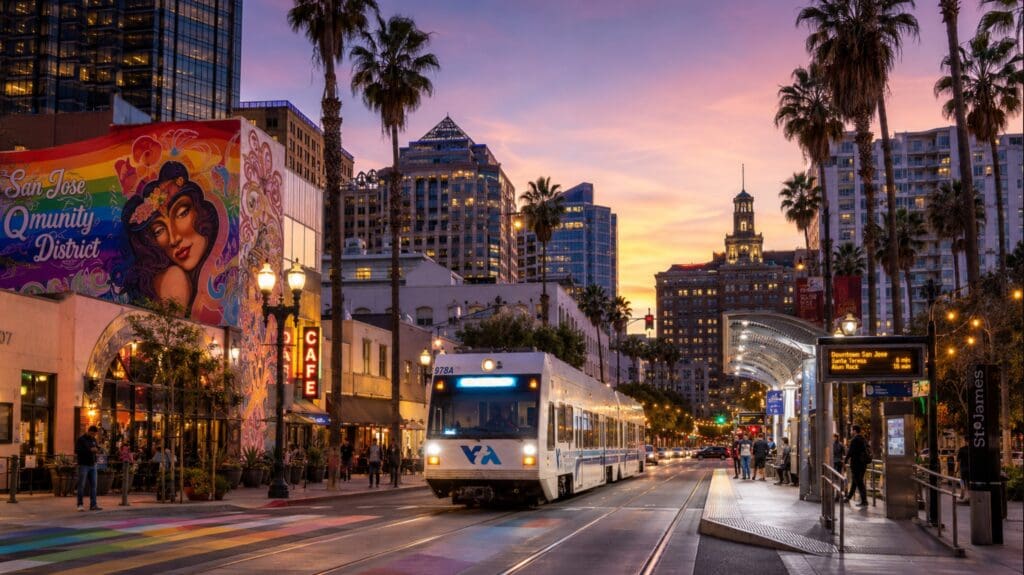
San Jose nevertheless has an official LGBTQ+-centered area: the Qmunity District on Post Street.
The district runs through a small section of Downtown between South First and South Market Streets. Its official website describes it as a welcoming place for socializing, shopping, dining, networking, and nightlife: Qmunity District.
It is physically small. You can cross it in minutes. Yet it matters because it gives queer South Bay life a visible address.
The district includes:
- Splash Video Dance Bar;
- Mac’s Club;
- queer-centered murals and public art;
- small businesses;
- event spaces;
- proximity to restaurants, museums, light rail, and hotels.
The right expectation is not “San Jose’s Castro.” Think of it as a cultural anchor from which the rest of the South Bay scene expands.
Nightlife in Downtown San Jose
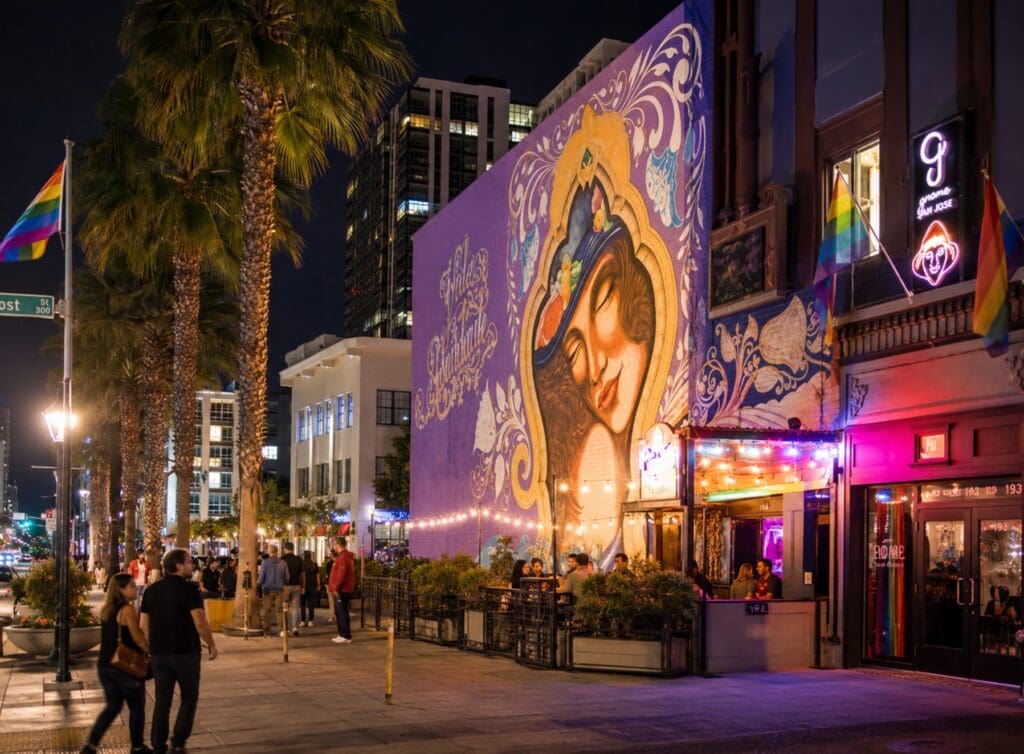
San Jose’s permanent gay-bar scene is currently compact. That means the event calendar often matters more than the number of venues.
A Thursday drag show, Pride weekend party, community fundraiser, karaoke night, or special DJ event can create a much bigger atmosphere than an ordinary early-week evening.
Before going out, check official websites and social media. South Bay nightlife can change quickly, and longstanding institutions have faced closures.
Splash Video Dance Bar: the high-energy center of gay nightlife
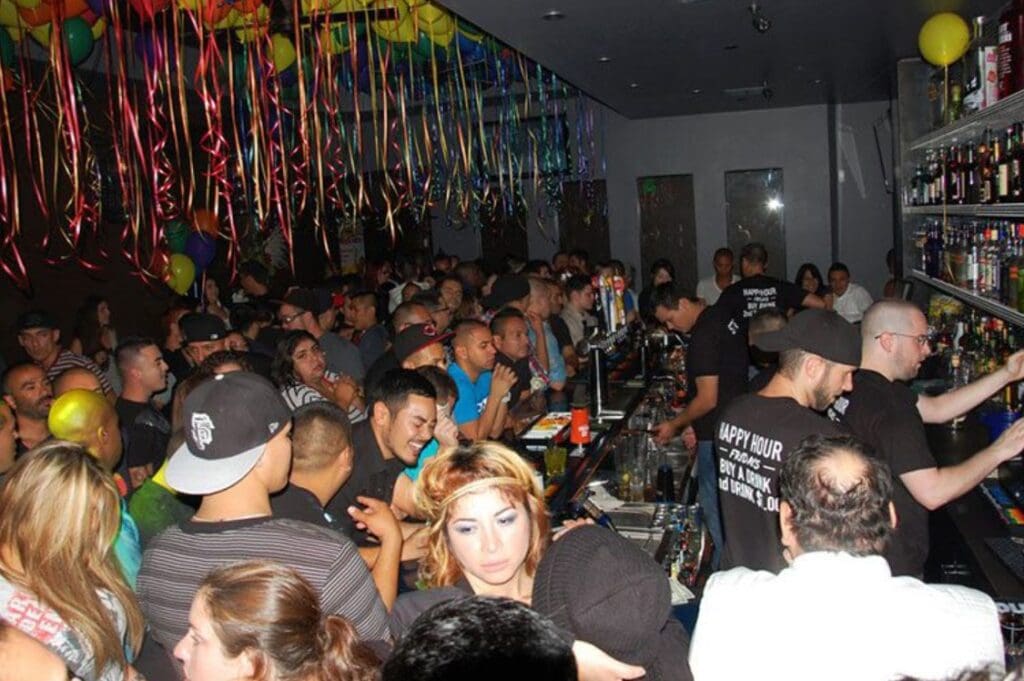
Splash San Jose is the city’s main LGBTQ+ dance club and the clearest destination for travelers who want a full night out.
The venue is located at 65 Post Street in the Qmunity District. Its layout, large video screens, multiple levels, DJs, drag performances, dancers, and rooftop or outdoor areas give it a distinctly visual, high-energy character.
What Splash actually feels like
Splash is not a quiet neighborhood bar.
The experience is built around movement: music videos across multiple screens, people circulating between levels, groups gathering near the bar, performers taking over the room, and a dance floor that becomes progressively busier as the night develops.
Earlier hours are easier for:
- meeting friends;
- having a conversation;
- exploring the venue;
- watching a show without fighting through a dense crowd.
Later hours are better for:
- dancing;
- large themed events;
- Pride celebrations;
- visitors who want a classic nightclub experience.
The crowd can include gay men, lesbians, bi and queer guests, trans and nonbinary people, allies, university students, young professionals, longtime South Bay residents, and visitors from across the region. However, the mix changes significantly by event.
Best strategy for Splash
Do not arrive without checking the night’s theme.
One evening may center drag or bingo, while another may be built around a DJ, holiday, performer, or Pride event. Follow the venue’s official Instagram and website before committing your entire evening.
Also, keep in mind that Downtown San Jose can become quieter within a few blocks of busy nightlife. Use a rideshare or walk with friends when returning to a hotel late at night.
Mac’s Club: history, conversation, and the neighborhood-bar experience
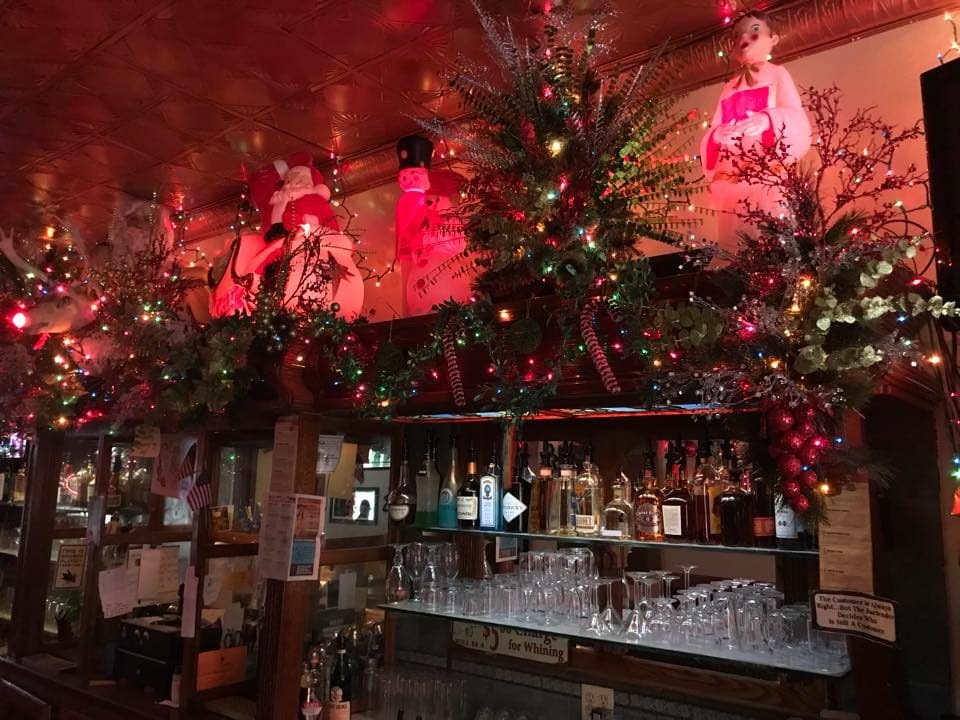
A few doors away, Mac’s Club provides a completely different experience.
Visit San Jose describes Mac’s as the city’s oldest gay bar, with a small, friendly atmosphere and patio seating. The bar currently operates at 39 Post Street.
Mac’s feels more like a local institution than a production.
Expect:
- regulars at the bar;
- stronger emphasis on conversation;
- a mixed-age crowd;
- a relaxed patio;
- a jukebox or television;
- straightforward drinks;
- a less fashion-conscious atmosphere.
This is the better choice when you want to sit, observe, and actually talk to someone.
For solo visitors, Mac’s can be easier than a large club, particularly during happy hour or early evening. Sit at the bar rather than isolating yourself at a table. In a smaller venue, a simple question about the neighborhood or upcoming events can become a real conversation.
Mac’s versus Splash
Choose Mac’s for:
- conversation;
- local history;
- a neighborhood-bar atmosphere;
- an early drink;
- a more relaxed social experience.
Choose Splash for:
- drag;
- dancing;
- visual energy;
- large events;
- a late night.
The strongest evening often combines both: Mac’s first, then Splash when the dance floor becomes more active.
The loss of Renegades and what it says about queer nightlife
San Jose’s nightlife landscape changed again in May 2026 when Renegades, a longstanding leather-and-Levi’s bar and community institution, closed permanently.
Local coverage described the closure as a significant loss for the South Bay’s already limited permanent LGBTQ+ bar scene: https://hoodline.com/2026/05/san-jose-leather-landmark-renegades-shutters-leaving-just-two-gay-bars-standing/.
That closure is more than a directory update.
It illustrates why travelers should support the remaining venues, tip staff, attend fundraisers, and understand that queer nightlife spaces serve functions beyond entertainment. They preserve community memory, host benefit events, employ performers, create chosen family, and give people a place to exist visibly.
It also explains why San Jose’s scene increasingly depends on temporary events, community groups, sports, Pride programming, and mixed venues rather than a large permanent bar circuit.
Community and culture: the real heart of queer San Jose
If you only visit Splash and Mac’s, you will see the nightlife but miss the infrastructure that has sustained LGBTQ+ life in the South Bay for decades.
The Billy DeFrank LGBTQ+ Community Center
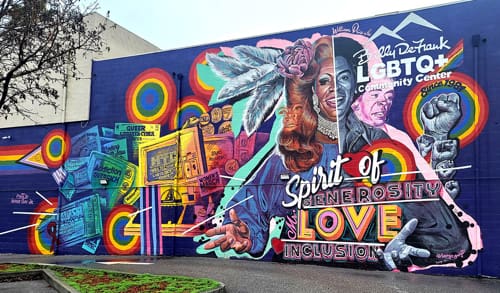
The Billy DeFrank LGBTQ+ Community Center is the most important LGBTQ+ institution in San Jose.
It stands at 938 The Alameda, roughly half a mile from San Jose Diridon Station. The location is convenient enough for a visitor arriving by Caltrain, but it feels separate from the commercial nightlife of Post Street.
That separation matters.
The DeFrank Center is not a bar, tourist attraction, or corporate inclusion display. It is a working community center where people attend support groups, discussion groups, social activities, educational programs, free testing, leadership events, senior gatherings, and community celebrations.
Why the center is historically important
The center opened on March 1, 1981, after Santa Clara County voters repealed local housing and employment protections for gay men and lesbians.
Its creation was therefore an act of local resilience.
The center was named after William Price, an African American activist and drag performer who used the stage name Billy DeFrank and raised funds for community causes. The center’s official history is available at defrankcenter.org/info, while the detailed Queer Silicon Valley history places it within decades of South Bay activism.
Over time, the center became an incubator for:
- political groups;
- social organizations;
- trans support networks;
- HIV/AIDS services;
- cultural programs;
- sports and recreation;
- senior activities;
- LGBTQ+ publications and archives;
- Silicon Valley workplace activism.
The center’s history is closely tied to the development of LGBTQ+ protections within the technology industry. Groups such as High Tech Gays met there and challenged discriminatory security-clearance practices.
In other words, Silicon Valley’s current corporate Pride branding did not appear spontaneously. Local activists fought for workplace recognition long before rainbow logos became standard in June.
Visiting the center respectfully
Check the official calendar before visiting. Many activities are designed for specific identities, age groups, or support needs and should not be treated as tourist programming.
Public events, community celebrations, bingo, exhibitions, fundraisers, and open social activities can be excellent ways to connect.
If you are moving to the South Bay, the center should be one of your first stops.
Q Corner and LGBTQ wellness resources
The Q Corner is a peer-driven Santa Clara County behavioral-health program serving LGBTQ+ people through community connection, resources, referrals, and support.
This matters particularly for people who are:
- new to the region;
- seeking affirming mental-health services;
- trans or nonbinary;
- isolated;
- looking for peer groups;
- navigating local healthcare.
Santa Clara County also operates an Office of LGBTQ Affairs, which coordinates policy, resources, research, and community support.
The existence of a county-level LGBTQ office gives the South Bay a form of institutional support that visitors may not immediately see from the nightlife scene.
Queer Silicon Valley: learning the history the tech narrative often erases
Queer Silicon Valley is an invaluable digital history project documenting activism, nightlife, politics, community organizations, HIV/AIDS, trans history, Latinx organizing, workplace advocacy, Pride, and culture throughout Santa Clara County.
It is especially useful because San Jose is often described only through technology.
That version of the city leaves out:
- drag performers;
- lesbian and feminist organizing;
- gay bars;
- queer people of color;
- HIV/AIDS activism;
- political campaigns;
- trans community-building;
- the fight for protections inside technology companies.
Spend time with the project before or during your visit. It will change how you understand otherwise ordinary streets.
Rainbow Chamber of Commerce Silicon Valley
Travelers who want to support LGBTQ+-owned and allied businesses should consult the Rainbow Chamber of Commerce Silicon Valley.
The chamber publishes a business directory and organizes networking, educational, and community events. Its listings can be more useful than generic “gay-friendly” guides because ownership and participation are easier to verify.
Silicon Valley Pride 2026
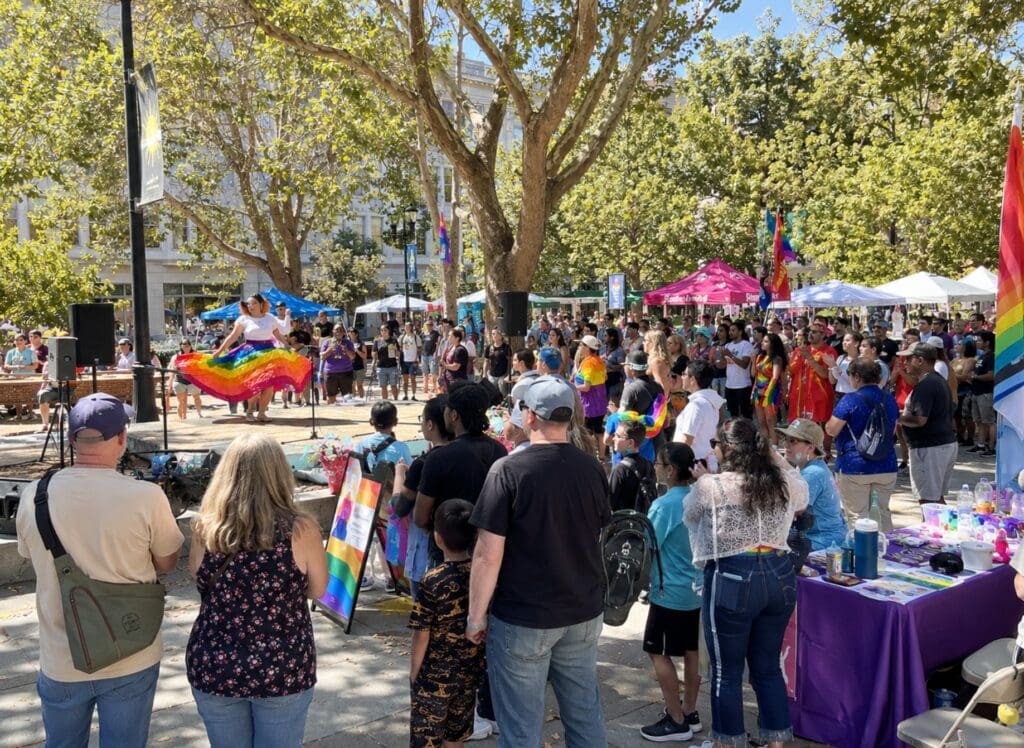
Silicon Valley Pride is the South Bay’s largest annual LGBTQ+ celebration.
The official Silicon Valley Pride website confirms that the 2026 festival and parade are scheduled for August 29 and 30, 2026 in Downtown San Jose.
The festival typically combines:
- entertainment;
- community organizations;
- vendors;
- health resources;
- local businesses;
- nightlife events;
- a parade;
- family and community programming.
Unlike San Francisco Pride, which dominates the Bay Area’s June calendar, Silicon Valley Pride takes place later in the summer. This gives the South Bay its own major moment rather than positioning it only as an extension of San Francisco.
Late August in San Jose can be warm. Bring water, sunscreen, a hat, and comfortable shoes. Downtown pavement holds heat, and shade may be limited during peak hours.
Cafés and restaurants: where queer visitors can actually spend the day
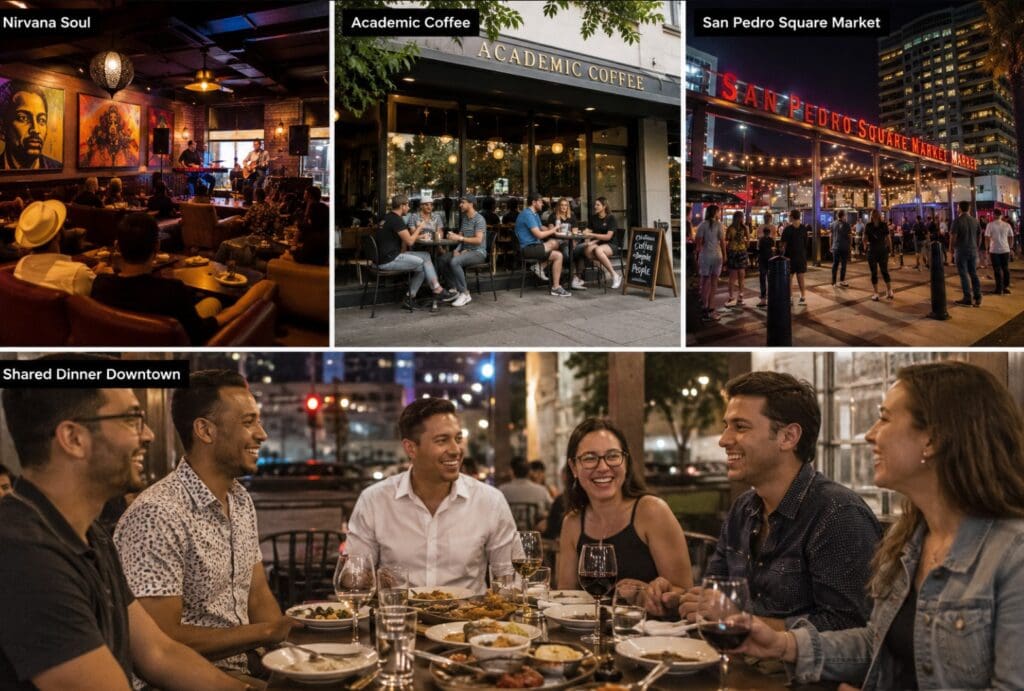
Not every useful LGBTQ+ travel recommendation needs to be explicitly gay-owned.
A strong local guide should distinguish between verified queer institutions and mixed-crowd establishments that are practical, welcoming places to meet, work, date, or recover after nightlife.
Ownership and policies can change, so use the Rainbow Chamber directory when supporting certified or self-identified LGBTQ+ businesses is your priority.
Nirvana Soul: joyful coffee and community energy
Nirvana Soul is one of Downtown San Jose’s most welcoming daytime stops.
Founded by sisters Jeronica Macey and Be’Anka Ashaolu, the café emphasizes community and joyful experiences. The Downtown location serves coffee, tea, waffles, pastries, and creative drinks such as ube and lavender-based lattes.
The atmosphere is colorful and social rather than hushed or corporate.
It works well for:
- a casual first date;
- remote work;
- meeting a local contact;
- recovering after a late night;
- starting an exploration of the SoFA District.
Because the café attracts students, artists, professionals, and Downtown residents, it offers a broader view of San Jose than a hotel lobby or tech-campus coffee bar.
Academic Coffee: a quieter SoFA meeting point
Academic Coffee is another strong option in or near the SoFA arts district.
Visit San Jose describes it as a contemporary neighborhood café known for specialty coffee, tea, creative drinks, and a welcoming environment for solo visitors or casual meetups: https://www.sanjose.org/listings/academic-coffee.
Academic is better suited to conversation than a crowded weekend food hall. It works for:
- a morning meeting;
- a low-pressure date;
- reading or journaling;
- planning the day;
- waiting for nearby museums or galleries to open.
San Pedro Square Market: the easiest group choice
San Pedro Square Market is one of Downtown’s most reliable social destinations.
The market combines multiple food vendors, bars, outdoor seating, music, events, and the historic Peralta Adobe plaza.
It is especially useful when a group cannot agree on food.
One person can order pizza, another sushi, another Latin American food, and everyone can meet at a shared table. That flexibility removes pressure from casual dates and group gatherings.
The atmosphere changes over the day:
- lunch is relaxed;
- after-work hours become social;
- evenings can be lively with music and events;
- major sports or city events can make the entire area extremely crowded.
SoFA Market: casual food in the arts district
SoFA Market is a smaller, community-oriented food hall on South First Street.
It is practical when you want:
- multiple food choices;
- a casual meal;
- a stop near arts venues;
- something less intense than San Pedro Square;
- an easy place to meet before a show.
The wider SoFA District contains galleries, theaters, music, street events, cocktail bars, and creative spaces. Check current programming because the district is strongest when an event is happening.
Petiscos: Portuguese small plates for a real dinner
Petiscos serves Portuguese small plates based on family recipes.
Sharing dishes makes it a good choice for a date or small group. It also reflects an important part of San Jose’s cultural identity: the city and surrounding region have longstanding Portuguese and Azorean communities that are often overlooked in generic Silicon Valley coverage.
Reserve on busier evenings.
Mezcal: Oaxacan food in a distinctive Downtown setting
Mezcal Restaurant serves traditional Oaxacan cuisine in Downtown San Jose.
The covered patio and distinctive dining room work well for:
- dinner before Splash;
- a date that needs enough time for conversation;
- visitors who want more than generic California cuisine;
- groups staying near central hotels.
Because it sits close to Post Street, it is one of the most convenient dinner-to-nightlife combinations.
Paper Plane: cocktails without nightclub pressure
Paper Plane is a craft-cocktail bar on South First Street.
It is not a gay bar. However, its open, mixed-crowd atmosphere provides a useful alternative for LGBTQ+ travelers who want quality drinks without immediately committing to a dance club.
Start here when you want a quieter cocktail, then walk toward the Qmunity District later.
Daytime culture beyond coffee
San Jose is not a city where every major attraction is packed into a postcard district. Nevertheless, several daytime stops fit naturally into an LGBTQ+ weekend.
San Jose Museum of Art
The San Jose Museum of Art sits beside Plaza de César Chávez in the heart of Downtown.
Its manageable size makes it ideal for a date or a short cultural break. You can visit without losing an entire day, then continue to a café, dinner, Pride event, or Post Street.
The Tech Interactive
The Tech Interactive explores science, engineering, innovation, and technology through interactive exhibits.
It is particularly suitable for:
- visitors traveling with family;
- tech professionals who want a more playful experience;
- rainy or very hot afternoons;
- couples who prefer an activity to sustained small talk.
Japanese American Museum of San Jose
The Japanese American Museum of San Jose documents Japanese American history, including immigration, agriculture, wartime incarceration, and community life.
Located in Japantown, it provides a deeper view of the region than the standard technology narrative.
Municipal Rose Garden
The Municipal Rose Garden is a calm, free outdoor stop near The Alameda and the Rose Garden neighborhood.
It works well as a short walk before or after visiting the Billy DeFrank Center.
Santana Row and the Winchester Mystery House
Santana Row is a polished outdoor shopping and dining district across from the Winchester Mystery House.
The area is not a queer district, but it can be useful for:
- upscale dinners;
- shopping;
- hotel stays;
- date nights;
- visitors who prefer a designed, self-contained environment.
The atmosphere is far more polished and commercial than Downtown or The Alameda.
Exploring the wider South Bay
[Insert an interactive South Bay map connecting Downtown San Jose with Campbell, Los Gatos, Santa Clara, Mountain View, and San Francisco]
🗺️ South Bay Regional Map Cities · Transit · Landmarks
Connecting Downtown San Jose with Campbell, Los Gatos, Santa Clara, Mountain View, and San Francisco — with transit lines, key landmarks, and LGBTQ+ venues.
📌 Click any pin on the map to see details and addresses.
🚆 Caltrain runs from San Francisco (4th & King) through South Bay to Diridon Station, with stops in Mountain View, Santa Clara, and San Jose.
🚊 VTA Light Rail connects Downtown San Jose with Campbell, Santa Clara, and Mountain View.
Sources: Caltrain · VTA · Visit San Jose
Queer life in Silicon Valley does not stop at the San Jose city limit.
Many residents work, live, date, and socialize across several cities. A person may live in Campbell, work in Santa Clara, attend a group at the Billy DeFrank Center, and go to San Francisco once a month.
Understanding this regional movement is essential.
Campbell: the easiest relaxed evening outside Downtown
Downtown Campbell has restaurants, cafés, bars, shops, events, and a compact main street. The official district site maintains a current directory at downtowncampbell.com.
The vibe is:
- suburban but walkable;
- lively without feeling like a nightclub district;
- good for low-pressure dates;
- popular for brunch, dinner, and local events.
VTA’s Green Line runs between central San Jose and Winchester Station in Campbell. Check current service through the VTA Green Line page.
Campbell is especially good when you want to meet someone somewhere calmer than Downtown without committing to a full drive into the mountains or up the Peninsula.
Los Gatos: romantic, scenic, and more expensive
Los Gatos sits at the base of the Santa Cruz Mountains.
Its historic Downtown offers restaurants, boutiques, wine, cafés, and access to outdoor spaces. The official visitor page highlights Downtown and the Los Gatos Creek Trail: https://www.losgatosca.gov/3/Visiting-Los-Gatos.
Los Gatos works well for:
- a romantic weekend;
- an anniversary dinner;
- hiking or walking;
- wine-related day trips;
- visitors who prefer a quiet hotel to Downtown nightlife.
The Los Gatos Creek Trail links portions of San Jose, Campbell, and Los Gatos.
However, Los Gatos is not the most convenient base for gay nightlife. Use a car or rideshare, and do not assume you can return from Splash quickly or cheaply after closing.
Mountain View and the Peninsula
Mountain View’s Castro Street not to be confused with San Francisco’s Castro District offers restaurants, cafés, and Caltrain access.
The Peninsula’s LGBTQ+ scene is also dispersed, often organized through workplaces, community groups, private events, and regional organizations rather than permanent gay venues.
For travelers visiting technology companies, Mountain View or Santa Clara may be the most practical hotel location. However, Downtown San Jose offers a more visible nightlife and cultural base.
How to get around San Jose and Silicon Valley
San Jose is spread out. The map can be deceptive because several neighborhoods appear close but are separated by highways, large blocks, rail corridors, or environments that are unpleasant to walk after dark.
From San Jose International Airport
Norman Y. Mineta San Jose International Airport is close to Downtown by regional standards.
VTA provides airport connections through bus Route 60 and light-rail transfers. Current information is available through the VTA light-rail guide and Route 60 page.
A rideshare is generally the easiest option when:
- you arrive late;
- you have luggage;
- you are staying at Santana Row, Campbell, or Los Gatos;
- your schedule is tight.
Downtown
Once you are Downtown, walk between:
- Post Street;
- San Pedro Square;
- Plaza de César Chávez;
- SoFA;
- central hotels;
- the San Jose Museum of Art;
- convention facilities.
Use rideshare late at night if your route passes through quiet blocks.
VTA light rail
VTA light rail connects Downtown with areas including:
- Diridon Station;
- Campbell;
- North San Jose;
- Milpitas BART;
- Santa Clara employment areas;
- Levi’s Stadium;
- Mountain View Caltrain.
It is useful but not a complete substitute for a car. Service frequency and late-night coverage may not match every nightlife plan.
Always use the trip planner rather than relying on memory.
Caltrain: San Jose to San Francisco
Caltrain is the most direct public-transportation link between Downtown San Jose and San Francisco.
The electric service can make the journey between San Jose and San Francisco in roughly an hour, depending on the train pattern. San Jose Diridon Station is the primary South Bay station.
Caltrain is useful for:
- a Castro day trip;
- San Francisco Pride;
- Giants games;
- concerts;
- a weekend split between both cities;
- travelers flying through SFO.
However, check the last return train before going out. A San Francisco club night can easily continue after rail service becomes inconvenient.
Service changes and construction also occur, so consult the current Caltrain status page.
BART
BART serves the Berryessa/North San Jose and Milpitas stations.
The Berryessa/North San Jose station connects to Downtown through VTA buses. It is useful for reaching the East Bay and San Francisco, but it is less convenient than Caltrain for a visitor already staying near Diridon or Downtown.
Do you need a car?
You do not need a car for a short Downtown-focused trip.
You probably do need one or regular rideshare use when your plans include:
- Los Gatos;
- multiple tech campuses;
- wineries;
- hiking;
- the Santa Cruz Mountains;
- suburban hotels;
- several South Bay cities in one day.
Do not judge a hotel only by its distance in miles. Traffic patterns can turn a short-looking route into a frustrating commute.
San Jose versus San Francisco: complementary scenes, not competitors
🏳️🌈 Qmunity District ⚡ VS ⚡ 🏳️🌈 Castro Street
San Jose’s emerging queer hub · San Francisco’s iconic LGBTQ+ landmark
Post Street
Castro Street
San Francisco has:
- more permanent LGBTQ+ venues;
- multiple queer cultural districts;
- larger nightlife variety;
- major historic landmarks;
- more visitors;
- denser public transportation.
San Jose offers:
- a smaller, more familiar scene;
- lower social pressure in many spaces;
- deep community infrastructure;
- easier parking in some areas;
- warmer weather;
- South Bay cultural diversity;
- proximity to work and suburban life;
- community groups where people see one another repeatedly.
San Francisco is better when you want abundance.
San Jose can be better when you want continuity.
Many South Bay residents use both. The healthiest approach is not to treat San Jose as a waiting room for San Francisco. Build local routines, then use Caltrain when a major event, club, exhibition, or Pride celebration draws you north.
Where to stay in San Jose and the South Bay
🏨 Hotel Map – San Jose Area 10+ hotels
Compare hotels across Downtown, The Alameda, Santana Row, Campbell, and Los Gatos — with addresses and neighborhood vibes.
📌 Click any pin on the map to see hotel details and addresses.
📍 Neighborhoods: Downtown (🔴) · The Alameda (🔵) · Santana Row (🟠) · Campbell (🟢) · Los Gatos (🟣)
Sources: Visit San Jose · Visit Santa Clara County
Downtown: best for nightlife and first-time visitors
Staying Downtown places you close to:
- the Qmunity District;
- Splash and Mac’s;
- SoFA;
- San Pedro Square;
- museums;
- light rail;
- restaurants;
- the convention center.
Hotel De Anza
Hotel De Anza is a historic Art Deco hotel near San Pedro Square, SAP Center, and Downtown nightlife.
Choose it for:
- character;
- proximity to Diridon;
- access to restaurants;
- a smaller boutique feel.
Signia by Hilton San Jose
Signia by Hilton faces Plaza de César Chávez and offers a large, full-service hotel environment near the convention center.
Choose it for:
- central location;
- pool and fitness facilities;
- business travel;
- easy walking to Pride events.
Other Downtown hotels
The San Jose Downtown Association maintains a current Downtown hotel directory.
Always ask about:
- street-facing noise;
- parking charges;
- convention or event surcharges;
- walking distance to Post Street;
- pool availability;
- accessibility.
The Alameda and Diridon: best for local character and transportation
The Alameda feels more residential and historic than central Downtown.
It is the best area for proximity to:
- the Billy DeFrank Center;
- Diridon Station;
- the Municipal Rose Garden;
- cafés;
- SAP Center;
- Caltrain.
Hotel inventory is limited, so you may need to stay Downtown and walk, take a bus, or use rideshare.
Santana Row: best for polished leisure
Hotel Valencia Santana Row provides an upscale boutique experience directly inside the district.
Choose Santana Row for:
- shopping;
- restaurants;
- luxury;
- date-night atmosphere;
- easy access to the Winchester Mystery House.
Do not choose it because you expect to walk to gay nightlife. Post Street requires transportation.
Campbell: best for a quieter South Bay base
The DoubleTree by Hilton Campbell–Pruneyard Plaza and nearby hotels provide access to restaurants, shops, and the VTA Green Line.
Campbell is a smart choice for longer stays, business travel, or visitors who want a calmer base than Downtown.
Los Gatos: best for a romantic weekend
Toll House Hotel Los Gatos sits within walking distance of the historic Downtown.
Choose Los Gatos for:
- romance;
- trails;
- restaurants;
- access to the Santa Cruz Mountains;
- a slower pace.
It is not the right base for someone planning to spend every night in Downtown San Jose or San Francisco.
When to visit
Spring
Spring offers comfortable temperatures, green hills after winter rain, and good conditions for walking, trails, and outdoor dining.
It is one of the best seasons for a first visit.
Summer
San Jose is typically warmer and sunnier than San Francisco.
Summer is ideal for evening events and Pride, but midday heat can be uncomfortable. Silicon Valley Pride takes place in late August, so plan for sun exposure and hydration.
Fall
Fall is often excellent for South Bay travel:
- warm days;
- cooler evenings;
- fewer winter storms;
- good restaurant and wine-country weather;
- outdoor events.
Winter
Winter is mild compared with much of the United States, but rain and cold evenings are possible.
This is a good season for business travel, museums, restaurants, and a quieter experience.
Safety and LGBTQ+ protections
San Jose and Santa Clara County have visible LGBTQ+ institutions, local government resources, community organizations, and California-wide civil-rights protections.
The Santa Clara County Office of LGBTQ Affairs provides local resources and rights information.
The ACLU of California explains current state protections against discrimination based on sexual orientation, gender identity, gender expression, and transgender status: https://www.aclusocal.org/know-your-rights/lgbtq-rights-california-amidst-recent-executive-orders/.
However, legal protections do not eliminate ordinary travel risks.
Practical Downtown safety
- Use well-lit routes at night.
- Request rideshare pickup directly outside the venue.
- Do not leave phones on bar or restaurant tables.
- Keep bags closed in crowded events.
- Avoid leaving visible belongings in parked cars.
- Check your route before walking several blocks after closing.
- Stay aware around major festivals, games, and conventions.
Downtown can shift quickly from a busy block to a very quiet one. This is not a reason to avoid it; it is a reason to plan.
Gay Dating-app safety
When meeting someone:
- choose a public place;
- arrange independent transportation;
- share the location with a friend;
- do not disclose your hotel room immediately;
- trust discomfort;
- keep control of your drink;
- leave without apology when a situation feels wrong.
Resources for trans and nonbinary visitors
California provides substantial legal protections, but individual experiences vary.
Useful local resources include:
- Q Corner;
- Office of LGBTQ Affairs;
- LGBTQ Wellness;
- Billy DeFrank Center;
- LGBTQ Youth Space for eligible young people.
A realistic three-day gay San Jose itinerary
[Insert a downloadable infographic titled “72 Hours in Queer San Jose”]
🏳️🌈 72 Hours in Queer San Jose
Friday: Qmunity District and Downtown nightlife
4 p.m. – Check in Downtown
Hotel De Anza or a central convention-area hotel will make the evening easiest.
5:30 p.m. – Walk through San Pedro Square
Start with a drink, snack, or early dinner at the market.
7:30 p.m. – Dinner at Mezcal or Petiscos
Both offer enough atmosphere for the meal to feel like part of the trip rather than fuel before a club.
9:30 p.m. – Mac’s Club
Have an early drink and experience the neighborhood-bar side of queer San Jose.
11 p.m. – Splash
Move to Splash for drag, DJs, or dancing, depending on the schedule.
Saturday: community history, coffee, and SoFA
9:30 a.m. – Nirvana Soul
Start slowly with coffee and breakfast.
11 a.m. – Billy DeFrank Center or local history
Attend a public event if one is scheduled. Otherwise, explore the center’s history online and walk around The Alameda and the rainbow crosswalk.
1 p.m. – Municipal Rose Garden
Take a relaxed walk before returning Downtown.
3 p.m. – Museum or SoFA
Choose the San Jose Museum of Art, Japanese American Museum, or a Downtown arts event.
6:30 p.m. – San Pedro Square or SoFA Market
Use a food hall for a flexible dinner.
9 p.m. – Paper Plane and event-based nightlife
Start with cocktails, then choose Splash, a Pride event, a local performance, or a community fundraiser based on the calendar.
Sunday: South Bay date-day energy
Option 1 – Campbell
Take light rail or rideshare to Downtown Campbell. Have brunch, walk the district, then spend time along the Los Gatos Creek Trail.
Option 2 – Los Gatos
Drive or rideshare to Downtown Los Gatos for a slower day of restaurants, shops, trails, or wine.
Option 3 – San Francisco
Take Caltrain from Diridon for a day in the Castro, Mission, or SoMa. Check the return schedule before leaving San Jose.
A realistic three-day gay San Jose itinerary
🏳️🌈 72 Hours in Queer San Jose
Friday: Qmunity District and Downtown nightlife
4 p.m. – Check in Downtown
Hotel De Anza or a central convention-area hotel will make the evening easiest.
5:30 p.m. – Walk through San Pedro Square
Start with a drink, snack, or early dinner at the market.
7:30 p.m. – Dinner at Mezcal or Petiscos
Both offer enough atmosphere for the meal to feel like part of the trip rather than fuel before a club.
9:30 p.m. – Mac’s Club
Have an early drink and experience the neighborhood-bar side of queer San Jose.
11 p.m. – Splash
Move to Splash for drag, DJs, or dancing, depending on the schedule.
Saturday: community history, coffee, and SoFA
9:30 a.m. – Nirvana Soul
Start slowly with coffee and breakfast.
11 a.m. – Billy DeFrank Center or local history
Attend a public event if one is scheduled. Otherwise, explore the center’s history online and walk around The Alameda and the rainbow crosswalk.
1 p.m. – Municipal Rose Garden
Take a relaxed walk before returning Downtown.
3 p.m. – Museum or SoFA
Choose the San Jose Museum of Art, Japanese American Museum, or a Downtown arts event.
6:30 p.m. – San Pedro Square or SoFA Market
Use a food hall for a flexible dinner.
9 p.m. – Paper Plane and event-based nightlife
Start with cocktails, then choose Splash, a Pride event, a local performance, or a community fundraiser based on the calendar.
Sunday: South Bay date-day energy
Option 1 – Campbell
Take light rail or rideshare to Downtown Campbell. Have brunch, walk the district, then spend time along the Los Gatos Creek Trail.
Option 2 – Los Gatos
Drive or rideshare to Downtown Los Gatos for a slower day of restaurants, shops, trails, or wine.
Option 3 – San Francisco
Take Caltrain from Diridon for a day in the Castro, Mission, or SoMa. Check the return schedule before leaving San Jose.
Moving to San Jose as an LGBTQ+ person
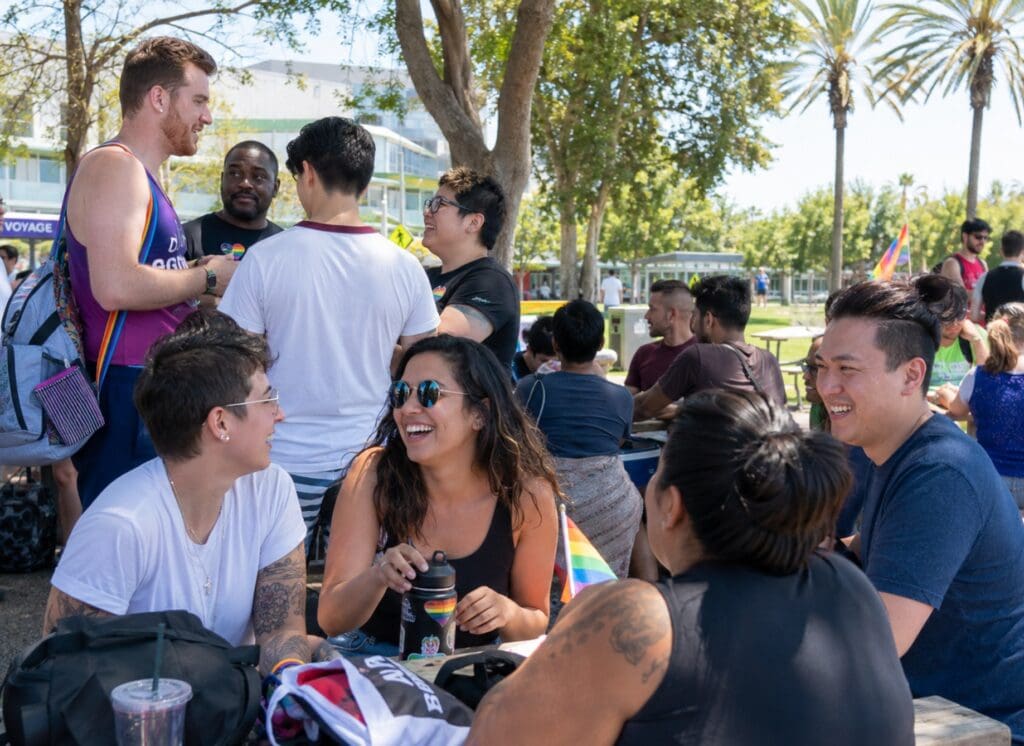
San Jose can be difficult for newcomers who expect community to appear automatically.
The city’s size, work schedules, housing costs, and dispersed social geography mean that building a network requires deliberate effort.
The most effective strategy is to join something recurring.
Consider:
- a discussion group at the Billy DeFrank Center;
- a Rainbow Chamber mixer;
- Pride volunteering;
- recreational sports;
- a Q Corner or LGBTQ Wellness group;
- arts organizations;
- local activism;
- professional LGBTQ+ networks;
- regular neighborhood cafés;
- events in Campbell, Santa Clara, or Mountain View.
Do not rely only on workplace affinity groups. They can be valuable, but a social identity tied entirely to your employer can become fragile during layoffs, job changes, or remote work.
Likewise, do not rely entirely on San Francisco. The Caltrain connection is useful, but a local friend should not always require a two-hour round trip.
Gay Dating in Silicon Valley: what the travel guides rarely explain
Gay Dating here is shaped by geography and work culture.
People may have demanding schedules, long commutes, hybrid work arrangements, international travel, startup pressure, family obligations, or housing far from where they socialize.
That can make app conversations feel abundant while actual meetings remain difficult.
The practical solution is to date locally and specifically.
Instead of “Let’s meet somewhere in the Bay Area,” suggest:
- coffee at Nirvana Soul;
- a drink at San Pedro Square;
- dinner in Campbell;
- the Rose Garden;
- a museum;
- a public event at the DeFrank Center;
- a walk on the Los Gatos Creek Trail.
The more concrete the invitation, the more likely it becomes a real date.
San Jose is also a place where friendships can become romantic connections because people see one another repeatedly. A smaller scene may offer fewer immediate options, but it can produce more context.
Supporting queer South Bay life
A meaningful LGBTQ+ trip should contribute to the spaces that make it possible.
You can support the local community by:
- buying from Rainbow Chamber businesses;
- attending public DeFrank Center fundraisers;
- donating to community organizations;
- tipping drag artists and bar staff;
- visiting Mac’s and Splash outside Pride weekend;
- attending Silicon Valley Pride;
- learning local history through Queer Silicon Valley;
- volunteering when you live locally;
- respecting support groups that are not public entertainment;
- recommending San Jose as its own queer destination rather than merely an airport for San Francisco.
Final verdict: is San Jose worth visiting for LGBTQ+ travelers?
Yes, provided you understand what kind of destination it is.
San Jose is not the best choice for a traveler who wants ten gay clubs within three blocks or a nonstop party itinerary.
It is a strong choice for someone who values:
- community history;
- a compact but genuine queer district;
- multicultural food;
- warmer South Bay weather;
- access to technology and business travel;
- nearby towns and outdoor spaces;
- a quieter social environment;
- easy rail access to San Francisco;
- institutions that serve people beyond nightlife.
The city’s queer identity lives in the contrast between Splash’s screens and dance floors, Mac’s small patio, the Billy DeFrank Center’s meeting rooms, a Pride crowd in Plaza de César Chávez, a coffee shop in SoFA, and a conversation that continues beyond closing time.
San Jose does not reveal everything immediately.
That may be its weakness as a tourist destination. It is also what makes the scene feel real.
Once you move beyond the assumption that Silicon Valley is only offices, laptops, and corporate campuses, you find a community with its own history, losses, institutions, humor, resilience, and social rituals.
Gay San Jose is not San Francisco in miniature.
It is the South Bay on its own terms.
About the Author
Alain VEST is an independent LGBTQ+ lifestyle journalist.
Their work focuses on California nightlife, gay dating culture, community institutions, regional transportation, queer-owned businesses, and the relationship between technology-driven cities and the people who build lives beyond the workplace.
This guide combines current official venue information, local LGBTQ+ archives, community organizations, county resources, transportation agencies, tourism sources, and neighborhood-level reporting. Venue hours, business ownership, event schedules, rail service, and local regulations can change, so travelers should verify essential details through the linked sources before visiting.
Discover our Gay Key West Guide and San Jose Gay guide