Editorial integrity note: lived experience should never be fabricated. This guide is grounded in current official tourism, transit, venue, community, archival, and local reporting sources, verified through July 2026. Before publication under a personal byline, a Seattle resident or frequent Pacific Northwest visitor should review the neighborhood observations and complete the author biography with genuine, verifiable experience.
Table of Contents
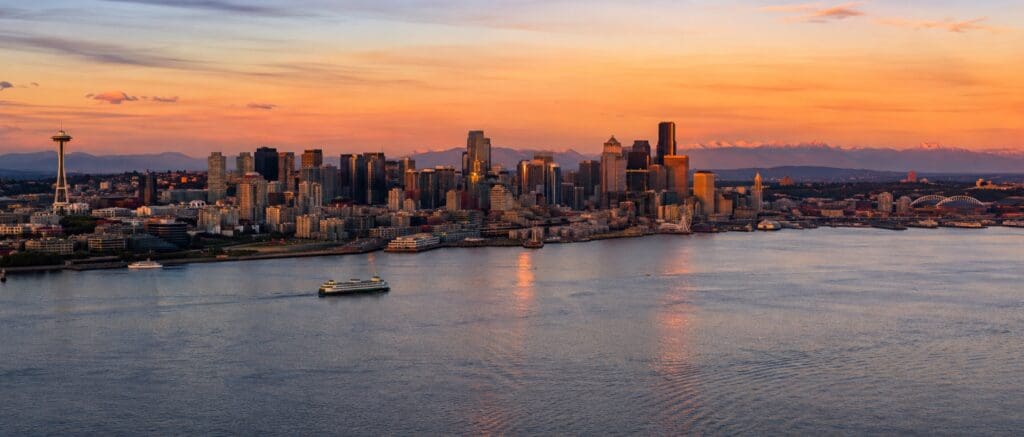
Seattle’s queer identity is difficult to separate from the city itself.
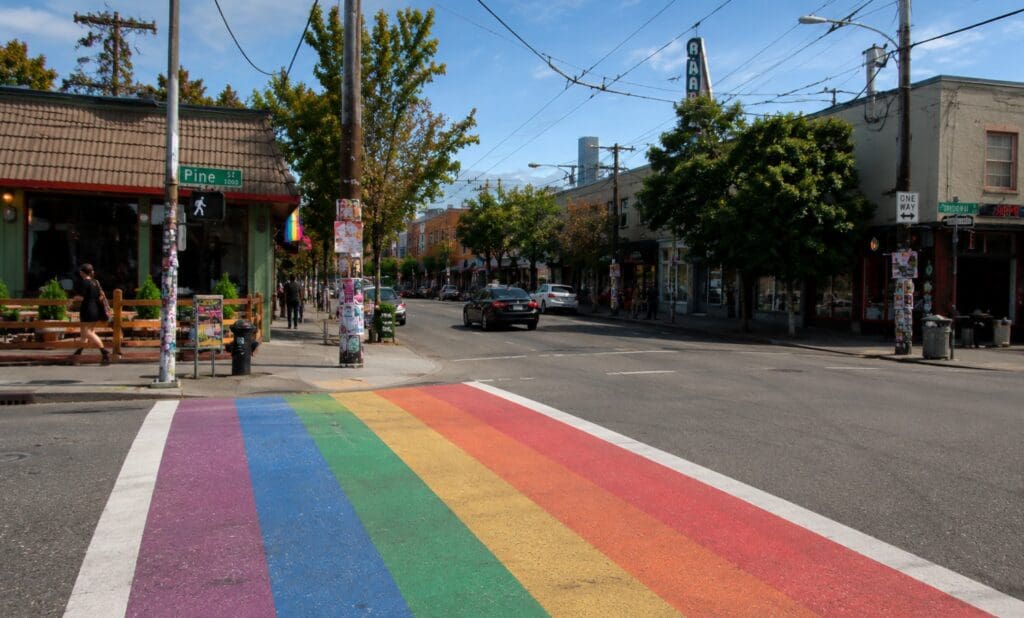
It is present in Capitol Hill’s rainbow crosswalks and crowded Pike/Pine sidewalks, in a lesbian bar that has survived since the 1980s, in underground electronic clubs, independent bookstores, community health organizations, hiking groups, waterfront parks, and an annual Pride weekend that spreads from Volunteer Park to Broadway, downtown Fourth Avenue, and Seattle Center.
Yet gay Seattle is not confined to a single neighborhood or type of venue. Capitol Hill remains its historic center of gravity, but LGBTQ+ life also thrives in Belltown, Beacon Hill, Fremont, West Seattle, the Central District, and beyond. Visit Seattle similarly describes Capitol Hill as the city’s LGBTQIA+ epicenter while emphasizing that queer-owned and queer-welcoming businesses are found throughout the city. (Visit Seattle)
Seattle also rewards travelers who go beyond nightlife. Coffee shops encourage lingering. Ferries turn public transportation into sightseeing. Urban trails lead from dense neighborhoods toward beaches and forested bluffs. Meanwhile, community centers, bookstores, sports groups, and outdoor organizations make it possible to meet people without relying entirely on Gay dating apps.
Gay Seattle at a Glance
| Travel question | Practical recommendation |
|---|---|
| Best neighborhood for nightlife | Capitol Hill, especially around Broadway and the Pike/Pine corridor |
| Best area for a first visit | Capitol Hill, First Hill, downtown, or Belltown |
| Best time for Pride | Late June; confirm the current year’s official dates |
| Best weather | Generally July through early September |
| Do you need a car? | No for central Seattle; useful for regional trailheads and distant neighborhoods |
| Airport connection | Sound Transit’s 1 Line links Seattle-Tacoma International Airport with downtown and Capitol Hill |
| Best non-bar social option | LGBTQ+ outdoor groups, Gay City programming, bookstores, cultural events, and community recreation |
| Essential practical advice | Bring comfortable shoes, a light waterproof layer, and government-issued ID for nightlife |
Why Seattle Belongs on an LGBTQ+ Travel Itinerary
Seattle offers something different from a destination built entirely around a compact gay entertainment district.
Its queer culture is both visible and embedded. You can move from a historic LGBTQ+ bar to a public park, an independent restaurant, a bookstore event, a ferry terminal, and a community arts program without feeling that you have exited one sealed-off social world and entered another.
Moreover, Seattle’s cultural identity has been shaped by overlapping traditions of labor organizing, feminist activism, environmentalism, music, technology, immigrant communities, Indigenous presence, and LGBTQ+ organizing. Consequently, its queer spaces are not identical in tone or purpose. Some are celebratory and polished; others are improvised, activist-led, quiet, intergenerational, nightlife-focused, or deliberately unconventional.
The city’s LGBTQ+ history also predates Capitol Hill’s present-day role. Historical mapping reported by KUOW shows that much of Seattle’s earlier gay and lesbian social life was concentrated around Pioneer Square before shifting toward Capitol Hill during the late 1960s and 1970s. Seattle Pride’s historical timeline and the Washington State LGBTQ Commission provide additional context for the city and state’s longer movement history. (KUOW)
Capitol Hill: The Historic Queer Beating Heart
Understanding the Pike/Pine Corridor
Capitol Hill is large, and saying that a business is “on the Hill” does not necessarily mean it is within a two-minute walk of every other destination.
For a first-time visitor, the most useful area to understand is the corridor formed by Broadway, East Pike Street, East Pine Street, 11th Avenue, 12th Avenue, and Cal Anderson Park.
Begin at Capitol Hill Station. From there, Broadway gives you the neighborhood’s most legible north-south spine, while Pike and Pine lead into its densest concentration of restaurants, bars, music venues, shops, and late-night activity. Sound Transit’s Capitol Hill Station is served by the 1 and 2 Lines and is fully accessible, making it the neighborhood’s principal public-transit gateway. (soundtransit.org)
During the morning, the area feels residential despite its nightlife reputation. People walk dogs around Cal Anderson Park, collect coffee before work, and occupy café tables with books or laptops. By late afternoon, delivery vehicles, restaurant staff, commuters, and early bar patrons begin overlapping.
Then, after dark, the visual texture changes. Rain-polished pavement catches neon and headlights during the wetter months. In summer, long evening light keeps patios active well after dinner. Lines form outside dance venues, while people move between Broadway, Pike, Pine, and 11th Avenue rather than committing to a single bar for the entire night.
Visit Seattle identifies Capitol Hill as an epicenter of LGBTQIA+ culture that combines longstanding gathering places with restaurants, boutiques, public art, and parks. Its rainbow-painted crosswalks remain the neighborhood’s most immediately recognizable queer landmark. (Visit Seattle)
Cal Anderson Park: The Neighborhood’s Open-Air Living Room
Cal Anderson Park sits beside the Pike/Pine nightlife corridor and functions as a meeting point, rest stop, recreation space, and community gathering area.
For a visitor, it is also a useful orientation landmark. Broadway lies to the west, 11th and 12th Avenues run along or near its eastern side, and many major queer venues are within a manageable walk.
However, treat it as a real neighborhood park rather than a staged attraction. People exercise, meet friends, play sports, organize demonstrations, and spend ordinary afternoons there. During major events, the park can become part of a larger festival footprint; PrideFest Capitol Hill, for example, has used Broadway, Denny, and Cal Anderson Park for stages and community programming. (Seattle Pride Guide)
Capitol Hill Is Queer, but It Is Not Frozen in Time
Capitol Hill’s LGBTQ+ legacy remains visible, although the neighborhood has changed through redevelopment, rising costs, new residential construction, business turnover, and shifting nightlife patterns.
This means visitors should avoid treating every contemporary business as a preserved artifact of an earlier gayborhood. Some venues are multigenerational institutions. Others are new concepts occupying spaces that previously held different forms of queer life.
The University of Washington’s Queer Capitol Hill: A Historic Walking Tour was created to reveal the neighborhood history that is no longer obvious from present-day streetscapes. The Seattle Architecture Foundation also offers a version of this walking-tour framework, connecting queer history with the area’s changing built environment. (UW Libraries)
🕰️ Then & Now: Capitol Hill Historic vs Current
Explore the evolution of Seattle’s LGBTQ+ heart on Capitol Hill. Historic icons (closed) appear in sepia, while today’s vibrant spaces shine in rainbow colors. Toggle layers or click any pin to read its story.
Where to Stay in Seattle
Capitol Hill: Best for Nightlife and Neighborhood Immersion
Stay on or near Capitol Hill when your priorities are nightlife, queer culture, independent restaurants, coffee, and the ability to return to your accommodation without crossing the city late at night.
The most convenient zone is generally within walking distance of Capitol Hill Station, Broadway, or Pike/Pine. However, check the exact address carefully. North Capitol Hill, the 15th Avenue area, and the eastern edge of the neighborhood are quieter but farther from the principal nightlife corridor.
Choose Capitol Hill when you want:
- gay and queer nightlife nearby;
- access to Cal Anderson and Volunteer Parks;
- independent restaurants and cafés;
- direct light-rail service;
- a neighborhood atmosphere rather than a conventional business district.
The trade-off is noise. Accommodations directly above or beside Pike/Pine nightlife may remain lively late into the evening, especially on summer weekends and during Pride.
First Hill: Best for Quieter Proximity
First Hill sits between Capitol Hill and downtown. It is less nightlife-focused, yet close enough to reach Pike/Pine on foot, by bus, or by streetcar.
This area works particularly well for visitors who want access to the Hill without sleeping directly above weekend activity. It also places downtown museums, hospitals, restaurants, and Pioneer Square within reasonable reach.
The First Hill Streetcar connects Capitol Hill Station with First Hill and the Chinatown–International District, including connections near King Street Station. (Visit Seattle)
Belltown and Downtown: Best for First-Time Sightseeing
Belltown and central downtown provide convenient access to Pike Place Market, the waterfront, Westlake Station, Seattle Center, museums, and larger hotels.
They are also practical for travelers who want to split their time between Capitol Hill and conventional sightseeing. Westlake and Capitol Hill stations are only a short light-rail journey apart, while several bus routes climb east toward the Hill. (soundtransit.org)
Belltown is especially suitable for travelers interested in Kremwerk, Fulcrum Café, the waterfront, and late-night dining. Nevertheless, block-level atmosphere can change quickly, so compare recent accommodation reviews and examine the immediate surroundings rather than choosing solely by neighborhood name.
Uptown and Lower Queen Anne: Best for Seattle Center and PrideFest
Uptown, sometimes still called Lower Queen Anne, surrounds Seattle Center, the Space Needle, Climate Pledge Arena, museums, theaters, and PrideFest’s main Sunday festival grounds.
Visit Seattle describes Queen Anne and Uptown as cultural districts anchored by Seattle Center and major attractions. (Visit Seattle)
This area is a strong option during Pride weekend because the downtown parade traditionally ends near Seattle Center. It is also convenient for travelers attending concerts, sports events, or performances.
Pioneer Square: Best for History and Regional Transportation
Pioneer Square offers historic architecture, galleries, stadium access, King Street Station, light rail, and proximity to the waterfront ferry terminal.
It also connects visitors with the earlier geography of Seattle’s queer history. Before Capitol Hill became the city’s principal gay social center, many LGBTQ+ establishments and meeting places were concentrated around Pioneer Square. (KUOW)
The neighborhood is generally quieter after business hours when there is no stadium event. Therefore, travelers primarily interested in Capitol Hill nightlife may prefer a more central or eastern base.
Queer-Owned Coffee, Breakfast, and Daytime Businesses
Seattle’s coffee culture is not just a tourism slogan. Cafés function as informal offices, meeting rooms, reading spaces, first-date locations, and alternatives to alcohol-centered socializing.
Still, ownership and opening status change. Before publishing or traveling, confirm the current location and hours through the business itself or the GSBA directory. GSBA, founded in 1981, describes itself as Washington’s LGBTQ+ and allied business association and maintains filters for finding LGBTQ+-owned enterprises. (thegsba.org)
Fulcrum Café: Queer-Owned Coffee in Belltown
Fulcrum Café is one of the clearest choices for travelers specifically seeking an LGBTQ+-owned coffee business.
The Belltown café serves coffee roasted by Seattle-based Fulcrum Coffee Roasters, along with seasonal beverages and food. Local reporting has identified Fulcrum as LGBTQ+-owned, while its current ordering site lists daily service, with longer weekday hours than many neighborhood coffee shops. (King 5)
Its location works well for a morning that continues toward Seattle Center, the waterfront, or Pike Place Market.
Best for: carefully prepared coffee, a central meeting point, and starting a Belltown or Seattle Center day.
Glo’s: A Queer-Owned Capitol Hill Breakfast Institution
Glo’s began as a small breakfast-and-lunch diner in 1987 and now operates near Capitol Hill Station. Its current menu continues to focus on breakfast, including the eggs Benedict variations for which the restaurant is especially well known. (Glo’s Cafe)
The business has also been identified as LGBTQ+-owned and occupies a prominent space within the transit-oriented development beside the station. (Wikipédia)
Expect a more substantial meal than a quick pastry-and-coffee stop. Weekend waits are possible, so arriving earlier or choosing a weekday is sensible.
Best for: brunch, a restorative breakfast after nightlife, and meeting friends close to transit.
Cupcake Royale: Coffee, Baking, and Queer Business History
Cupcake Royale was founded by Jody Hall, who describes herself as a queer female founder and has connected the company’s identity with LGBTQ+ advocacy from its earliest years. (Cupcake Royale)
The company has changed its retail footprint over time, including the closure of several traditional café locations. Consequently, verify the current pickup or café location before building it into an itinerary. Its official site continues to sell cupcakes and espresso products, while the brand remains an important example of explicitly queer entrepreneurship in Seattle. (Cupcake Royale)
Best for: dessert, locally rooted queer business history, and celebratory orders.
Dough Joy: Queer-Owned Vegan Doughnuts
Dough Joy identifies itself as an LGBTQ-owned business specializing in plant-based doughnuts. (Dough Joy)
However, travelers should note an important current change: its Capitol Hill shop closed in late June 2026. The company has operated in other neighborhoods, including West Seattle and Ballard, so check the official business page before traveling to a specific location. (CHS Capitol Hill Seattle News)
This is exactly why a high-quality travel guide should distinguish between a business that exists and a particular branch that remains open.
Charlie’s Queer Books: Literature and Community in Fremont
Charlie’s Queer Books describes itself as Seattle’s home for queer books and gifts. (charliesqueerbooks.com)
Located in Fremont rather than Capitol Hill, it gives visitors a reason to explore beyond the traditional gay nightlife corridor. In addition to retail, the store has hosted author events, workshops, open mics, book clubs, and queer co-working activities. (Secret Seattle)
Best for: queer literature, gifts, community events, and travelers seeking an alcohol-free social environment.
Additional LGBTQ+-Owned Businesses
Ownership changes, so use the current GSBA directory rather than relying exclusively on a static annual list. Washington State’s LGBTQ Commission also directs residents and visitors toward queer-owned business resources. (thegsba.org)
Other businesses worth investigating include queer-owned restaurants, bakeries, tea shops, bars, retailers, arts organizations, and professional services in neighborhoods far beyond Capitol Hill.
☕ Seattle LGBTQ+‑Owned Businesses Verified
Discover verified queer‑owned coffee shops, bookstores, restaurants, and retailers across Seattle. Each pin is accompanied by a short description and address. Click any marker or list item to learn more.
Seattle’s Queer Nightlife
Most nightlife venues are restricted to guests aged 21 and older. Bring physical government-issued identification, check the event calendar, and never assume that the atmosphere on one night represents the venue every night.
Seattle’s queer bars are highly programming-dependent. A room that feels like a relaxed neighborhood bar during happy hour may become a ticketed drag venue or crowded dance floor later.
Wildrose: A Living Piece of Lesbian Bar History
Wildrose has operated on East Pike Street since 1984 and identifies itself as Seattle’s only lesbian bar. Its calendar includes DJs, karaoke, trivia, drag bingo, dating events, and songwriter nights. (Wildrose)
It is also one of the oldest surviving lesbian bars in the United States. Its street-level windows and visible presence matter historically because lesbian and gay bars were once frequently hidden in basements, alleys, or less visible districts. Contemporary reporting has documented how Wildrose’s openness and longevity have made it a major symbol of Seattle’s lesbian and sapphic communities. (Condé Nast Traveler)
The venue is relatively compact, and Pride events can extend into the surrounding street. Arrive early when attending a major party or ticketed program.
Best for: lesbian and sapphic community, dancing, karaoke, Pride history, and a genuine Seattle institution.
Pony: An Unpolished Queer Dive With a Strong Identity
Pony occupies a small former gas-station building and describes itself as a tribute to the gay bars of 1970s New York and San Francisco. Its covered, heated patio is usable across much of Seattle’s variable weather. (ponyseattle.com)
The appeal is not polished luxury. Pony is intentionally compact, visually eccentric, and deeply associated with alternative queer nightlife. It is also a venue where the décor, music, crowd, and building itself feel inseparable.
Because it is small, it can shift rapidly from nearly empty to densely crowded.
Best for: queer dive-bar energy, patio conversations, alternative music, and an atmosphere that resists corporate uniformity.
The Cuff Complex: Leather Roots and a Multi-Space Night Out
The Cuff opened in 1993 and remains one of Capitol Hill’s foundational LGBTQ+ nightlife institutions. Its official site lists a Pike/Pine-area complex with evening service from Tuesday through Sunday. (The Cuff Complex)
Historically associated with leather, uniforms, bears, and gay male social culture, the venue now programs a wider range of music and community nights. Local reporting on its 2025 ownership change described it as a backbone of Capitol Hill queer life and noted plans to diversify music and party formats. (CHS Capitol Hill Seattle News)
Its larger layout makes it better suited than some smaller bars for groups who want a patio, dance space, and multiple environments in a single venue.
Best for: dancing, leather and Bear community history, a large patio, and a multigenerational gay crowd.
Kremwerk: Underground Music, Drag, and Queer Experimentation
Kremwerk is a queer-owned nightclub complex focused on underground electronic music, experimental drag, goth, house, techno, drum and bass, and other subcultural programming. (Kremwerk)
It sits closer to Belltown and the Denny Triangle than to the center of Pike/Pine, so plan transportation rather than treating it as an incidental Capitol Hill stop.
Kremwerk’s strongest nights are generally event-specific. Read the listing closely: a techno night, drag cabaret, live performance, and themed dance party may attract very different audiences.
Best for: electronic music, innovative drag, late-night dancing, and visitors who prefer underground programming to a conventional video bar.
Neighbours Nightclub: A Longstanding Broadway Dance Institution
Neighbours opened in the 1980s and has remained one of Seattle’s longest-running LGBTQ+ dance clubs. It is located on Broadway near the core of Capitol Hill nightlife and regularly hosts DJs and drag programming. (Wikipédia)
The primary reason to visit is straightforward: dancing. Unlike smaller conversation-oriented bars, Neighbours is most valuable once the room is active and the sound system becomes the center of the experience.
Best for: a classic late-night dance-club experience.
Union Seattle: Patio, Food, and a Lower-Pressure Start
Union serves the LGBTQ+ and allied community from Capitol Hill with a full bar, food, lounge seating, and a year-round outdoor patio. The venue states that it does not charge a cover. (2025 Union Seattle)
This makes it a useful starting point for a visitor who does not yet know where the night is going. Have food or a first drink, assess the atmosphere, and then walk toward Pike/Pine or remain for the evening.
Best for: happy hour, group meetups, patio seating, and a less performance-centered start to the night.
Queer/Bar: Check Its Status Before Visiting
Queer/Bar has been known for drag, burlesque, dance parties, and large Pride programming on 11th Avenue. However, as of July 2026, its official website stated that the venue was temporarily closed for a refresh and leadership transition. (Queer/Bar)
Do not publish or follow an itinerary that presents it as routinely open without checking for a reopening announcement.
That temporary status illustrates a broader rule: nightlife changes faster than neighborhood reputation. Always verify the day’s program directly.
Beyond the Bar: Community Centers, Books, Arts, and Social Groups
Gay City: Seattle’s LGBTQ+ Center
Gay City, also known as Seattle’s LGBTQ+ Center, provides health and wellness services, resource referrals, arts programming, library resources, youth education, and community connection. (Gay City: Seattle’s LGBTQ Center)
Its role is broader than that of a visitor attraction. Approach it as a working community institution. Attend public events when appropriate, use its resource library, support its programs, or learn about the AIDS Memorial Pathway.
As of 2026, the center’s resource referral services included assistance related to housing instability, domestic violence, crisis support, and other community needs. (Human Interests)
Lambert House
Lambert House is a community center serving LGBTQ+ youth aged 10 to 22 through support groups, dinners, activities, leadership programs, and social services. (Lambert House)
It should not be treated as a tourist stop. Adult visitors can support its mission through donations, approved volunteering, and public fundraising events rather than entering youth programming without a defined role.
Queer Books and Cultural Events
In addition to Charlie’s Queer Books, Seattle’s libraries, arts organizations, theaters, and museums host LGBTQ+ programming throughout the year.
Visit Seattle also highlights the Seattle Men’s Chorus and Seattle Women’s Chorus as major LGBTQIA+-identified musical organizations. (Visit Seattle)
Before traveling, review current calendars from:
- Gay City;
- Seattle Pride;
- PrideFest;
- Charlie’s Queer Books;
- Seattle Center;
- GSBA;
- local theaters and museums;
- community-specific Pride organizations.
Smaller events often make conversation easier than the largest nightlife venues.
Beyond the Bar: Outdoor Adventures and Social Clubs
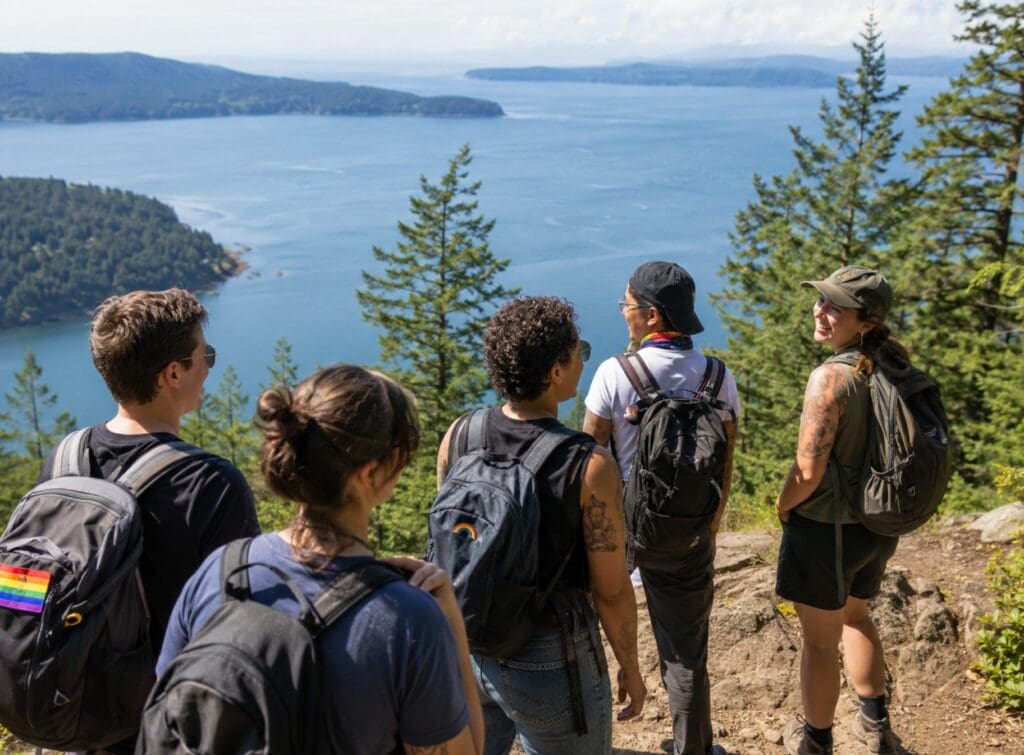
Seattle’s proximity to water, urban forests, mountain ranges, and regional trails strongly shapes local social life.
For queer travelers, outdoor organizations can provide a structured way to meet people without the pressure of a nightclub or dating profile.
OutVentures
OutVentures is a member-led LGBTQ+ outdoor organization serving Seattle, the Puget Sound region, and the wider Pacific Northwest. Its programming includes hiking, camping, cycling, kayaking, and other activities. (OutVentures)
Trip requirements vary. Read the elevation, distance, equipment, transportation, and experience expectations carefully before registering.
Queer Mountaineers
Queer Mountaineers organizes inclusive outdoor opportunities for LGBTQ+ adventurers, including community events and volunteer-led activities. (Queer Mountaineers)
This may be more relevant for visitors with established outdoor experience or those planning a longer Pacific Northwest stay.
Seattle Queer and Queer-Ally Hiking Groups
Gay City has also directed community members toward a Seattle queer and queer-ally hiking group designed to create safer outdoor social opportunities across skill levels. (Gay City: Seattle’s LGBTQ Center)
Because volunteer-led groups can change platforms or activity levels, confirm that the group is currently active before planning around it.
Queer Outdoor Inclusion Resources
The Washington State LGBTQ Commission maintains a list of organizations supporting 2SLGBTQIA+ inclusion in outdoor recreation, including OutVentures and Queer Mountaineers. (lgbtq.wa.gov)
This is a better starting point than choosing an unfamiliar commercial tour simply because it uses rainbow branding.
Easy Outdoor Experiences Within Seattle
Volunteer Park
Volunteer Park sits on Capitol Hill and contains the Seattle Asian Art Museum, Volunteer Park Conservatory, gardens, paths, and a historic water tower. (Seattle)
It is an excellent choice for a visitor who wants greenery without leaving the neighborhood. Walk north from Pike/Pine, visit the park, and return along 15th Avenue or Broadway.
Discovery Park
Discovery Park is Seattle’s largest public park, covering hundreds of acres of forests, meadows, bluffs, and protected tidal shoreline. (Seattle)
It offers one of the clearest ways to experience the city’s relationship with Puget Sound without renting a car for a full mountain excursion.
However, it is not directly beside downtown. Plan the bus or rideshare journey, download the trail map, and allow more time than you would for an ordinary urban park.
West Seattle Water Taxi and Alki
The King County Water Taxi crosses between downtown and West Seattle in approximately 10 to 15 minutes. From the West Seattle terminal, local connections provide access toward the waterfront and Alki. (King County)
This is one of the most efficient ways to combine transportation with a skyline view.
Bainbridge Island Ferry
Washington State Ferries operates passenger and vehicle service between downtown Seattle and Bainbridge Island. The crossing takes roughly 35 minutes on a typical published schedule, although service disruptions and seasonal schedules can occur. (Transports État Washington)
Walk-on travel is generally simpler than taking a car. Check the live sailing schedule before leaving, especially during weekends and summer.
Seattle Pride: Planning the Biggest LGBTQ+ Weekend
Seattle does not celebrate Pride through a single event. Instead, the month includes community festivals, marches, neighborhood events, nightlife programs, arts presentations, volunteer projects, and the downtown parade.
For 2026, major events included:
- Seattle Pride in the Park: June 6 at Volunteer Park;
- Trans Pride Seattle: June 26 at Volunteer Park Amphitheater;
- PrideFest Capitol Hill: June 27 on Broadway and around Cal Anderson Park;
- Seattle Dyke March and Rally: June 27;
- Seattle Pride Parade: June 28 along Fourth Avenue downtown;
- PrideFest Seattle Center: June 28. (Seattlepride)
Future years will use different dates. Always consult the official Seattle Pride, PrideFest, Trans Pride Seattle, and Seattle Dyke Alliance pages before booking.
Pride in the Park
Seattle Pride in the Park is an all-ages event held at Volunteer Park, with performances, music, community participation, and vendors. In 2026, it took place on June 6. (Seattlepride)
It generally feels more like a community festival than a downtown parade and works well for visitors seeking daytime programming.
Trans Pride Seattle
Trans Pride Seattle is organized as a free festival celebrating TwoSpirit, trans, and gender-diverse people. In 2026, it took place at Volunteer Park Amphitheater on the Friday of Pride weekend. (transprideseattle.org)
Follow the event’s stated accessibility and health guidance. In 2026, organizers specifically indicated that masks were expected.
PrideFest Capitol Hill
PrideFest Capitol Hill transforms parts of Broadway and Cal Anderson Park into an all-ages street festival with stages, vendors, community organizations, food, and age-restricted beverage areas. (Seattle PrideFest)
Because this takes place inside a residential and commercial neighborhood, transit is easier than driving. Capitol Hill Station becomes extremely busy, so establish a meeting point away from the most crowded entrance.
Seattle Pride Parade and PrideFest Seattle Center
The Seattle Pride Parade follows Fourth Avenue through downtown. For 2026, it was scheduled for June 28 from late morning through midafternoon. (Seattlepride)
PrideFest Seattle Center followed nearby with free stages, food, vendors, and community booths. (Seattle Center)
The parade and festival are geographically connected, but expect slow movement through the crowds. Do not schedule a tightly timed reservation immediately afterward.
Pride Weekend Logistics
Book accommodation early, particularly in Capitol Hill, downtown, Belltown, and Uptown.
Bring:
- comfortable walking shoes;
- water;
- sun protection;
- a light rain layer;
- a portable battery;
- ear protection when sensitive to loud sound;
- physical identification;
- any required medication;
- a screenshot of the schedule and meeting location.
Additionally, decide whether your priority is community programming or nightlife. Trying to attend Trans Pride, PrideFest Capitol Hill, the Dyke March, multiple ticketed parties, the parade, and Seattle Center in one uninterrupted sequence can become exhausting.
The Best Time to Visit Seattle
Late June: Best for Pride
Visit in late June when Pride is the main reason for the trip.
The advantages are unmatched LGBTQ+ programming, long daylight hours, outdoor events, and community visibility. The disadvantages include larger crowds, elevated hotel prices, ticketed-event sellouts, and unpredictable weather.
July and August: Best for Outdoor Weather
July and August generally offer the strongest conditions for parks, ferries, patios, and regional excursions.
Washington’s official tourism guidance identifies summer as the busiest travel season, peaking in July and August, and recommends booking accommodation and activities in advance. (State of Washington Tourism)
Summer does not guarantee mild conditions. Heat events and wildfire smoke are possible, so check air-quality and weather alerts before strenuous activity.
September: Best Balance
September often provides a useful compromise: fewer peak-summer crowds, pleasant daytime conditions, and continued access to outdoor activities.
However, daylight becomes shorter and rain becomes more likely as the month progresses.
October Through April: Best for Indoor Culture
Seattle’s cooler months suit travelers focused on coffee, bookstores, food, theaters, museums, live music, and nightlife.
NOAA describes the regional climate as mild but characterized by a pronounced rainy season and substantial winter cloudiness. (NOAA Institutional Repository)
Pack a waterproof outer layer rather than relying only on an umbrella. Wind and crowded sidewalks can make umbrellas inconvenient.
Navigating the Emerald City
Getting From Sea-Tac Airport to Central Seattle
Sound Transit’s 1 Line connects SeaTac/Airport Station with downtown, Capitol Hill, the University District, and points north.
Trains generally depart every eight to ten minutes for much of the day, although late-night and maintenance schedules vary. Follow airport signs from baggage claim to the station’s pedestrian bridge. (soundtransit.org)
For Capitol Hill, remain on the train beyond downtown and exit at Capitol Hill Station.
The airport station is undergoing elevator-related construction through 2026, so travelers with mobility needs should check current access notices before arrival. (soundtransit.org)
Light Rail
Light rail is the most predictable way to move between:
- the airport;
- downtown;
- Capitol Hill;
- the University District;
- Roosevelt;
- Northgate;
- stadiums;
- the Chinatown–International District.
Sound Transit provides current schedules, alerts, station accessibility information, and real-time arrivals. (soundtransit.org)
Buses and Streetcars
King County Metro fills the gaps between rail stations, particularly for Queen Anne, Madison Valley, the Central District, Fremont, Ballard, and West Seattle.
The First Hill Streetcar is useful for travel between Capitol Hill, First Hill, and the Chinatown–International District. (Visit Seattle)
Consult live arrival data rather than relying only on a static timetable.
Walking
Seattle is walkable within neighborhoods, but the city is not uniformly flat.
A route that looks short on a map can include a meaningful slope, especially between the waterfront, downtown, First Hill, and Capitol Hill. Comfortable shoes matter more than fashionable footwear during a full sightseeing day.
Pike/Pine, Broadway, downtown, Belltown, Seattle Center, and the waterfront can be combined on foot by travelers comfortable with hills. For longer cross-city journeys, use transit.
Biking and Scooters
Cycling is practical for experienced urban riders, particularly along protected routes and trails. However, steep grades, wet surfaces, streetcar tracks, and heavy traffic require attention.
Use a helmet, avoid riding directly across streetcar rails at a shallow angle, and check whether your route includes protected infrastructure.
Rideshares and Taxis
Rideshares are useful after late-night events, when traveling to Discovery Park, or when moving between Capitol Hill and neighborhoods without direct rail service.
During Pride and major concerts, pickup zones can become congested. Walk several blocks away from closed streets before requesting a vehicle.
Renting a Car
Do not rent a car solely for downtown and Capitol Hill.
A car becomes worthwhile when planning:
- multiple regional hikes;
- Mount Rainier or Olympic Peninsula excursions;
- rural or suburban destinations;
- luggage-heavy travel between dispersed locations;
- mobility arrangements not adequately served by transit.
Parking in Capitol Hill can be time-consuming and expensive, particularly at night.
Socializing Beyond Dating Apps
A Gay dating app can identify nearby people, but it rarely explains how a city’s community functions.
In Seattle, structured activities often offer a more natural route into social life. Join an outdoor event, attend a bookstore discussion, volunteer for a public Pride activity, participate in recreation, or attend an arts performance.
Repeated-interest settings are particularly valuable because they remove the pressure to determine immediately whether an interaction is romantic, social, or transactional.
Good starting points include:
- OutVentures;
- Queer Mountaineers;
- Gay City programs;
- GSBA events;
- Seattle Pride volunteering;
- queer literary events;
- LGBTQ+ choruses;
- public community cleanups;
- recreational programs offered through Seattle Parks.
Seattle Parks explicitly lists recreation programming for LGBTQ+ and allied participants among its community offerings. (Seattle)
Practical Safety, Inclusion, and Accessibility
Seattle should not be described as either perfectly safe or uniquely dangerous.
Use the same situational awareness expected in any large American city:
- keep your phone charged;
- confirm the route home before drinking;
- meet new contacts in public;
- tell a friend where you are going;
- do not leave a drink unattended;
- use staffed transit areas late at night;
- avoid displaying valuable items unnecessarily;
- leave any environment that feels hostile or unstable.
Capitol Hill’s busiest nightlife blocks usually contain many pedestrians, but activity can drop quickly several streets away.
Trans and Nonbinary Travelers
Many Seattle LGBTQ+ institutions explicitly include trans and nonbinary people. Nevertheless, individual experiences can vary by venue, crowd, and event.
Consult community-specific organizations and recent event listings rather than assuming that every venue using a rainbow symbol offers the same level of inclusion.
Gay City and the Washington State LGBTQ Commission are useful starting points for current resources. (Gay City: Seattle’s LGBTQ Center)
Travelers Under 21
Most bars and nightclubs are unavailable to visitors under 21.
Focus instead on:
- Pride in the Park;
- PrideFest Capitol Hill;
- Trans Pride Seattle;
- Volunteer Park;
- bookstores;
- museums;
- Gay City’s appropriate public programming;
- all-ages concerts and cultural events.
Lambert House provides specialized programs for LGBTQ+ youth aged 10 to 22, although participation should follow its registration and eligibility rules. (Lambert House)
Accessibility
Sound Transit publishes station-specific accessibility details, while Pride and Seattle Center events generally provide their own access guidance. (soundtransit.org)
Older bars and converted buildings may present narrower interiors, stairs, crowded circulation routes, or limited seating. Contact venues directly when step-free entry, accessible restrooms, seating, captioning, or sensory accommodations are essential.
A Three-Day LGBTQ+ Seattle Itinerary
Day One: Coffee, Capitol Hill, and Nightlife
Begin with breakfast at Glo’s near Capitol Hill Station.
Then walk through Cal Anderson Park and explore the rainbow crosswalks, Broadway, Pike, Pine, and 11th Avenue. Continue north toward Volunteer Park for the conservatory, Seattle Asian Art Museum, and neighborhood views.
Return to Pike/Pine in the late afternoon. Have dinner nearby, followed by a drink at Union or Wildrose.
Later, choose one principal nightlife experience:
- Pony for a compact queer dive;
- the Cuff for a larger complex;
- Neighbours for dancing;
- a ticketed Kremwerk event for underground electronic music.
Avoid attempting all four in a single night.
Day Two: Downtown, Queer Business, and the Waterfront
Start at Fulcrum Café in Belltown.
Walk toward Pike Place Market and the waterfront. From there, choose either:
- the West Seattle Water Taxi for skyline views and Alki;
- the Bainbridge Island ferry for a longer Puget Sound excursion;
- Seattle Center for museums and the Space Needle area.
Return to Belltown or Capitol Hill for dinner.
Check the calendars for Gay City, Charlie’s Queer Books, Kremwerk, Wildrose, or local performance organizations. A reading, community gathering, or small show may provide a more memorable evening than another unplanned bar crawl.
Day Three: Queer Community and the Outdoors
Choose an OutVentures, Queer Mountaineers, or community hiking event when dates align.
Otherwise, spend the morning at Discovery Park. Allow several hours for trails, beaches, and transportation.
Later, visit Charlie’s Queer Books in Fremont or explore another neighborhood through the current GSBA business directory.
Finish the trip with a relaxed dinner and a return visit to the venue where you felt most comfortable. Seattle is better experienced through familiarity than checklist completion.
Common Travel Mistakes to Avoid
Staying Far From Capitol Hill Without Checking Transit
A lower room rate can become less attractive when every evening requires a long, expensive rideshare.
Treating Every “Seattle” Address as Central
Seattle is geographically extended. West Seattle, Ballard, Capitol Hill, and the University District are distinct areas with meaningful travel time between them.
Assuming Pride Is Only the Sunday Parade
Trans Pride, PrideFest Capitol Hill, the Dyke March, Pride in the Park, and smaller cultural events are essential parts of the city’s Pride calendar. (Seattlepride)
Depending on an Old Nightlife List
Venues close, reopen, relocate, and change ownership. Queer/Bar’s temporary 2026 closure and Dough Joy’s Capitol Hill branch closure demonstrate why direct verification matters. (Queer/Bar)
Spending the Entire Trip on Pike/Pine
Capitol Hill is essential, but Seattle’s queer culture extends into Belltown, Fremont, Beacon Hill, West Seattle, the Central District, and outdoor communities across Puget Sound.
Packing Only for the Forecast
Carry a light waterproof layer even when the day begins dry. At the same time, bring sun protection during summer: long daylight and outdoor events can produce more exposure than visitors expect.
Frequently Asked Questions
Capitol Hill is the city’s historic and contemporary LGBTQ+ center, especially around Broadway and the Pike/Pine corridor. However, queer-owned businesses and community organizations operate throughout Seattle. (Visit Seattle)
Yes. Pike/Pine, Broadway, Cal Anderson Park, and many nightlife venues are close enough to explore on foot. Nevertheless, the neighborhood includes hills, and destinations farther north or east may require transit.
Yes. Light rail directly serves the airport, downtown, and Capitol Hill. Buses, streetcars, ferries, water taxis, walking, and rideshares cover most visitor needs. (soundtransit.org)
It depends on the desired atmosphere.
Wildrose: lesbian and sapphic history;
Pony: queer dive-bar character;
Cuff: larger venue with leather roots;
Neighbours: classic dancing;
Union: patio, food, and conversation;
Kremwerk: underground electronic music and experimental drag.
Some events are. PrideFest Capitol Hill, Trans Pride, and the Dyke March have traditionally taken place on or near Capitol Hill. The main Seattle Pride Parade travels through downtown, while the principal Sunday PrideFest is held at Seattle Center. (Seattle PrideFest)
Choose late June for Pride, July or August for the most reliable outdoor conditions, and September for a balance of generally pleasant weather and smaller crowds.
Yes. Consider bookstores, coffee shops, Gay City programming, community arts events, Volunteer Park, Pride festivals, LGBTQ+ outdoor groups, and Seattle Parks recreation.
Use the GSBA business directory and filter for LGBTQ+-owned companies. (thegsba.org)
Final Perspective: What Makes Queer Seattle Distinctive
Seattle’s LGBTQ+ culture is not defined by one bar, one neighborhood, or one annual parade.
It lives in the continuity between them.
Wildrose preserves lesbian bar history while new queer businesses experiment with different models of community. The Cuff and Neighbours carry decades of nightlife memory, while Kremwerk creates space for new drag and electronic subcultures. Gay City connects health, arts, education, and community resources. Outdoor groups expand queer belonging into forests, waterways, and mountain landscapes.
Meanwhile, Capitol Hill remains both symbolic and practical: a neighborhood where public queer visibility is literally painted into the street, but where history, redevelopment, celebration, and displacement coexist.
The best way to experience gay Seattle is therefore not to rush through a list of rainbow-marked addresses. Spend a morning over coffee. Walk Pike and Pine at different times of day. Attend one event where nobody is trying to impress a dating algorithm. Take a ferry. Learn which spaces existed before the current ones. Support a queer-owned business outside Pride Month.
Ultimately, Seattle’s queer community is most visible not when it performs for visitors, but when it continues the ordinary work of gathering, creating, remembering, and looking after one another.
About the Author
Alain VEST is an LGBTQ+ travel journalist.
Editorial requirement: Replace every bracketed field with accurate, verifiable information supplied or approved by the named writer. Do not claim residence, attendance, membership, or firsthand experience that the author cannot substantiate.
A monthly check of Seattle’s LGBTQ+ venue openings, closures, and major events could keep this guide current; say the word and I’ll set it up.